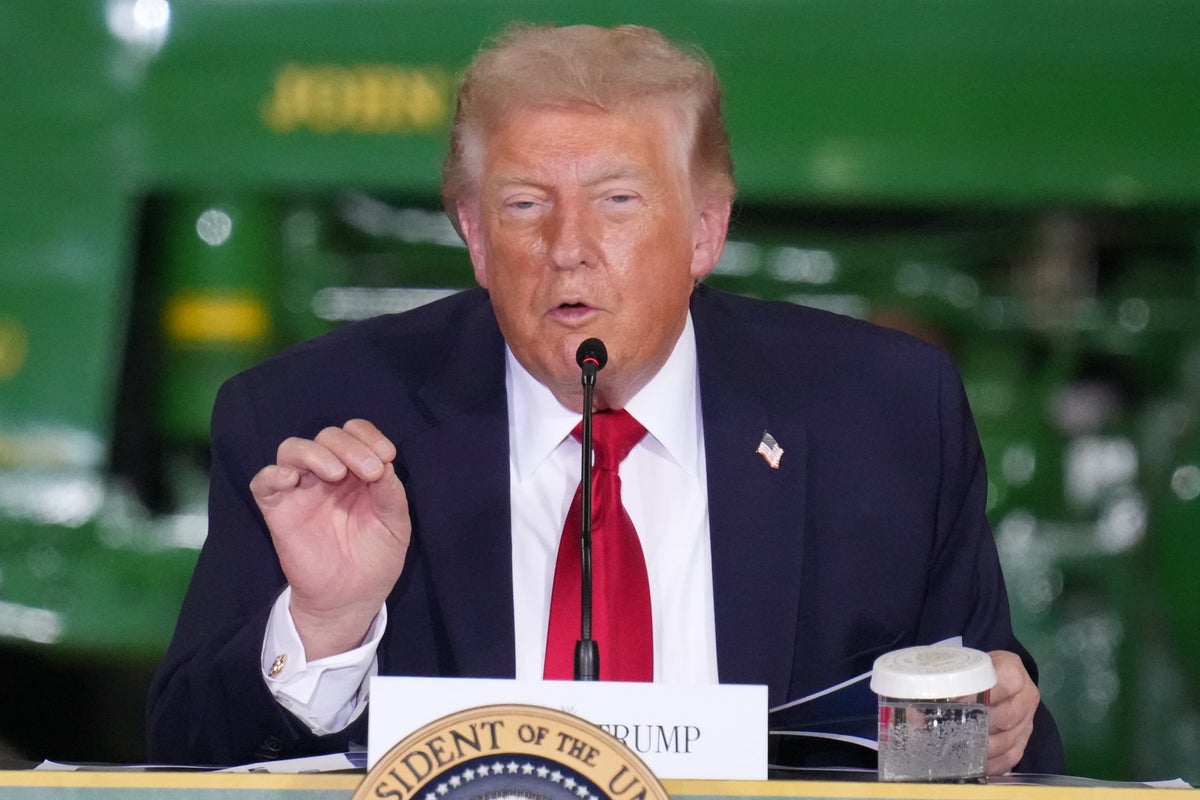
High-profile executive attendance at major sporting events creates a severe operational trade-off between institutional safety and commercial infrastructure. President Donald Trump’s decision to attend Game 3 of the NBA Finals between the New York Knicks and the San Antonio Spurs at Madison Square Garden marks the first time a sitting U.S. president has attended an NBA Finals game. While politically and culturally symbolic, integrating a presidential security apparatus into the densest transit and entertainment hub in the United States introduces systemic bottlenecks. This analysis quantifies the logistical friction, evaluates the economic suppression of local fan zones, and maps the operational adjustments required when federal protection protocols override standard arena operations.
The Security Bottleneck: Quantifying Throughput Constraints
The core conflict of integrating a United States Secret Service (USSS) protection detail into a high-capacity urban venue stems from a fundamental mismatch in throughput capabilities. Madison Square Garden operates at peak capacity during the NBA Finals, accommodating approximately 19,500 ticketed fans.
Under standard operating procedures, modern arenas utilize high-throughput walkthrough metal detectors and ticket scanners optimized to process thousands of entrants per hour per gate. This allows the venue to achieve full occupancy within a standard 60-to-90-minute pre-game window.
The introduction of presidential security protocols replaces this system with a high-friction screening model. The operational impact is governed by three primary structural constraints:
- Magnetometer Throughput Limits: Standard USSS-approved magnetometers process approximately 300 individuals per hour under optimal conditions. To process 19,500 fans within a strict two-hour window prior to tipoff, the arena requires a minimum of 33 active, fully staffed screening lanes operating at peak efficiency.
- The No-Bag Mandate: To bypass the severe bottleneck of manual property inspection, authorities instituted a strict zero-bag policy. Eliminating bag checks removes a variable-time component from the screening equation, preventing a total collapse of the entry system. However, because Madison Square Garden sits directly above Penn Station—the busiest transit hub in North America—this policy shifts the burden to the consumer, forcing commuters to alter their travel patterns or secure off-site storage.
- Double-Layer Perimeter Verification: Fans must clear an exterior law enforcement checkpoint simply to approach the venue doors, effectively converting public streets into a sterile zone. This creates a two-tiered queuing system that extends the total transit time from the perimeter to the seat to an estimated minimum of 45 to 60 minutes per attendee.
This operational friction is not theoretical; it replicates patterns observed at recent high-profile sporting events. During the men's singles final at the U.S. Open, identical secondary screening layers at Arthur Ashe Stadium caused thousands of ticket holders to miss the start of the match, forcing tournament organizers to delay the scheduled start time by 30 minutes. For Game 3 of the NBA Finals, the Knicks issued strict advisories mandating that fans arrive at least two hours prior to the 8:40 p.m. tipoff to absorb this systemic delay.
Externalities of the Hard Closure: The Economic and Social Cost Function
The operational footprint of a presidential visit extends far beyond the physical walls of the arena. In a highly dense urban matrix like Midtown Manhattan, a "hard closure" radiates economic and social disruptions across multiple city blocks, primarily through the suppression of external fan activation zones.
The Cancellation of Plaza33 and Fan Dispersion
Throughout the Knicks' 13-game postseason winning streak, the exterior of Madison Square Garden—specifically the Plaza33 space on 33rd Street—served as a primary point of aggregate fan density. Game 2 saw upwards of 6,500 non-ticketed fans gathering in the immediate vicinity of the arena.
For Game 3, the New York Police Department (NYPD) denied the permits for this outdoor assembly in coordination with federal handlers. The decision-making framework behind this cancellation balances two competing variables: crowd control and threat mitigation.
Threat Mitigation Vector = f(Crowd Density, Line-of-Sight Access, Exit Velocity)
Managing a dense, fluid crowd of thousands of un-screened individuals directly adjacent to the VIP ingress and egress points presents an unacceptable risk profile for the USSS. The cancellation of the plaza watch party effectively flattens the crowd density curve around the immediate perimeter, creating a predictable, controllable environment for law enforcement.
Structural Relocation and Municipal Backfills
To absorb the displaced demand of non-ticketed fans, the city administration under Mayor Zohran Mamdani executed a structural backfill by establishing an alternative watch party at Bryant Park, located several blocks away.
While this relocation mitigates the immediate safety risk at Seventh and Eighth Avenues, it alters the economic dynamics of the event:
- Scribnerian Friction: Local businesses, bars, and restaurants immediately surrounding Madison Square Garden experience a sharp contraction in foot traffic from non-ticketed consumers who are deterred by the multi-block lockdown.
- Resource Diversion: The NYPD must split its tactical deployment between the hard security zone at the Garden and the newly established, 5,000-capacity secondary site at Bryant Park. This increases the total municipal labor expenditure for a single evening.
- Transit Redirection: Closing the major vehicular and pedestrian corridors on Seventh and Eighth Avenues forces a rerouting of surface transit and pedestrian flows, compounding the daily operational load of Penn Station beneath the arena floor.
Secondary Market Anomalies and Audience Stratification
The intersection of a historic sporting event—the Knicks' first Finals appearance since 1999—and a historic presidential visit amplifies the extreme economic stratification of the modern sports landscape.
The baseline economic demand for NBA Finals tickets in New York City was already unprecedented, driven by a half-century championship drought dating back to 1973. Prior to the announcement of the presidential visit, the entry-level price on secondary ticketing platforms hovered at historic highs. The confirmation of the presidential attendance acted as a secondary demand shock, driving the minimum "get-in" price past $6,000, with premium courtside seating valued in the tens of thousands of dollars.
This pricing environment alters the demographic composition of the in-arena audience, turning Celebrity Row into a highly securitized corporate and political forum. Sitting political figures, including Mayor Mamdani, are forced to navigate this hyper-inflated market out of pocket to maintain public alignment with the city's sporting success, while the president enters as an official guest of Madison Square Garden owner James Dolan.
This dynamic creates a stark divergence between the internal and external game-day experience:
| Metric / Variable | In-Arena Environment (MSG) | External Fan Zone (Bryant Park / Local) |
|---|---|---|
| Socioeconomic Access | High-net-worth individuals, corporate entities, political dignitaries | General public, local fan base, commuter demographics |
| Security Friction | High (Multi-stage USSS screening, zero-bag policy, 2-hour lead time) | Moderate (Standard municipal policing, open-air crowd management) |
| Average Cost of Entry | >$6,000 per seat | Free (Requires pre-registration / capped capacity) |
| Spatial Density | Capped at fixed arena capacity (19,500) | Fluid, capped at 5,000 for official park site |
Strategic Recommendations for Future High-Profile Venue Integration
Venues and municipal agencies must treat presidential visits to active championship sporting events not as standard VIP arrivals, but as systemic disruptions requiring distinct operational models. The following protocols establish a framework for minimizing future friction:
Decentralize the Perimeter Early
Rather than establishing ticket checkpoints at the immediate arena doors, municipalities must implement a multi-tiered geofence at least three blocks out from the venue. This outer perimeter should serve as the initial ticket-verification and bag-filtering layer. By stripping non-compliant items and un-ticketed pedestrians away from the core structure early, the velocity of the final magnetometer screening layer increases.
Implement Dynamic Transit Scheduling
For venues positioned directly above major mass-transit infrastructure like Penn Station, event organizers must coordinate with transit authorities (e.g., the MTA and Amtrak) to adjust ingress and egress patterns. This includes designating specific subway exits exclusively for ticketed fans that feed directly into the secure screening queues, preventing the intersection of daily commuters with arena-bound spectators.
Standardize Alternative Digital Activations
To preserve local commercial activity when outdoor watch parties are canceled, cities must pre-authorize secondary entertainment zones outside the security footprint. Rather than reacting ad-hoc to a permit cancellation, municipal planning departments should hold pre-approved contingency sites equipped with large-scale broadcast infrastructure. This maintains fan engagement and protects the economic interests of local vendors without compromising the federal security mandate at the primary venue.