The announcement of Kanye West’s performance at SoFi Stadium on April 3 functions as a high-stakes stress test for the infrastructure of modern independent distribution and stadium-scale event management. This event is not merely a concert; it is a manifestation of a specific economic model—the "Pop-Up Stadium" framework—where the traditional multi-month lead time for a 70,000-capacity venue is compressed into a 24-day operational window. The success of this engagement depends on three critical variables: the efficiency of the "Vultures" era supply chain, the technical feasibility of the "Listening Experience" format versus a traditional live performance, and the regional market saturation of the Los Angeles live music sector.
The Structural Mechanics of the SoFi Engagement
SoFi Stadium represents the apex of high-fixed-cost venues. To achieve break-even, an artist must navigate a complex cost function involving massive rental fees, specialized union labor (IATSE), and astronomical insurance premiums. West’s strategy deviates from the standard industry playbook by leveraging a "Just-In-Time" (JIT) marketing approach.
The Compressed Sales Cycle
Traditional stadium tours utilize a six-to-nine-month lead time to maximize Tier 1 ticket pricing and capture corporate sponsorship. By announcing an April 3 date in mid-March, West is utilizing a scarcity-driven demand model.
- Velocity Over Duration: The objective is to trigger a "flash-sale" effect, where the urgency of the date minimizes consumer price sensitivity.
- Reduced Marketing Overhead: A shorter cycle reduces the sustained burn rate of digital advertising and outdoor media. The artist relies on organic social media propagation to replace a traditional $2 million+ regional marketing budget.
- Inventory Management: With a 70,000-seat capacity, the risk of "dead air" or unsold upper-bowl sections is significant. The strategy likely involves a staged release of tickets to maintain the appearance of high demand and facilitate secondary market price floors.
The Listening Experience vs. The Live Performance
The "Vultures" events have redefined the technical requirements of the stadium experience. By shifting from a traditional vocal performance to a "Listening Experience," the operational risk profile changes significantly.
- Audio Fidelity vs. Performance Reliability: In a standard concert, the primary risk is vocal fatigue or technical failure of live instruments. In a listening event, the primary risk shifts to the Front of House (FOH) engineering. The stadium’s internal sound system (the Infinity Screen and its integrated 260-speaker system) becomes the lead instrument.
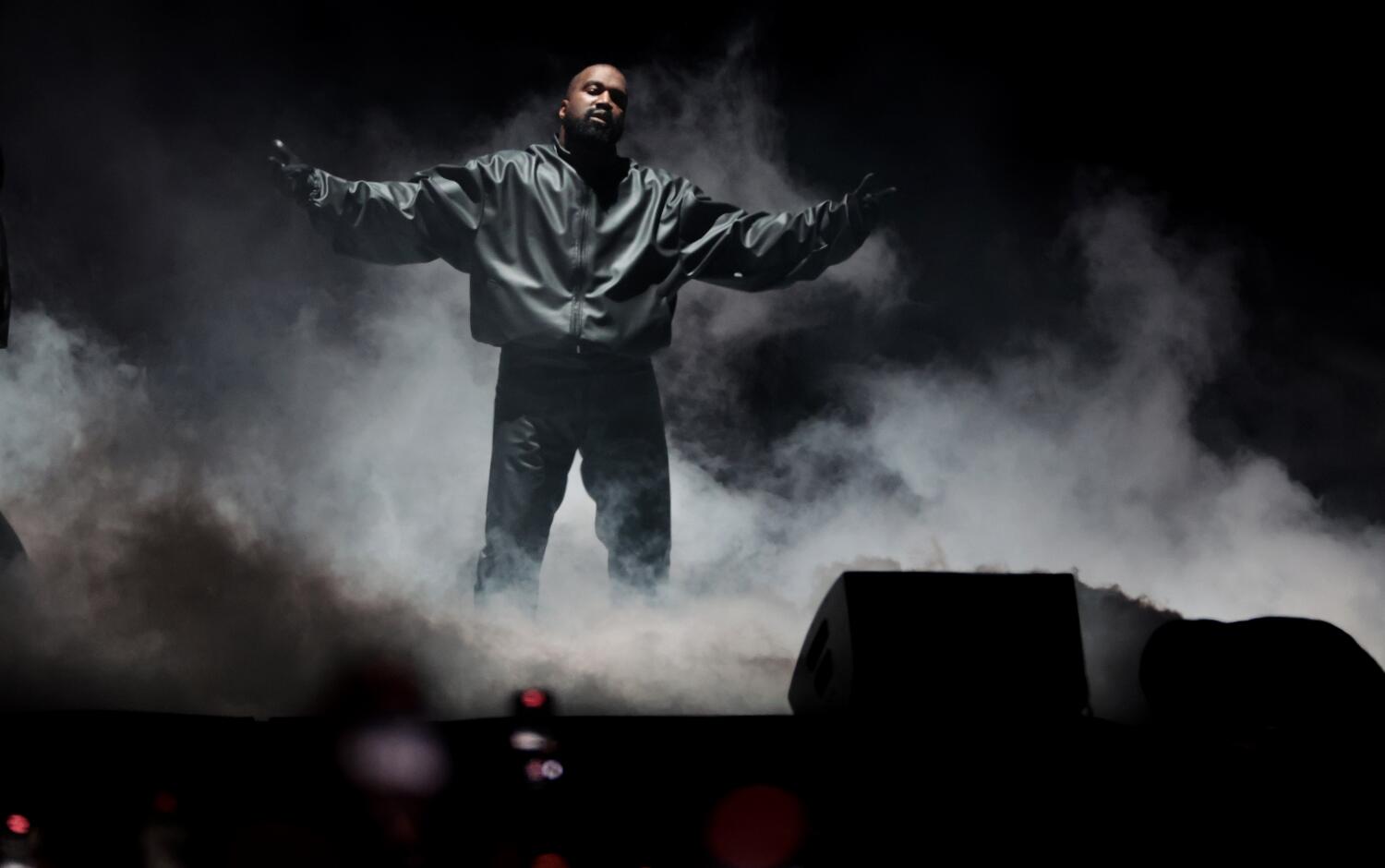
- Visual Architecture: West’s recent staging has favored minimalist, high-concept structures—often involving atmospheric fog, specific lighting temperatures, and circular stage designs that maximize "obstructed view" conversions into premium seating.
- Labor Efficiencies: A recorded playback event requires fewer on-stage technicians and backline crew than a full-band production, though it demands higher-tier visual and lighting programmers to ensure the spectacle justifies the ticket price.
The Economic Impact of the Independent Tier
This SoFi date serves as a data point for the viability of the "Independent Major" model. Having moved away from the traditional label ecosystem (G.O.O.D. Music/Def Jam), West now operates as a vertically integrated entity. This shift changes the distribution of the "Revenue Pie."
The Margin Expansion
In a traditional label deal, a significant portion of touring revenue is diverted to recoupment or cross-collateralization. As an independent operator, West’s entity retains a higher percentage of:
- Primary Ticket Sales: Direct-to-consumer sales eliminate the "label tax."
- Merchandise Revenue: In stadium environments, Per-Head (PH) merchandise spending for high-tier artists ranges from $15 to $35. On a 70,000-person night, this represents a gross of $1.05 million to $2.45 million, with margins often exceeding 75% on apparel.
- Digital Integrations: The event likely serves as a content-generation hub for the YZY app or other proprietary streaming platforms, turning a one-night event into a perpetual digital asset.
The Risk of Logistic Friction
The absence of a major label's touring department means the logistical burden falls on a smaller, more agile, but potentially more fragile team. The "Three Pillars of Logistic Friction" in this context are:
- Permitting and Security: Coordinating with Inglewood law enforcement and SoFi’s internal security on a three-week timeline requires an existing, high-trust relationship with local authorities.
- Load-In/Load-Out Efficiency: Stadiums are booked back-to-back. The "April 3" date implies a rigorous 48-hour window for transformation, requiring a 24-hour crew rotation.
- Insurance and Liability: Insuring a high-profile, "unpredictable" asset like West requires high premiums. Independent entities often face more stringent "Force Majeure" clauses than corporate-backed tours like those managed by Live Nation or AEG.
Regional Market Analysis: The Los Angeles Factor
Los Angeles is the most competitive live music market in the world. The April 3 date places the event in direct competition with the lead-up to the Coachella Valley Music and Arts Festival.
The Radius Clause and Market Cannibalization
While West is not on the Coachella poster, the presence of 100,000+ music fans in Southern California during April creates both opportunity and competition.
- The "Warm-up" Effect: Local fans who cannot attend Coachella may view the SoFi event as a more accessible alternative.
- Disposable Income Constraints: The high cost of Coachella (passes, lodging, transport) creates a "wallet share" bottleneck. The April 3 date is strategically positioned before the festival’s peak spending period, essentially "sniping" discretionary income from the regional demographic before it migrates to Indio.
Venue Specification: Why SoFi?
SoFi Stadium is not just a venue; it is a brand-alignment tool. Its status as the most expensive stadium ever built ($5.5 billion) mirrors West’s "architectural" phase of career management.
- The Translucent Roof: Allows for "Golden Hour" lighting effects that are impossible in traditional enclosed domes or open-air stadiums, providing a unique aesthetic for the filmed version of the event.
- The Seating Configuration: The verticality of SoFi allows for a more "intimate" stadium experience, keeping the audience closer to the floor-level stage, which is vital for the immersive atmosphere of a listening event.
The Mechanism of the "Vultures" Rollout
The April 3 concert is a tactical component of the "Vultures" multi-volume release strategy. In a traditional album cycle, the tour follows the completion of the music. In the current West model, the events are the production process.
- Iterative Feedback Loops: Each event allows the artist to test new mixes and track sequences in a live environment, using the stadium's acoustics as a final mastering room.
- The "Hype-as-Service" Model: By making each event slightly different—varying guests, tracklists, or visual themes—the artist encourages "repeat attendance" and constant social media discourse.
- The Scarcity Value of the "One-Off": Because this is not billed as a 40-city tour, each individual date carries the weight of a "limited edition" product. This maximizes the secondary market value (StubHub, SeatGeek) which, while not directly benefiting the artist's primary gross, increases the perceived cultural capital of the event.
Strategic Forecast: The Operational Pivot
As April 3 approaches, the primary indicator of success will not be the "sell-out" status—which is highly likely given the market—but the execution of the visual media. This event is being designed for the lens as much as for the ear. The integration of high-definition drone cinematography and real-time social media broadcasting suggests that the SoFi event is a pilot for a new type of "Cinema-Concert" hybrid.
The immediate strategic priority for the production team is the stabilization of the guest roster. The "Vultures" project is inherently collaborative; the presence or absence of Ty Dolla $ign and other featured contributors significantly alters the "Value Proposition" for the ticket holder.
Furthermore, the stadium must prepare for a "High-Volatility Crowd Profile." Unlike a typical NFL game or a Taylor Swift concert, a West event attracts a demographic that values aesthetic disruption. This necessitates a specific approach to crowd management that prioritizes "vibe" and flow over rigid seating enforcement, particularly in the floor and lower-bowl sections.
The final metric of the SoFi engagement will be its "Post-Event Decay Rate." If the conversation surrounding the event focuses on the technical precision and the sonic quality of the "Vultures" material, it validates West's move toward independent stadium-scale curation. If the conversation is dominated by logistical failures or delays, it will highlight the inherent risks of bypassing the traditional industry infrastructure in favor of a lean, high-speed operational model.