A bolt of lightning tearing through the sky is terrifying enough from the ground. Now imagine you're sitting on top of millions of pounds of volatile fuel when that same electrical monster slams directly into your nose cone.
That is precisely what happened on July 23, 2026, when a Chinese Long March 3B rocket lifted off from the Xichang Satellite Launch Center in Sichuan province. Roughly thirty seconds into flight, a massive flash illuminated the ascent. Spectators captured the exact moment a lightning arc connected with the accelerating vehicle.
Most people assume a rocket strike like that spells total disaster. History has plenty of scars to back up that fear. Yet, this booster shrugged it off. It kept pushing upward, cleared the atmosphere, and successfully deployed the Tianlian-2-06 data relay satellite into a geostationary transfer orbit.
Why Lightning Ruins Rockets
Weather delays are the bane of every space program. Launch directors constantly scrub missions because of stray clouds, high winds, and electrical charges in the air.
When a metal cylinder shoots up through the atmosphere, it acts as a lightning conductor. It triggers what meteorologists call a triggered lightning strike by bridging an electric field between clouds or the ground.
The danger isn't just a burnt exterior paint job. Modern rockets rely heavily on dense networks of sensitive avionics, computers, and internal wiring. A high-voltage surge can scramble flight computer logic, trip circuit breakers, or send erroneous steering commands to the engine nozzles.
We saw the terrifying reality of this back during NASA's Apollo 12 mission in November 1969. A Saturn V rocket was struck twice shortly after liftoff. The electrical shock knocked out instrumentation panels and triggered warning lights across the capsule. Only quick thinking by flight controllers—specifically shouting out the legendary "SCE to AUX" command to switch signal conditioning electronics—saved the mission from an abort.
Not every program gets lucky. Back in 1987, an unmanned Atlas-Centaur 67 rocket took a direct lightning hit less than a minute into its journey. The surge fried its guidance computer, sending the vehicle violently off course until range safety officers had to trigger its self-destruct mechanism.
Inside the Xichang Launch Environment
Location plays a massive role in these close calls. The Xichang Satellite Launch Center sits in a mountainous region of southwestern China, famous for volatile microclimates and sudden storm activity.
Launching heavy-lift workhorses like the Long March 3B from this terrain means engineers constantly dance with atmospheric risk. The Long March 3B features four liquid-propellant strap-on boosters attached to a core stage, creating a massive metallic silhouette that practically begs for static discharge during stormy launch windows.
Yet, aerospace engineering has evolved past the vulnerabilities of the 1980s. Modern orbital vehicles are built using Faraday cage principles. The conductive outer skin of the rocket safely channels electrical currents around the payload and internal computer systems, bleeding the energy off into the ionized exhaust plume trailing behind.
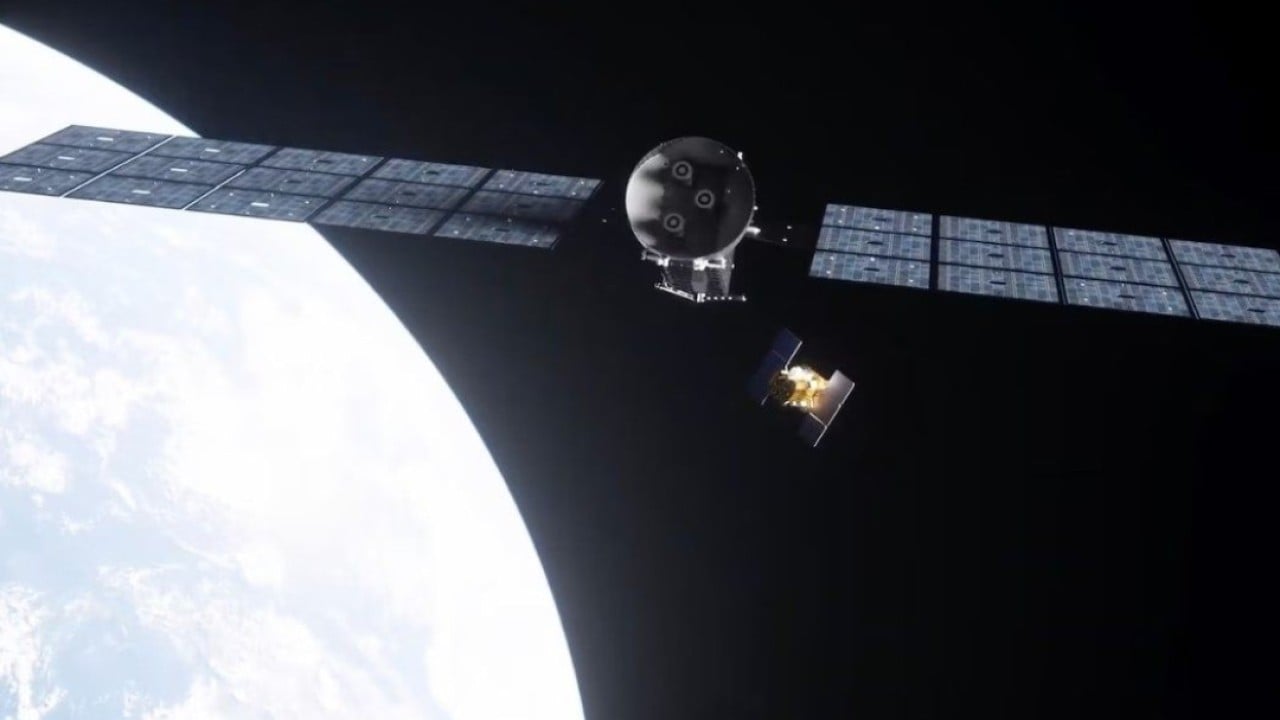
The China Aerospace Science and Technology Corporation confirmed that despite the dramatic light show, the vehicle's internal safeguards performed exactly as designed. The Tianlian-2-06 relay satellite reached its intended orbital slot to bolster communication links for the China Space Station and crewed missions.
What This Means for Future Launches
Incidents like this prove that even with rigid pre-flight weather criteria, nature loves to throw curveballs. Ground sensors can read atmospheric potential, but local electric fields change in seconds once a multi-story rocket tears through a humid cloud deck.
Space agencies aren't going to stop launching into cloudy skies, but events like this highlight why aerospace hardening remains a masterclass in redundancy. When millions of volts hit aluminum and titanium at Mach 1, survival isn't just about luck. It's about engineering that anticipates the worst sky has to offer.