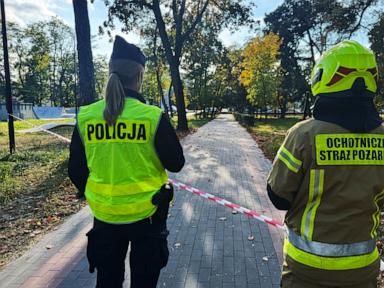
The pavement outside was cold enough to bite through the soles of cheap shoes, but no one shifted their weight.
We stood in a jagged crescent around the heavy glass doors, five feet back from the security line, watching the amber glow of the exit sign inside. Every few seconds, someone adjusted a scarf or checked a phone screen that had long since stopped updating. Time behaves strangely when you are waiting for a stranger to walk out of a room where decisions are being made about things that belong to you. For a more detailed analysis into similar topics, we recommend: this related article.
It is a specific kind of helplessness. You cannot knock on the glass. You cannot ask how much longer it will take. You can only watch the shifting shadows behind the frosted panels and wait for the hardware to click.
Consider what happens next: the door pushes outward. For broader information on this topic, extensive coverage is available at TIME.
A single figure steps through, blinking against the grey daylight, clutching a Manila folder like a shield. Then another. Then a steady, unbroken drift of people pouring past the threshold, shoulders hunched against the wind, talking in low, urgent murmurs that dissolve into the traffic noise before they reach the curb.
They went inside hours ago as individuals with separate anxieties, distinct leases, and disconnected bank accounts. They came out as a crowd.
This is how major shifts in civic and corporate life actually happen. We spend our lives fixated on the theater of the boardroom—the sweeping gestures, the signed documents, the dramatic pronouncements delivered behind mahogany lecterns. But those moments are just the punctuation mark at the end of a sentence written entirely in waiting rooms, fluorescent-lit corridors, and quiet compromises.
To understand why a community fractures or a system bends, you have to look past the doors and examine the weight of the air inside that room.
Let us be honest about why we avoid looking.
Complexity is exhausting. When an institution changes its rules—whether it is a municipal zoning board reshaping a neighborhood or a corporate restructure eliminating three hundred livelihoods—the public explanation is almost always wrapped in a linguistic blanket designed to soften the blow. We are told to expect efficiency. We are told that adjustments are necessary for alignment.
These words are chosen because they are weightless. They float above the concrete reality of missed mortgage payments, disrupted school districts, and the quiet grief of losing a place where you used to belong.
Imagine Sarah, who worked fifteen years in the logistics department of a regional manufacturing plant before the merger was announced. Her desk was near the south-facing window, where a stubborn fern managed to survive despite the dry radiator heat. She knew the cadence of the building—the exact minute the freight elevator groaned in the morning, the rhythm of the footsteps of the night shift crew passing her partition, the specific pitch of the wind rattling the fire escape during autumn gales.
When the decision came down, it did not arrive as a tragedy with a swelling string section. It arrived as an encrypted PDF attachment sent at 4:45 on a Tuesday afternoon.
The coldness of that delivery is not an accident. It is a mechanism for deflection. If you process a human life as a data point on an organizational chart, you never have to watch Sarah pack her fern into a cardboard box. You never have to explain why her十五 years of institutional memory were worth less than a projected three percent increase in quarterly operational yield.
There is a rhythm to displacement that repeats across industries, neighborhoods, and generations. It begins with the rumor.
Rumors do not travel in straight lines; they drift through breakrooms and text chains like smoke from an unlocated fire. Someone notices an unfamiliar consultant carrying a sleek laptop case near the executive suites. Someone else overhears a hurried phone call about a lease renegotiation.
At first, people laugh it off. We are wired to reject catastrophic futures because the alternative—acknowledging our vulnerability—requires too much emotional overhead. We tell ourselves that things are too stable to fall apart. The building has been here for fifty years. The brand is a household name. My contract was renewed six months ago.
Then comes the formal announcement.
This is the phase where language undergoes a strange mutation. Leaders who have never set foot on the shop floor suddenly start speaking fluent corporate vernacular, deploying terms like optimization, transition phase, and strategic pivot with the practiced ease of weather forecasters predicting a distant storm.
They speak with absolute certainty about inevitability. The market demands it, they say. Global competition requires it. The future waits for no one.
Notice how neatly this framing absolves everyone of responsibility. If the market is a force of nature—as inevitable and unreasoning as a hurricane—then nobody is actually to blame for the wreckage left in its wake. It is simply rain falling on the roof.
Except the market is not a hurricane. It is a collection of choices made by people sitting in comfortable chairs, insulated from the friction of their own decisions.
We stayed outside until the last shadow cleared the revolving door.
A janitor in a grey jumpsuit came out next, wheeling a large plastic bin filled with discarded paper cups, crumpled agendas, and the occasional discarded name badge still pinned to a strip of blue lanyard. He dumped the contents into a larger truck at the curb, slammed the metal tailgate shut, and drove away.
The pavement was empty again. The wind picked up a stray flyer from the gutter, spinning it in a tight, frantic circle before plastering it against a parking meter.
What remains after the doors close and the crowd disperses is the work of reconstruction. Not the corporate kind, but the human kind.
It is the labor of figuring out how to tell your family that your routine has just evaporated. It is the quiet recalculation of savings accounts and grocery budgets. It is the stubborn insistence on dignity in an environment that treats you as disposable.
We do a disservice to these moments when we sanitize them into headlines or financial summaries. Behind every statistic about workforce reduction or urban displacement is a kitchen table at midnight, lit by the harsh blue glow of a smartphone, where someone is typing out a resume for the first time in a decade, wondering if anyone on the other side of the screen will remember that they are a person, and not just an application.
The people who walked out of those doors today will find their way home. They will make dinner, answer questions from their children, and pretend that tomorrow is just another Tuesday.
But they will remember the weight of the air in that room. And next time, they will stand a little closer to the glass.