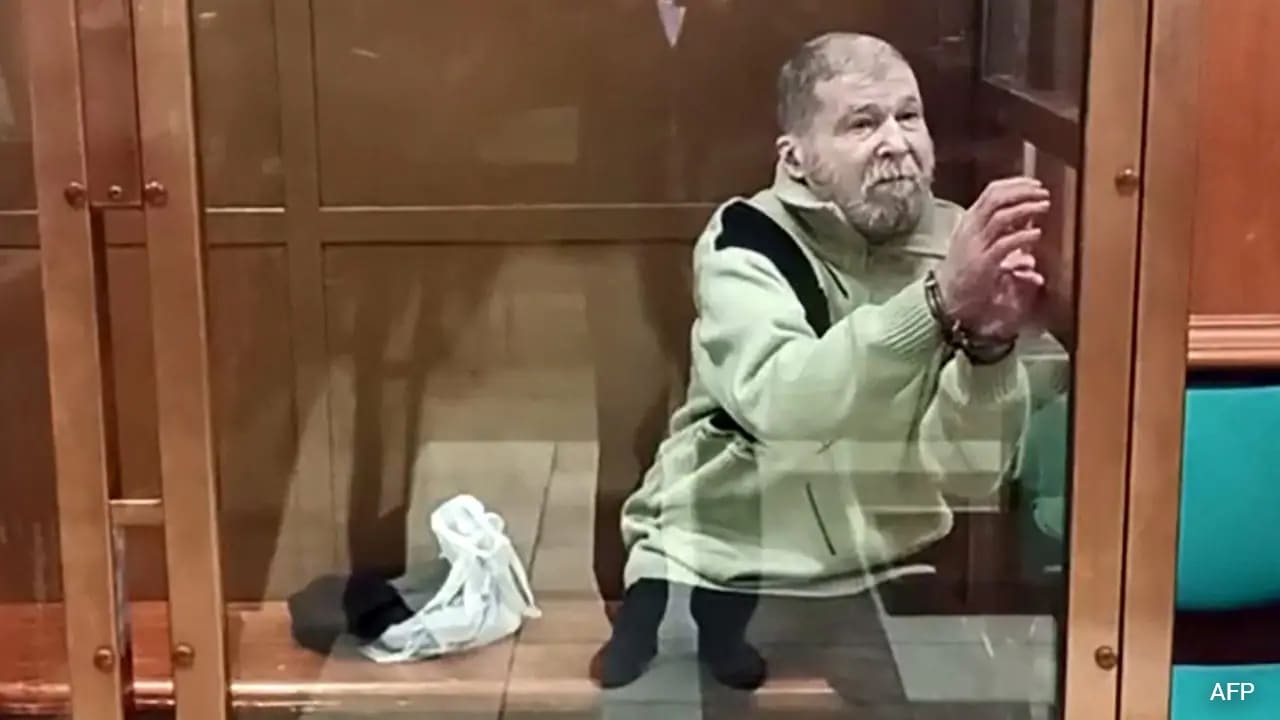
Silence has a weight. In a solitary cell, time does not move in minutes or hours; it accumulates like dust on a windowsill, settling heavy and gray over every thought. For months, the world outside kept spinning, news cycles churned, and diplomatic cables crossed oceans. But inside, the only sound was the distant echo of heavy boots on concrete and the steady, agonizing tick of a clock that seemed entirely broken.
The release of an American citizen previously detained during the full-scale conflict in Ukraine marks the end of a harrowing ordeal, yet it also highlights the profound human cost of geopolitical friction. When borders become battlefields, ordinary individuals caught in the crossfire often transition instantly from private citizens to diplomatic leverage. For another view, consider: this related article.
The Anatomy of Isolation
War is frequently discussed in terms of troop movements, territorial gains, and economic sanctions. Statistics dominate the headlines. Yet, beneath those massive numbers lie singular, terrifying human experiences. Imagine waking up in a foreign land where the language sounds like static, your passport is confiscated, and the familiar structures of safety vanish overnight.
Detention in a hostile environment strips away identity. Clothes are replaced by standard-issue garments. Schedules are dictated by guards who offer no explanations. In these moments, survival depends entirely on psychological resilience—finding an anchor in memories, holding onto the certainty of a home thousands of miles away, and trusting that somewhere out there, governments are negotiating in smoke-filled rooms. Further coverage on this matter has been published by TIME.
Diplomacy is rarely fast. It is a meticulous, agonizingly slow dance of intermediaries, back-channel communications, and high-stakes bargaining. Families wait by phones that do not ring, parsing every public statement from officials for a shred of hope.
The Return and the Reality
Stepping onto an airplane bound for home is not an instant cure for trauma. The transition from total confinement to sudden freedom can be disorienting. Sunlight feels too bright. Voices sound too loud. The realization that you can finally open a door without asking permission takes time to settle into the nervous system.
While headlines celebrate the reunion, the psychological journey is only beginning. Those who return carry invisible scars—reminders of a time when their liberty was used as a pawn in a much larger chess match. Their stories serve as a stark reminder of how fragile safety is, and how deeply interconnected individual lives remain with the shifting tides of international conflict.
The cell door finally opens, but the echoes of what happened inside linger, a quiet testament to endurance when everything else was stripped away.