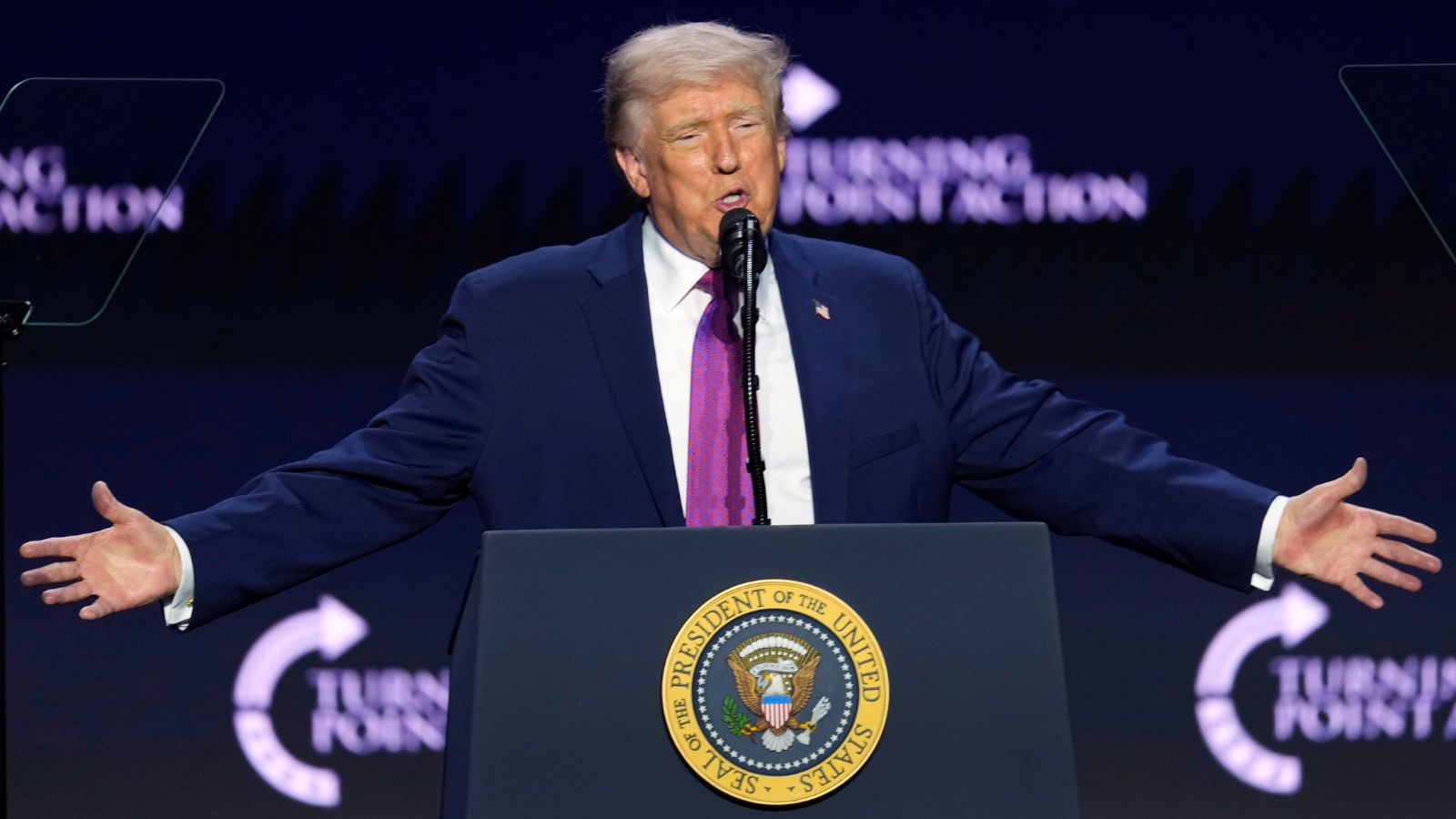
The air in a negotiation room doesn't just hold oxygen; it holds the weight of millions of lives. It is a thick, artificial atmosphere where the scratch of a pen can sound like a thunderclap. When Donald Trump announced that Iran had agreed to suspend its nuclear program indefinitely, the world felt a sudden, sharp intake of breath. The deal was framed in the starkest terms possible: a total freeze of nuclear ambitions with no financial reprieve in sight. No released funds. No billion-dollar pallets. Just a hard stop.
Consider the mechanic in Tehran or the student in Isfahan. They live in the spaces between these headlines. For them, geopolitics isn't a chess board; it is the price of bread and the availability of medicine. While the cameras flash in Washington, the reality on the ground in Iran remains one of frozen potential. The "indefinite suspension" of a nuclear program is a victory of security for some, but for the average person caught in the crossfire of sanctions, it feels like another year of treading water in a rising tide.
The administration’s stance is a departure from the historical rhythm of diplomacy. Usually, these things are a dance—a step forward for a step back. One side gives up a centrifuges; the other side unlocks a bank account. Not this time. By refusing to release frozen funds, the U.S. is essentially saying that the price of admission to the global community has changed. The entrance fee is now total compliance, and the change is being kept by the house.
It is a high-stakes gamble on human endurance.
Think of a hypothetical family in the suburbs of Tehran, perhaps led by a father named Hassan. He isn't a nuclear scientist. He doesn't care about enrichment levels or heavy water reactors. He cares that his daughter’s asthma inhaler now costs four times what it did three years ago because the currency has been hollowed out. In this narrative of "no frozen funds to be released," Hassan is the invisible protagonist. He is the one who bears the cost of a policy designed to squeeze a government until it gasps.
The logic of the strategy is cold and mathematical. If you remove the carrot and only use the stick, the theory goes, the target has no choice but to stop moving. But humans aren't numbers on a spreadsheet. They are volatile. When you lock the vault and throw away the key, you aren't just stopping a weapons program; you are testing the structural integrity of a society.
The nuclear program itself has always been a symbol as much as a scientific endeavor. For the Iranian leadership, it was a badge of sovereignty, a way to say they would not be dictated to by the West. For the U.S., it was a ticking clock in a dark room. Now, that clock has supposedly been smashed. Trump’s announcement paints a picture of a total capitulation, a victory won through the sheer pressure of economic isolation.
But silence in the laboratories does not mean peace in the streets.
The decision to keep the funds frozen is a deliberate choice to maintain the leverage. It’s the diplomatic equivalent of keeping a hand on the throat even after the opponent has stopped swinging. Proponents argue this is the only way to ensure the suspension remains truly "indefinite." If the money flows, the centrifuges might start spinning again under the cover of a replenished treasury.
Opponents, however, look at the historical wreckage of such policies. History is littered with "total victories" that sowed the seeds of the next, more bitter conflict. When a population feels it has nothing left to lose because its wealth is locked in foreign banks while its children go hungry, the "indefinite" nature of a deal becomes very fragile indeed.
The tension is palpable. On one hand, the specter of a nuclear-armed Iran is a nightmare scenario for regional stability and global security. Stopping that progress is a monumental achievement in the eyes of many. On the other hand, the human element—the millions of people whose lives are tied to the movement of those frozen billions—cannot be ignored without consequence.
Imagine the ledger. On one side, the removal of a global threat. On the other, the slow-motion collapse of a middle class.
The narrative being sold is one of strength and uncompromising resolve. It is a story of a president who refused to play by the old rules of "give and take" and instead demanded "give and give." It resonates with a base that felt previous deals were a betrayal, a funding of an enemy. But the story doesn't end with the announcement. It begins there.
The real test isn't the suspension itself. It’s what happens in the silence that follows. When the funds stay frozen and the program stays dark, the pressure builds in ways that don't always show up on a satellite feed. It builds in the resentment of a generation that feels punished for the sins of its leaders. It builds in the black markets and the back alleys where desperation meets opportunity.
We are watching a grand experiment in the limits of economic warfare. Can you force a nation to change its soul by emptying its pockets? The answer isn't in the press release. It’s in the eyes of the people waiting for the vault to open, wondering if their future is truly being secured or if it’s simply being held for ransom in a game where they are the only ones who can't afford to play.
The ink on the agreement is dry, but the blood in the veins of those affected is still pumping, fast and anxious. In the quiet halls of power, the deal is a victory. In the loud, crowded markets of the world, it is a question mark that grows larger with every day the money stays behind bars.
The vault remains closed. The world waits to see who breaks first: the architects of the policy or the people living under its shadow. It is a story of power, yes, but more than that, it is a story of the terrible, heavy cost of a peace that offers no bread.
A man stands at a window in Tehran, watching the sun set over a city that feels like it’s holding its breath, waiting for a tomorrow that looks exactly like today.