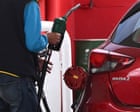
The morning ritual in a quiet suburb of Melbourne feels disconnected from the searing heat of a desert half a world away. Sarah flips the switch on the kettle. She checks the fuel light on her SUV. To her, these are binary choices of a Tuesday morning. But the click of that kettle and the rising cost of that fuel are tethered by invisible, high-tension wires to the drone of engines over the Middle East.
When the Albanese government speaks about a "long tail" of economic impact following the escalations in the Iran conflict, they aren't talking about abstract geometry. They are talking about Sarah’s grocery bill. They are talking about the shivering uncertainty of a winter where the heater feels like a luxury.
Geopolitics is often treated as a game of chess played by titans in suits. We watch the news and see the maps, the red lines, and the flashing sirens. But the real impact doesn't stay in the war room. It migrates. It travels across oceans, seeps into supply chains, and eventually settles into the small, stressful calculations families make at the supermarket checkout.
The Australian economy is a delicate instrument. Right now, that instrument is picking up the deep, low-frequency vibrations of a global shockwave.
The Ghost in the Machine
Consider the path of a single liter of petrol. Before it reaches the pump in Sydney, it is a passenger on a global journey dictated by the stability of the Straits of Hormuz. When tensions between Iran and Israel flare, the insurance premiums on tankers skyrocket. Shipping routes are diverted. The global supply of oil constricts like a tightening throat.
For the average Australian household, this isn't just a "market fluctuation." It’s a tax on existence.
Every item on a shelf in Australia got there on a truck. When the cost of diesel rises, the cost of a head of lettuce rises. The cost of a box of cereal rises. This is the "long tail" the Treasurer is warning us about. It is the lingering, persistent pressure that remains long after the missiles have stopped flying and the news cycle has moved on to something else.
The government is currently staring at a ledger that doesn't balance. On one side, they have the promise of a surplus—a badge of fiscal discipline. On the other, they have a population that is increasingly exhausted. The "relief" being discussed in the halls of Parliament House isn't about giving people a windfall. It’s about building a levee against a rising tide of global instability.
The Mathematics of Anxiety
Imagine a hypothetical small business owner named David. He runs a delivery service. A few cents’ increase at the pump doesn't just annoy him; it threatens the viability of his staff's wages. If he raises his prices, his customers—who are also feeling the pinch—might walk away. If he doesn't, he goes under.
This is where the macro meets the micro.
The Albanese government finds itself in a precarious position. If they inject too much cash into the economy to help people like David and Sarah, they risk feeding the fire of inflation. If they do nothing, the "long tail" of the conflict might whip around and knock the legs out from under the working class.
The proposed relief measures are being framed as targeted interventions. This isn't the broad-based "helicopter money" of the pandemic era. Instead, it’s a surgical attempt to lower the cost of living without overheating the engine. We are looking at potential energy rebates, changes to the way student debt is indexed, and perhaps further tweaks to the tax system.
It is a balancing act performed on a wire that is currently being shaken by external forces.
Why the Middle East Matters to the Murray-Darling
There is a common misconception that Australia, being an island nation with significant natural resources, is insulated from the chaos of the northern hemisphere. We like to think of ourselves as a lifeboat. The reality is that we are more like a raft tied to a cruise ship. When the ship hits an iceberg, the raft feels the jolt.
The conflict involving Iran is particularly potent because of its role in global energy markets and its proximity to the world’s most vital shipping lanes. Even if not a single drop of Iranian oil ever touches Australian soil, the global price is set by the collective fear of the market.
Fear is an expensive commodity.
When the government warns of a "long tail," they are acknowledging that inflation isn't a ghost that can be exorcised overnight. It is a stubborn guest. Even if the conflict reaches a stalemate tomorrow, the ripples will continue to wash up on our shores for months, if not years. The "tail" is the lag time between a global event and the local consequence.
The Human Cost of Strategic Patience
The rhetoric coming out of Canberra has shifted. There is a newfound gravity. The talk of "relief" is a quiet admission that the previous measures—the stage three tax cuts, the meager increases to rent assistance—might not be enough to counter the sheer force of global volatility.
We are living in an era where the "cost of living" has become a permanent headline. It’s a phrase that has been repeated so often it has almost lost its sting, until you see a pensioner putting back a carton of eggs because they’ve gone up another fifty cents.
That is the emotional core of this policy debate. It isn't about percentages on a Treasury spreadsheet. It’s about the dignity of being able to afford a life in a country that is supposedly "the lucky country."
The government is currently weighing up the political cost of a smaller surplus against the human cost of a squeezed middle class. It is a brutal trade-off. To save the surplus is to maintain the appearance of being a "good economic manager." To save the households is to actually be one.
The Invisible Stakes
What happens if the relief doesn't come? Or what if it’s too little, too late?
The stakes are higher than just the next election. When a population feels that their hard work is being evaporated by forces beyond their control—and that their government is powerless or unwilling to intervene—the social fabric begins to fray. Trust erodes. People stop looking toward the future and start obsessing over the next twenty-four hours.
The "long tail" is also a psychological one. It’s the lingering feeling that the floor could drop out at any moment. It’s the hesitation to start a family, to buy a home, or to switch careers.
Australia's economic resilience has always been its pride. We survived the Global Financial Crisis. We navigated the pandemic. But this current challenge is different. It is a slow, grinding pressure. It is the death by a thousand price hikes.
Beyond the Horizon
The Albanese government’s strategy seems to be one of "strategic empathy." They are signaling to the public that they see the struggle, that they understand the link between the drone strikes in Isfahan and the price of milk in Ipswich.
But empathy doesn't pay the bills.
As the budget approaches, the focus will be on the mechanics of this relief. Will it be a one-off payment? A permanent structural change? A temporary subsidy? Each choice carries a different weight and a different risk.
The reality is that as long as the world remains in a state of "polycrisis"—where war, climate change, and economic instability feed into one another—the Australian government will be playing a perpetual game of defense. They are trying to catch the falling glass before it hits the floor.
Sarah finishes her tea. She looks at the news on her phone, sees a headline about a missile battery, and then looks at her banking app. The two things are part of the same story. She might not understand the complexities of uranium enrichment or the intricacies of the Persian Gulf's naval corridors, but she understands that her world feels smaller and more expensive than it did a year ago.
The long tail is moving. It is silent, it is heavy, and it is currently sweeping through every lounge room in the country. The question isn't whether the government will act, but whether they can act fast enough to stop the tail from knocking over the very people they are trying to protect.
The light on the SUV flickers. Sarah sighs and drives to the station. She watches the numbers on the pump climb higher and faster than the fuel enters the tank. In the reflection of the glass, she sees the ghost of a conflict she will never visit, paying a price for a war she didn't start.