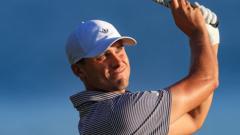
Ludvig Aberg doesn't play like a man who's supposed to be intimidated by the Island Green. While the established titans of the game spent their opening round at The Players Championship wrestling with their swings and the weight of expectation, the young Swede looked like he was out for a Sunday stroll. It's a striking shift in the golf hierarchy that's happening right before our eyes. TPC Sawgrass has a nasty habit of exposing even the slightest flaw in a player’s mental armor, yet Aberg seems to have skipped the learning curve entirely.
Most fans expected a shootout between Scottie Scheffler and Rory McIlroy. Instead, we got a clinic in composure from a guy who wasn't even a professional golfer two years ago.
The Aberg factor and why Sawgrass didn't bite back
Aberg’s round wasn't just about the score. It was the way he dismantled a course designed by Pete Dye to induce panic. He hit lines off the tee that most veterans avoid. He treated the par fives with a level of aggression that borders on arrogance, but he has the ball-striking to back it up. When you watch him, you notice the lack of tension. There’s no fidgeting. No three-minute discussions with his caddie about the wind. He picks a target and sends it.
Statistics from the opening round show Aberg gaining significant ground on the field in "Strokes Gained: Off the Tee." That's his bread and butter. At Sawgrass, if you can’t find the fairway, you're dead. The water hazards don't care about your world ranking. Aberg’s ability to compress the ball and control his flight meant he was playing a different game than the guys hacking out of the thick Bermuda rough.
He’s proving that the modern power game, when paired with a "goldfish" memory, is the ultimate weapon. He doesn't carry the scar tissue that many others do here. He hasn't rinsed a dozen balls on the 17th over the last decade. That ignorance is bliss, and right now, it’s worth a few shots a side.
Why Scottie Scheffler and Rory McIlroy struggled to find their rhythm
It’s rare to see Scheffler and McIlroy both look human on the same day. Usually, at least one of them is charging. Today, they both looked like they were fighting their own shadows.
For Scheffler, the issue wasn't the ball-striking—it’s never the ball-striking. The man hits the center of the face with boring consistency. The problem was the flat stick. He left at least three or four birdie putts short or on the edge. When you're the best player in the world, the expectation of perfection can become a burden. You could see the frustration building. His "misses" are better than most people's "greats," but at The Players, "good" isn't enough to keep pace with a leader who’s unconscious.
McIlroy’s day was a different story. It felt disjointed. He’d hit a towering drive that made the crowd gasp, then follow it up with a wedge shot that finished thirty feet from the hole. There’s a specific kind of pressure on Rory at Sawgrass. He’s won here before, but he’s also missed plenty of cuts. He’s trying to find that sweet spot between being the aggressive attacker he naturally is and the disciplined tactician the course demands. Today, he was caught in between.
The technical breakdown of the McIlroy miss
When Rory struggles, it’s usually a two-way miss. He’ll block one right, then over-compensate and pull the next one. On a course where the margins are razor-thin, that's a recipe for a 73. He spoke after the round about feeling "slightly off" with his alignment. In elite golf, a two-degree error at impact is the difference between a birdie look and a penalty drop.
The mid-tier surge and the names you shouldn't ignore
While the spotlight stays on the superstars, several grinders moved into the top ten. These are the guys who make a living on "tough" courses. They don't have Aberg's 330-yard carry, but they have the patience of a saint.
Keep an eye on the players who finished their rounds with high "Scrambling" percentages. Sawgrass rewards the ability to save par from the sand or the pine straw. If the wind picks up over the weekend, these are the players who will hang around while the "bomb and gouge" crowd starts to find the water.
The course is playing firm. The greens are getting faster with every hour of sunlight. That favor the grinders. If you aren't hitting 70% of your greens in regulation, you better have a world-class short game. Aberg has both right now, which is why the lead is his to lose.
How to watch the second round like an analyst
If you're watching the coverage tomorrow, stop looking at the leaderboard and start looking at the approach angles. TPC Sawgrass is a "positional" golf course. This means where you land your drive dictates whether you even have a chance to attack the pin.
Pay attention to the 16th hole. It’s a reachable par five, but the risk-reward is skewed. Players who try to hero-shot their way to an eagle often walk away with a six. Watch how Aberg plays it compared to the veterans. The young guns tend to go for the throat, while the older players often lay back to a comfortable wedge distance.
Also, keep a close eye on the body language of Scheffler. If he drains a twenty-footer in the first three holes, the rest of the field is in trouble. He’s the type of player who only needs one spark to ignite a 64.
Key metrics to track
- Driving Accuracy: Crucial for avoiding the "big number."
- Proximity to Hole from 125-150 yards: This is where the scoring happens at Sawgrass.
- Three-Putt Avoidance: The greens are undulating and treacherous.
The mental game of chasing a phenom
There’s a psychological element to having a young, fearless leader. For the veterans, it’s annoying. They’ve paid their dues, and here comes a kid who treats the most difficult course on the schedule like a pitch-and-putt. This can lead to "chasing." When players start trying to force birdies because they see a low number on the board, they make mistakes.
Aberg isn't just beating them with his clubs; he’s beating them with his vibe. He looks like he’s having fun. In a sport that often looks like a grueling day at the office, that joy is a massive competitive advantage.
Expect the pin positions to get much tougher for the second round. The tournament organizers don't like it when the field tears up their crown jewel. They’ll tuck those pins near the water and the slopes. We’ll see if Aberg can maintain his aggressive lines when the penalty for failure increases.
To get the most out of following the tournament, track the "Strokes Gained" data in real-time on the PGA Tour app. It tells a much deeper story than the raw score. Look for players who are hitting it great but putting poorly; they’re the ones most likely to "pop" for a low round tomorrow once the putts start falling. Focus on the guys moving up the leaderboard quietly—they’re usually the ones who will be there on Sunday afternoon when the pressure reaches its peak.