Luiz Inácio Lula da Silva's narrow defeat of Jair Bolsonaro in Brazil's 2022 presidential runoff does far more than strip Donald Trump of his closest ideological ally in the Western Hemisphere. It provides a real-time stress test of the populist election-denial playbook, proving that an entrenched incumbent can deploy state machinery, question voting systems for years, and mobilize millions of fervent supporters—and still lose when institutional guardrails hold and a fractured opposition unites around a singular democratic threat. For Trump, watching from Mar-a-Lago as he prepares his own return to the ballot, the results from Brasília are an unmistakable warning about the limits of grievance politics.
The numbers tell a stark story. Lula captured 50.9 percent of the vote to Bolsonaro's 49.1 percent, a margin of roughly 2.1 million ballots out of more than 124 million cast. It was the tightest presidential race in Brazil's modern democratic history, and the first time an incumbent president failed to win a second term since the country returned to civilian rule in 1985.
Washington insiders immediately framed the outcome around foreign policy—specifically, how a Lula presidency would chill bilateral relations with a future Trump administration, stall conservative alliances across Latin America, and shift global climate diplomacy back toward protecting the Amazon. That analysis misses the forest for the trees. The real story is structural. Brazil just ran a full-scale simulation of a second Trump campaign, and the flaws in the model were laid bare for every political strategist in America to see.
The Architecture of the Parallel Playbook
To understand why Bolsonaro's defeat reverberates so loudly in Palm Beach, you have to look at how deliberately the former Brazilian army captain mirrored Trump's political rise. When Bolsonaro won the presidency in 2018, Trump's inner circle quickly recognized a kindred spirit. Steve Bannon formally advised Bolsonaro's son, Eduardo, integrating the Brazilian movement into a broader international network of nationalist populism.
Bolsonaro adopted the aesthetic and tactical core of the MAGA movement almost wholesale. He bypassed traditional media to govern via raucous Facebook Live broadcasts. He framed political opponents not merely as wrong, but as existential enemies of God, family, and nation. He positioned himself as a rugged outsider battling a corrupt establishment, even after spending nearly three decades as a backbench congressman in Rio de Janeiro.
Most critically, Bolsonaro imported the pre-emptive delegitimization of the electoral process. Long before a single ballot was cast in 2022, he waged an unrelenting campaign against Brazil's electronic voting machines—a system used without a single proven instance of fraud since 1996. Like Trump's months-long assault on mail-in voting prior to November 2020, Bolsonaro's objective was clear. He was building an off-ramp from defeat, conditioning his base to view any outcome other than his own victory as evidence of a rigged system.
It worked on his base. It failed on the electorate at large.
Why Institutional Guardrails Held in Brasília
The defining difference between the American experience in 2020 and the Brazilian runoff in 2022 lies in how aggressively state institutions responded to the threat of subversion. In the United States, decentralized election administration meant that challenges to the vote played out across dozens of state courts, local canvassing boards, and secretaries of state, creating weeks of dangerous ambiguity.
Brazil operates under a centralized, federalized electoral judiciary—the Superior Electoral Court (TSE). Headed by Supreme Federal Court Justice Alexandre de Moraes, the TSE did not wait passively for post-election chaos to unfold. Throughout the campaign, Moraes wielded sweeping constitutional powers to fine Bolsonaro's coalition for spreading disinformation, order the removal of false social media posts within hours, and launch investigations into business leaders who privately discussed backing a coup if Lula won.
Critics, including many moderate legal scholars in Brazil, warned that Moraes's unilateral actions bordered on judicial overreach and risked turning Bolsonaro into a free-speech martyr. Yet when the polls closed on Sunday evening, the centralized nature of the TSE proved decisive. Because Brazil's voting machines transmit encrypted results directly to a central server, 99 percent of the vote was tallied within three hours.
There was no "red mirage" followed by days of mail-in ballot counting to fuel conspiracy theories. By the time Bolsonaro's allies could organize a coherent narrative of fraud, the mathematical reality of Lula's victory was already locked in. Within an hour of the TSE calling the race, President Joe Biden issued a statement congratulating Lula on "free, fair, and credible elections." Major European leaders followed immediately. Even Bolsonaro's closest domestic allies, including Lower House Speaker Arthur Lira, swiftly recognized the result.
Bolsonaro retreated into silence for nearly 48 hours, emerging only to deliver a terse, two-minute statement that stopped short of an explicit concession while authorizing the transition of power. The attempted strongman routine simply ran out of oxygen.
The Illusion of the Culture War Ceiling
For Trump's political operation, the substantive policy and demographic breakdown of Brazil's vote carries an even sharper lesson than the institutional mechanics. Bolsonaro ran an aggressive, late-stage campaign engineered to exploit cultural anxieties—precisely the strategy favored by modern conservative operatives in the United States.
Facing a double-digit polling deficit in the spring of 2022, Bolsonaro flooded the zone with social wedge issues. His surrogates accused Lula of planning to close evangelical churches, legalize abortion, and introduce gender ideology into public schools. At the same time, Bolsonaro bypassed Brazil's constitutional spending cap to pour billions of reais into Auxílio Brasil, a massive cash-transfer welfare program aimed at low-income voters, while slashing fuel taxes to artificially depress gas prices ahead of election day.
The combination narrowed the race dramatically, pulling Bolsonaro from a projected landslide defeat to within two percentage points of victory. Evangelicals broke heavily for the incumbent, giving him roughly two-thirds of their vote. Agribusiness regions in the center-west and south delivered massive margins.
Yet the strategy hit an immovable ceiling. Bolsonaro's relentless focus on culture-war grievances alienated moderate, middle-class voters in the populous southeast—particularly in the state of São Paulo, where his margin of victory collapsed compared to 2018. In the impoverished northeast, Lula's traditional stronghold, voters pocketed Bolsonaro's emergency welfare checks and voted for Lula anyway, remembering the sustained economic expansion and poverty reduction of his first two terms from 2003 to 2010.
The takeaway for American politics is blunt. Culture-war mobilization maximizes turnout among the committed base, but it cannot overcome the drag of chaotic governance and economic anxiety among swing voters. Bolsonaro's catastrophic handling of the COVID-19 pandemic—where he mocked vaccines, promoted unproven remedies, and presided over nearly 700,000 deaths—created an insurmountable trust deficit with a decisive sliver of the electorate. For Trump, whose own pandemic record and turbulent exit from office remain central liabilities with suburban independents, Brazil demonstrates that base enthusiasm alone is a losing math equation in a polarized two-way race.
The Power of the Broad Anti-Populist Coalition
Lula did not win because Brazil suddenly swung hard to the left. In fact, Bolsonaro's Liberal Party actually gained seats in Congress, securing the largest bloc in both the Chamber of Deputies and the Senate, while his allies won governorships in key states like São Paulo and Rio de Janeiro. Voters delivered a split verdict—embracing conservative legislators while rejecting the populist executive.
Lula won because he systematically dismantled the ideological purity tests that typically doom left-of-center candidates. Recognizing that he could not defeat Bolsonaro with the Workers' Party (PT) base alone, Lula built a sweeping, ideologically incoherent broad front dedicated to a single premise: preserving Brazil's 1988 democratic constitution.
He tapped Geraldo Alckmin—a center-right former governor of São Paulo and Lula's bitter rival in the 2006 presidential election—as his running mate. He secured endorsements from Simone Tebet, the centrist third-place finisher in the first round, and Marina Silva, a prominent environmentalist who had previously broken with the PT over corruption scandals. He courted former central bank presidents, prominent economists who had designed market-friendly reforms, and establishment figures who despised Lula's economic philosophy but feared Bolsonaro's authoritarian impulses even more.
This mirrors the exact coalition that carried Joe Biden to the White House in 2020, when progressive activists, moderate suburbanites, and Never-Trump Republicans temporarily set aside policy disputes to oust an incumbent they viewed as a systemic threat. Brazil proves that this anti-populist coalition model is durable and repeatable, provided the opposition candidate is disciplined enough to keep the focus squarely on the incumbent's fitness for office.
Geopolitical Fallout and the Isolation of MAGA
Beyond the electoral lessons, Lula's return fundamentally alters the geopolitical terrain Trump would inherit if he reclaims the presidency. During his time in office, Trump viewed Bolsonaro as an indispensable partner in reshaping hemispheric dynamics—a leader willing to echo Washington's hardline stance on Venezuela, push back against Chinese infrastructure investments in South America, and dismantle multilateral climate agreements.
A Lula-led Brazil flips every one of those alignments on its head.
The Return of South American Multipolarity
Lula's foreign policy doctrine is rooted in active non-alignment—the belief that Brazil should maximize its leverage by maintaining simultaneous, pragmatic ties with Washington, Beijing, Brussels, and Moscow. Under Bolsonaro, Brazil's relationship with China, its largest trading partner, was repeatedly strained by ideological attacks from the president's inner circle. Lula will immediately restore warmth to the BRICS bloc (Brazil, Russia, India, China, and South Africa), amplifying calls for trade conducted in local currencies rather than the U.S. dollar. Should Trump return to office promising renewed tariffs and an aggressive decoupling from Beijing, he will find Latin America's largest economy actively working against American economic containment strategies.
Climate Diplomacy as Economic Leverage
The Amazon rainforest is no longer just an environmental issue; it is a central pillar of global trade architecture. Under Bolsonaro, deforestation surged to a 15-year high, stalling the landmark European Union–Mercosur trade deal and isolating Brazil diplomatically. Lula has pledged to achieve zero net deforestation by 2030, a commitment that immediately unlocked hundreds of millions of dollars in frozen conservation funds from Norway and Germany within days of his victory. A future Trump administration looking to roll back green energy subsidies and withdraw once again from the Paris Agreement will face a unified front between Brussels and Brasília, where environmental compliance is increasingly tied to market access.
The Collapse of the Hemispheric Right
For years, Trump's movement drew energy from the narrative that nationalist populism was an unstoppable global wave—from Brexit in the UK to Viktor Orbán in Hungary and Bolsonaro in Brazil. The fall of Bolsonaro removes the crown jewel of that narrative in the Americas. Left-wing or center-left governments now hold power in the six largest economies of Latin America: Brazil, Mexico, Argentina, Colombia, Chile, and Peru. While these leaders vary wildly in competence and ideology—ranging from pragmatic reformers to erratic populists—none of them share Trump's worldview. If Trump returns to the White House, he will be operating in a hemisphere devoid of major ideological allies.
The Vulnerability Trump Cannot Ignore
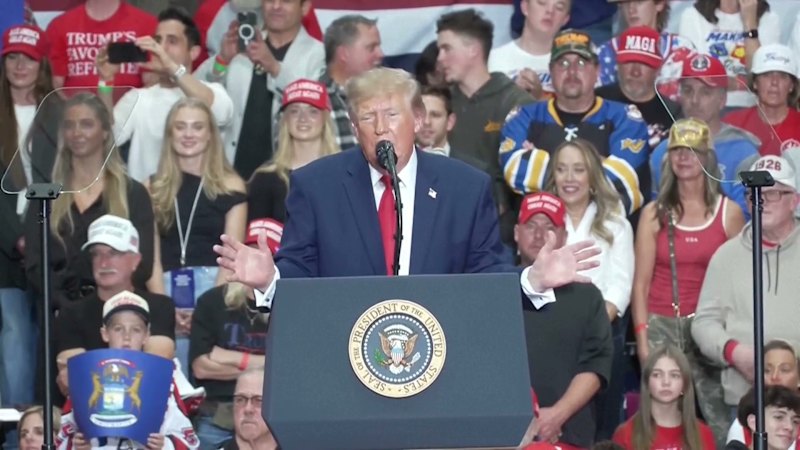
The most dangerous trap for any political movement is mistaking noise for strength. Bolsonaro's rallies were massive, sea-of-yellow spectacles that dwarfed Lula's campaign events in sheer visual intensity. His supporters dominated WhatsApp groups, Telegram channels, and TikTok feeds. To anyone judging the race by crowd sizes and online engagement, Bolsonaro looked invincible.
He lost anyway.
Trump operates inside an identical echo chamber, where rally attendance, social media metrics, and unwavering loyalty from party officials create the illusion of an electoral majority that does not exist in general election math. Brazil's runoff stripped away that illusion in dramatic fashion. It proved that an electorate will tolerate a great deal of economic friction and ideological disagreement from an opposition challenger if the alternative is four more years of institutional chaos, relentless polarization, and governance by grievance.
The voters who tipped the balance in São Paulo and Minas Gerais did not fall in love with Lula's past; they simply decided they were exhausted by Bolsonaro's present. Exhaustion is a quiet, invisible force in polling data until the exact moment ballots are counted, and no amount of questioning the machines can make it disappear.