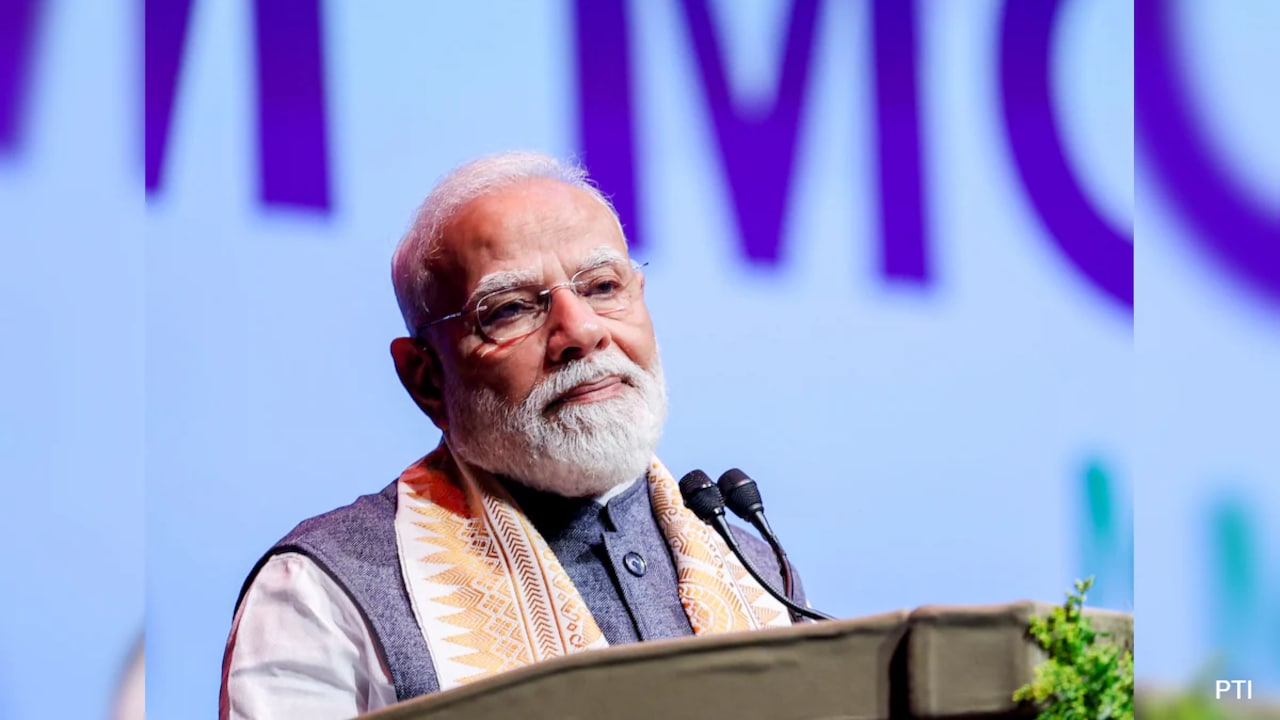
The marginal propensity to consume among smallholder farmers determines the velocity of capital injected via social safety nets. When the state executes a synchronized transfer of INR 18,880 crore to 9.44 crore agricultural landholders under the 23rd installment of the Pradhan Mantri Kisan Samman Nidhi (PM-KISAN), it is not merely deploying welfare; it is executing a systemic liquidity optimization. By timing this capital infusion precisely with regional sowing cycles, the program alters the credit-seeking behavior of agrarian households, shifting them away from high-interest informal lenders and stabilizing input procurement.
Understanding the true operational yield of this fiscal mechanism requires moving past basic disbursement metrics. Evaluating the underlying digital infrastructure, the real-world friction of identity verification, and the structural limits of landholder-targeted cash transfers reveals the exact economic mechanics at play.
The Three Pillars of Targeted Direct Benefit Capital Injections
The operational efficiency of a country-wide cash transfer depends on three integrated structural components. If any single pillar experiences friction, the velocity of capital drops, leading to localized liquidity bottlenecks.
       [ National Land Records Database ]
                       │
                       ▼
       [ Aadhaar / NPCI Central Engine ]
                       │
                       ▼
     [ Direct Benefit Transfer (DBT) Gate ]
                       │
                 ──────┴──────
                ▼             ▼
       [ Commercial Banks ] [ Rural Cooperatives ]
1. The Verified Landholder Register
Because the program strictly restricts benefits to cultivation landowners, the state land revenue records form the foundational layer of the targeting mechanism. Joint landholdings are treated as a single economic unit, meaning a single family cannot split titles to duplicate payouts. The exclusion criteria are systematic rather than discretionary: regular income taxpayers, institutional landholders, and retired government personnel receiving pensions above INR 10,000 are programmatically removed from the ledger.
2. The Decentralized Identity Verification Layer
To prevent leakage and ghost accounts, the system runs on a mandatory multi-factor validation protocol consisting of:
- eKYC completion: Biometric or face-authentication verification via official government portals.
- Aadhaar-NPCI Seeding: The individual bank account must be directly linked and mapped to the National Payments Corporation of India (NPCI) gateway.
- State-Level Land Auditing: Continual cross-referencing against updated localized revenue registries to identify unauthorized land transfers.
3. The Direct Benefit Transfer Gateway
By utilizing digital public infrastructure (DPI), the central government bypasses state-level intermediaries entirely. The capital travels directly from the central treasury to commercial banks and rural cooperative accounts via automated clearing houses. This structural path reduces administrative leakage to near zero, addressing a classic failure point of traditional commodity-subsidized welfare.
Technical Friction Points in Digital Public Infrastructure
While direct transfers are highly efficient at scale, the digital architecture introduces specific technical bottlenecks. Discrepancies within database linkages cause significant exclusion errors, where eligible smallholders are locked out due to data mismatches.
The primary failure point occurs during the synchronization of autonomous data silos. When a farmer's name varies between the state land registry, the Aadhaar identity database, and the commercial bank ledger, the NPCI gateway triggers an automated transaction rejection. Resolving these errors requires manual updates across multiple administrative offices, directly reducing the predictability of the income support during critical agricultural windows.
Furthermore, relying heavily on land titles excludes tenant farmers and sharecroppers entirely. Because these individuals do not hold formal titles, they absorb all the production risks and input cost inflation without benefiting from the direct liquidity injections. This reality distorts local labor markets and increases the credit dependence of landless agricultural workers on the informal financial sector.
Macro Effects on Input Costs and Credit Reliance
The injection of INR 2,000 per household every four months serves as a predictable working capital buffer. While the absolute value seems modest, its value matches the timing of essential input purchases, such as high-yield seeds, fertilizers, and diesel fuel for irrigation machinery.
[ Timely Cash Transfer ] ──► [ Cash Purchase of Inputs ] ──► [ Lower Cost of Production ]
         │
         └──► [ Avoidance of Informal Loans ] ──► [ Break Debt Accumulation Cycle ]
When farmers lack upfront liquidity at the start of a planting season, they usually turn to local agricultural traders or informal moneylenders. These lenders charge high interest rates, often tying the credit to an agreement to sell the harvest below market value.
By injecting cash right as input procurement begins, the direct benefit transfer breaks this dependency. The cash allows smallholders to make upfront purchases, negotiate better input prices, and preserve their freedom to sell crops at the best available market rates.
Evaluating the AgriStack Integration Model
To build on the direct cash transfer model, the state is introducing the Digital Agriculture Mission, backed by an allocation of INR 2,817 crore. The core of this modernization effort is AgriStack, a unified digital platform designed to connect separate agricultural services into one interface.
                    ┌─── Fertiliser Distribution
                    ├─── Kisan Credit Cards
[ AgriStack Core ] ─┼─── Direct Benefit Transfers
                    ├─── Crop Insurance (PMFBY)
                    └─── MSP-Based Procurement
Integrating cash transfers with AgriStack addresses a major structural weakness: the lack of data visibility between cash assistance, risk management, and market access. By linking a farmer’s ID with verified land details, the platform tracks fertilizer sales to prevent sub-optimal nutrient application and curb the black-market diversion of subsidized inputs.
In West Bengal, this system rollout coincides with extending the Pradhan Mantri Fasal Bima Yojana (PMFBY), targeting insurance coverage for nearly 1.10 crore farmers across 30 lakh hectares of agricultural land. Linking direct financial aid, digital identities, and subsidized crop insurance creates a comprehensive data feedback loop, allowing the state to evaluate real-time climate risks alongside household financial resilience.
Strategic Forecast: The Shift to Input-Linked Transfers
The current direct benefit framework is moving from simple income support toward data-linked input optimization. Relying entirely on unconditioned cash transfers leaves the state vulnerable to inflationary shocks within regional input markets, as cash injections can drive up local input prices if supplies are constrained.
As AgriStack rolls out nationally, the system will likely transition from untied cash transfers to smart, programmable digital vouchers. Future allocations will likely be tied to specific verified actions, such as buying balanced nutrient mixes, investing in micro-irrigation systems, or transitioning clusters to natural farming techniques. This shift will transform the program from a basic consumption-smoothing fund into a highly targeted tool for boosting agricultural productivity.
Review the agricultural ministry's implementation strategy to better understand how the eKYC authentication framework and Aadhaar seeding are being deployed across rural banking networks to secure digital infrastructure and minimize transaction failures.