You can paint a landmark whatever color you want, but you cannot outsmart basic biology or engineering.
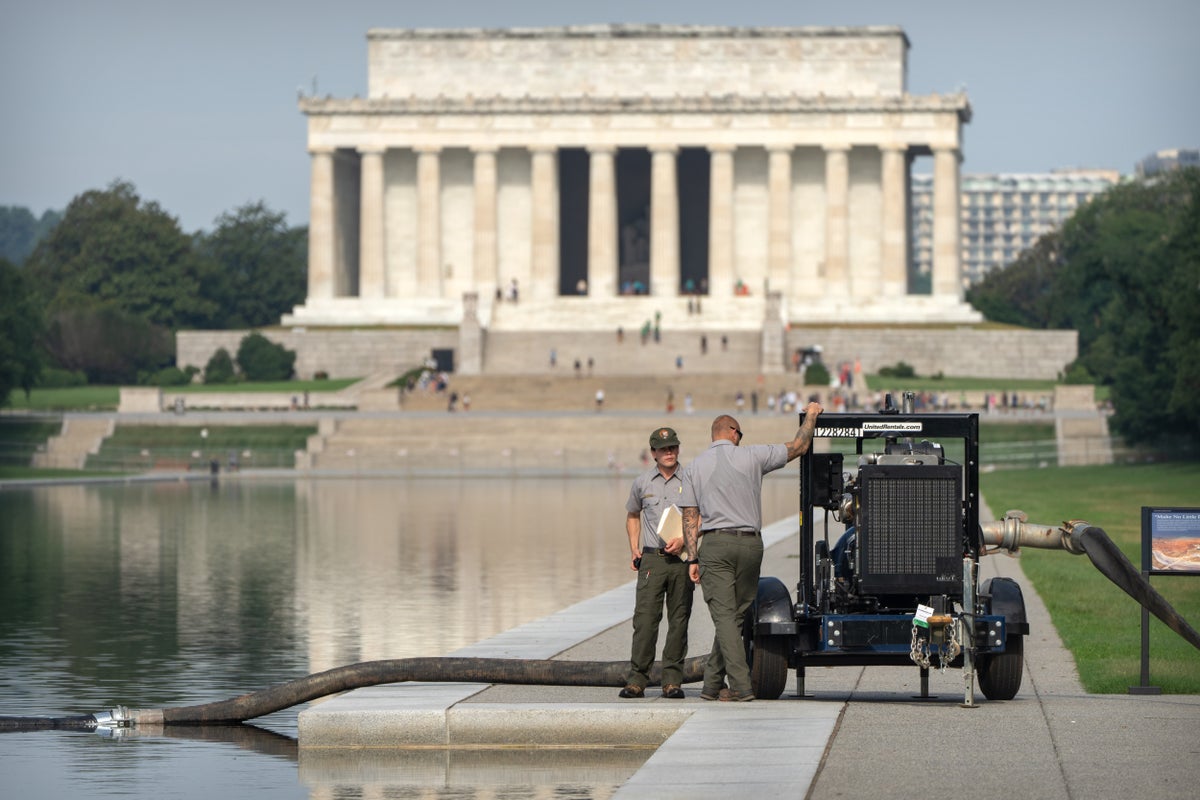
Crews are once again draining the Lincoln Memorial Reflecting Pool. Water pumps are buzzing, the National Park Service is standing around watching the levels drop, and a massive multimillion-dollar revamp is officially stalled. What was supposed to be a shining monument ready for America's 250th birthday has transformed into a murky saga of peeling lining, finger-pointing, and federal criminal charges.
This project was fast-tracked this spring when the Trump administration decided the historic pool needed a makeover. The idea was simple. Drain the water, install a brand-new water purification system, and coat the concrete floor in a vibrant hue dubbed "American flag blue." The initial timeline thrown around was just two weeks at a cost of roughly $2 million.
The reality hit hard. The contract numbers jumped to over $16 million. Virginia-based Atlantic Industrial Coatings secured a $14.7 million contract to repaint and waterproof the floor, while Ohio-based Green Water Solutions scored $1.7 million for a specialized ozone nanobubbler purification system.
By May, the administration was bragging about being ahead of schedule. The President even took his armored motorcade for a highly publicized drive right through the center of the dry, freshly sealed pool. But the celebration didn't last. Almost immediately after the water returned, things fell apart.
The Algae and the Peeling Liner
Bodies of water that are large, flat, and wide open to the summer sun are basically breeding grounds for microscopic organisms. Within days of the pool being refilled in June, a massive algae bloom turned the new blue water into a thick green soup. Workers rushed to the scene, dumping massive plastic jugs of hydrogen peroxide straight into the pool to oxidize and kill off the cyanobacteria.
While the chemical treatment temporarily knocked out the green hue, a bigger problem emerged. The bottom of the pool started lifting. Giant sheets of the newly applied industrial rubber liner began delaminating and peeling away from the concrete bed, floating to the surface in ragged chunks.
The political explanation came fast. The administration blamed the peeling on deliberate, criminal vandalism. The official claim alleged that bad actors had snuck onto the National Mall with razor blades and box cutters to intentionally slice a 300-foot gash into the pool's bottom, even going so far as to claim that saboteurs dumped commercial fertilizer into the water to artificially spark the algae bloom.
Water and environmental science experts immediately questioned that narrative. Scientists pointed out that introducing fertilizer wouldn't trigger a massive, visible bloom in a matter of hours. The nutrients already present in the municipal water supply, combined with intense summer sunlight and heat, are more than enough to spark a natural bloom. Furthermore, structural engineers noted that when a thick industrial coating fails to adhere properly to old, damp concrete, it bubbles and tears. Those jagged structural tears can easily look like slices to the untrained eye.
The Olympian in Court
The legal fallout has escalated rapidly. Law enforcement took the vandalism angle seriously, leading to misdemeanor charges against multiple individuals for allegedly removing pieces of the peeling lining.
The most high-profile target is David Hearn, a former Olympic canoe racer. Hearn was hauled into D.C. Superior Court, where he pleaded not guilty to intentionally damaging federal property. His defense team says the entire case is a blatant abuse of prosecutorial power designed to find a scapegoat for shoddy construction work. According to Hearn, he was simply standing by the pool, noticed the material peeling off, and reached into the water to inspect the loose sealant. When a park worker told him to drop it, he let go of the fragment.
Despite the arrests and the public trial, the administration hasn't adjusted its stance. Interior Secretary Doug Burgum has continually defended the quality of the workmanship, insisting the underlying labor was stellar and that the damage traces back to bad actors.
The Logistics of the Second Drain
The timing of this second shutdown was deliberate. The pool remained filled, albeit restricted and messy, through the Independence Day holiday so it could sit beneath a massive fireworks display on the National Mall.
Now, the water is being cleared out again. According to administration officials, this round of draining has a few distinct goals:
- Clear out the heavy ash, char, and chemical debris dropped into the water by the July 4 fireworks.
- Patch and reseal the sections where the industrial liner detached from the concrete floor.
- Clean out the plumbing infrastructure.
Interestingly, the Interior Department has confirmed they won't seek new competitive bids to fix the peeling floor. They are sticking with Atlantic Industrial Coatings to handle the repairs. The administration claims the fix won't cost taxpayers a fortune because the core raw materials are already paid for, meaning this round is mostly about targeted labor.
Meanwhile, Capitol Hill is stepping in. Democratic lawmakers in both the House and Senate have launched official inquiries into the project. They want a clear, itemized look at the contract awards, the actual total of taxpayer dollars spent, and why a routine historical renovation turned into a legal and logistical circus.
If you're planning a trip to the National Mall anytime soon to catch that perfect, glassy reflection of the Lincoln Memorial, you'll need to alter your expectations. The site is actively operating as a construction zone. The water is disappearing, the pumps are running, and the grand timeline for a century-long cosmetic fix has officially been reset. Keep your distance from the perimeter fencing, bypass the dry concrete basin, and look for updates from the National Park Service on when the plumbing is cleared and the gates finally reopen.
Lincoln Memorial Reflecting Pool repairs This short field report highlights the visual state of the peeling paint and algae growth at the landmark during the initial project breakdown.