The ledger looked like any other ledger. It had columns for dates, descriptions of imported goods, and neatly inked numbers detailing costs in Rwandan francs. To a casual customs inspector in Mombasa or a bank teller in Brussels, it was just the paperwork of a highly successful African conglomerate. But if you looked closer at the entries from late 1993 and early 1994, the reality was entirely different.
Fifty thousand machetes. Then another hundred thousand. Then hundreds of thousands more.
They were cheap, mass-produced tools imported from China, ostensibly meant for clearing brush and harvesting coffee. But the man who signed the checks didn’t own enough farmland to require half a million blades. His name was Félicien Kabuga. For decades, he was one of the wealthiest men in Rwanda, a tycoon who built an empire on tea, real estate, and political connections.
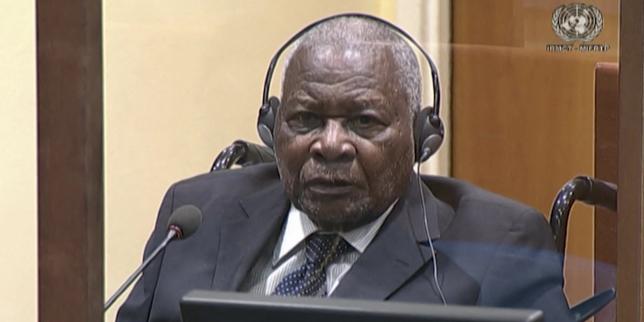
In May 2026, news filters out that Kabuga has died. He was 91 years old. He did not die in a concrete prison cell, nor did he hear a judge read out a final verdict on his life. He died in a hospital bed in France, a free man in the eyes of the law, because his mind had withered away before the courts could finish processing his crimes.
For the survivors of the 1994 genocide against the Tutsi, this is not just a standard bureaucratic update. It is a profound, sickening biological betrayal. The clock simply ran out.
The Sound of a Radio Station
To understand how a businessman becomes an architect of mass slaughter, you have to understand the power of sound.
Imagine sitting in a small brick home in Kigali in the spring of 1994. The air is warm, smelling of rain and eucalyptus. But the air is also filled with a crackling, hypnotic voice coming from a small plastic radio on the table. The station is RTLM—Radio Télévision Libre des Mille Collines. It plays the best Congolese soukous music. The DJs are young, charismatic, and funny. They banter, they laugh, and then, with casual familiarity, they call human beings "cockroaches." They read out names. They read out license plate numbers. They tell listeners exactly where those people are hiding.
That radio station did not appear out of thin air. It required transmitters, generators, studios, and salaries. Kabuga was its main financial backer and the president of its board of directors.
He understood something terrifyingly modern about human psychology: you don't need to hand every person a weapon if you can first convince them that their neighbors are planning to kill them. Fear is the ultimate force multiplier. Through RTLM, Kabuga’s money purchased the psychological infrastructure of the genocide. He turned a modern media apparatus into a tracking system for murder.
When the killing began in April 1994, the ledger entries materialized in the streets. The imported machetes were distributed to militias known as the Interahamwe, an organization Kabuga also helped fund and logistically support. For one hundred days, the country tasted iron and blood. More than 800,000 people were slaughtered with horrifying, intimate proximity.
Then, the regime collapsed, and the billionaire vanished.
The Illusion of the Grid
For twenty-six years, Félicien Kabuga was a ghost.
We often like to believe that the international community is an all-seeing, all-powerful entity. We watch movies where satellites track targets to the square inch, where intelligence agencies can find anyone, anywhere, if they just look hard enough. It is a comforting myth. It makes us feel safe.
The reality is far more fragile, porous, and easily bought.
Kabuga didn't hide in a remote cave or a deep jungle bunker. He hid in plain sight, moving through the leafy, affluent suburbs of European and African capitals. He used fake passports, shifting identities, and a vast web of family connections to evade a multi-million-dollar bounty placed on his head by the United States government. He lived in Nairobi. He spent time in Switzerland. He eventually settled in Asnières-sur-Seine, a quiet, unremarkable suburb just outside Paris.
Think about the sheer audacity of that existence. While survivors in Rwanda walked past mass graves every day, the man accused of funding those graves was buying fresh baguettes from a French bakery, breathing the cool evening air, and watching the sunset over the Seine.
The system didn't fail to find him because he was a master of survivalist tactics. It failed because money buys silence. It buys clean apartments in countries with strict privacy laws. It buys children who grow up to be professionals capable of managing their father’s hidden assets. The international grid is only as effective as the political will behind it, and for a long time, the world simply looked away.
The Slow Machinery of International Justice
When French anti-terrorist police finally broke down the door of his apartment in May 2020, Kabuga was an old man of 85, frail and stooped. The arrest was hailed as a triumph for global justice. The message was clear: no matter how long it takes, the world will catch you.
But catching a suspect is not the same as holding them accountable.
The trial began in The Hague under the International Residual Mechanism for Criminal Tribunals. The prosecutors brought forward thousands of pages of documents, shipping manifests, bank transfers, and eyewitness testimonies. They were prepared to lay out the anatomy of a genocide, dollar by dollar, radio broadcast by radio broadcast.
Then, the legal machinery ground to a halt against the reality of human biology.
Kabuga’s defense attorneys argued that their client was suffering from severe dementia. He couldn't remember the events. He couldn't assist his legal team. He was, quite literally, losing his mind.
Medical experts were called. Brain scans were analyzed. The court found itself in an excruciating philosophical and legal dilemma. Can you try a man who no longer possesses the cognitive capacity to understand the charges against him? Is it justice to sentence an empty shell?
In September 2023, the judges made a painful decision. They paused the trial indefinitely. They ruled that Kabuga was unfit to stand trial. There would be no verdict. No official declaration of guilt or innocence. He was moved to a hospital, under judicial supervision, where he remained until his breathing stopped for the final time.
The Empty Space Where a Verdict Should Be
This is where the narrative of international law breaks down, leaving us with a profound sense of emptiness.
We are hardwired to demand endings. We want the villain to face the jury, to look into the eyes of the people he harmed, and to hear the slam of the cell door. We want the catharsis of a period at the end of a horrific sentence.
Instead, Kabuga’s death leaves only an ellipsis.
Consider what this means for someone like Dafroza Gauthier, a survivor who has spent decades hunting down perpetrators of the Rwandan genocide living in France. For activists and survivors, a trial is not just about punishment. It is about documentation. It is about forcing the truth into a permanent, undeniable public record so that future generations cannot claim it was all an exaggeration or a lie.
When a high-profile suspect dies without a conviction, it creates a void that deniers eagerly fill. Without a final judicial stamp, the facts are left vulnerable to revisionism. The defense can always claim that their client would have been acquitted, that the evidence was flawed, that the system was rigged.
The ultimate tragedy of Félicien Kabuga's death is not that he escaped physical prison, but that he escaped the historical finality of a courtroom judgment. He used his wealth to buy the weapons, used his wealth to flee the consequences, and then used his aging body as the ultimate shield against accountability.
The ledger remains open, the numbers are still clear, but the signature at the bottom has faded into the quiet, unbothered silence of a cemetery plot. All that remains is the memory of the radio broadcasts, the scars on the bodies of the living, and the heavy realization that sometimes, the clock runs out before justice can even lace up its shoes.