The coffee in the glass cup has gone completely cold. Across the narrow mahogany table, a senior trade analyst in Beijing taps a silver pen against a printed sheet of crude oil imports, his face illuminated only by the pale blue glare of a Bloomberg terminal. Outside, the night air of the capital smells of wet coal and damp pavement. A million bicycles hum past in the dark, moving toward tomorrow with the relentless, metronomic discipline of a machine designed never to stop.
Right now, that machine is listening.
Thousands of miles away, the air over the Middle East shimmers with heat and interceptor smoke. A tanker sits idle in the Persian Gulf, its crew staring at the horizon through salt-crusted binoculars, waiting for a clearance that may never come. We talk about geopolitics as if it were a game of chess played by ghosts in sterile rooms. We draw neat little arrows on maps. We use words like "calculus" and "policy" to smooth over the jagged edges of human terror.
But behind every economic forecast sits a person holding their breath.
Consider what happens when a single missile arcs across a desert sky. To a quantitative economist in Shanghai, it is a supply shock. It is a quarterly adjustment in gross domestic product projections. It is a flickering number on a glowing screen that suggests energy costs might spike by four percent before the winter thaw. But down on the docks of Qingdao, it is something entirely different. It is the sudden, terrifying realization that the fuel required to power the cranes, the trucks, and the cargo ships carrying finished electronics to the ports of Rotterdam and Los Angeles has just become a hostage to fortune.
For years, the planners in Beijing have built their entire economic miracle on a singular, comforting assumption. They assumed the world would stay open. They assumed that the chaotic, violent energy markets of the Middle East could be managed through quiet diplomacy, steady trade, and an unspoken agreement that commerce always wins in the end. Energy flows south; cheap manufactured goods flow north. A clean, circular equation.
Then the horizon catches fire.
When an Iran war moves from the dark realm of military contingency planning into the violent glare of reality, the comfort of that assumption shatters like cheap glass. It is not just about oil barrels or shipping lanes. It is about the fundamental vulnerability of an empire that imports more than half of the petroleum it consumes to keep its lights burning and its factories humming.
Imagine standing on the floor of a manufacturing plant in Shenzhen. The rhythmic thud of automated assembly arms fills the cavernous room. Millions of microchips slide down chutes, destined for smartphones, electric vehicles, and medical devices that will be shipped to every corner of the planet. Now, turn off the power. Or double the cost of the electricity fueling those generators. The assembly lines stutter. The workers look up from their stations. The delicate, hyper-optimized supply chains that span from the deserts of the Middle East to the tech hubs of southern China begin to fray at the seams.
This is the hidden cost of conflict. It does not announce itself with sirens in the capital. It creeps in through the quiet recalculations of risk managers who suddenly realize their safety margins have evaporated overnight.
Economists love models because models are clean. They do not sweat. They do not panic. They do not remember the smell of burning oil or the sight of empty grocery shelves. But the people who run the government in Beijing do not have the luxury of living inside a mathematical model. They must look at the map and see the chokepoints. They must look at the Strait of Hormuz, that narrow vein of water through which a massive share of China's economic lifeblood passes every single day, and wonder what happens if someone pinches it shut.
They know the history. They know that empires rise and fall not always because of their own mistakes, but because they trusted the stability of a world that was always built on shifting sand.
So what does the leadership do when the calculus changes?
First, they look inward. They accelerate the pivot toward domestic renewables with a desperate, singular focus. Solar panels roll off production lines in numbers that defy comprehension. Electric vehicle fleets expand not just as a green initiative, but as an urgent matter of national survival. Every kilowatt generated by a wind turbine in Inner Mongolia is one less barrel of crude oil that needs to pass through dangerous waters thousands of miles away. This is not environmentalism born of altruism; it is the cold, hard logic of self-preservation.
Yet, transformation takes time. You cannot simply flip a switch and replace an oil-dependent industrial giant with wind and sun overnight. The transition is messy, expensive, and fraught with friction. Between the world as it is and the world as Beijing wants it to be lies a treacherous valley of vulnerability.
During this transition, every flicker of violence in the Persian Gulf sends a shockwave through the halls of power in China. It forces policymakers to weigh competing priorities. Do they throw their full diplomatic weight behind efforts to de-escalate the crisis, risking entanglement in a diplomatic quagmire they have traditionally avoided? Or do they step back, hoard their resources, and brace for the inevitable economic tremors that will ripple through their domestic markets?
There are no easy answers. There is only the relentless pressure of reality pushing against grand ambitions.
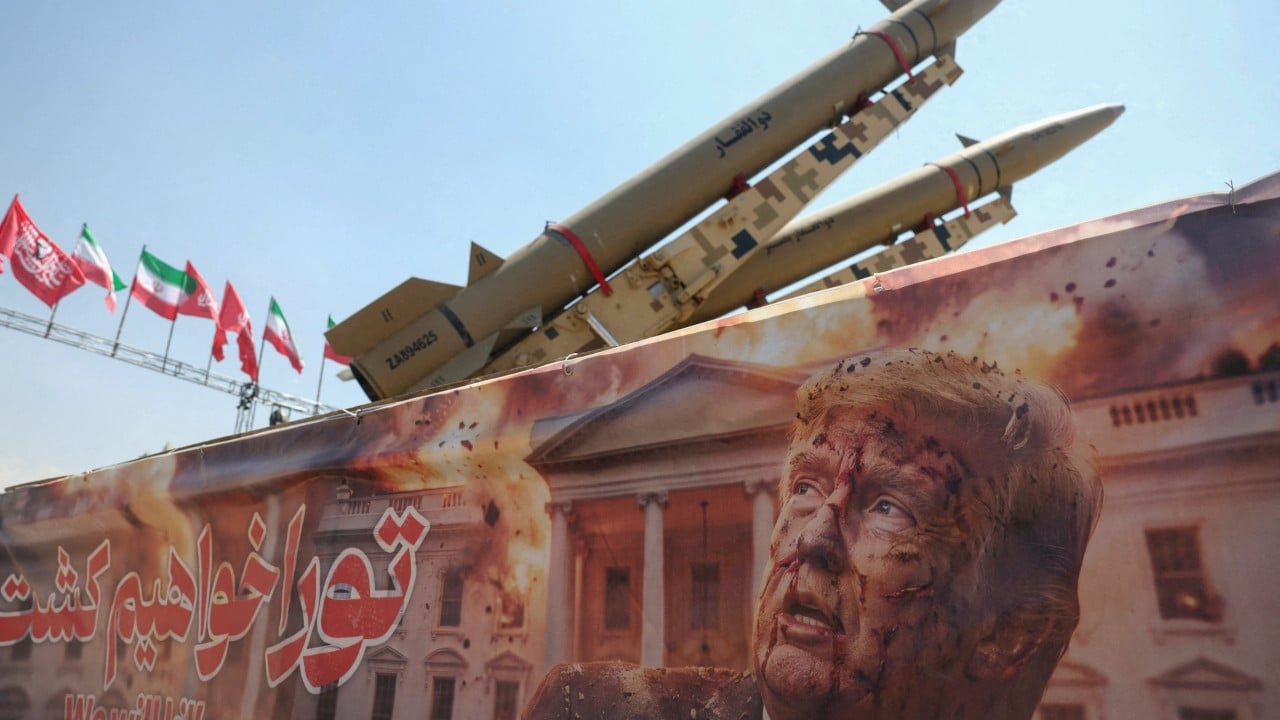
When we look at the headlines about potential conflicts involving Iran, we often narrow our focus to the immediate combatants. We watch the missile tests, we count the naval vessels, we listen to the angry rhetoric bouncing between capitals. We forget that the ripples of these events travel far beyond the immediate blast zone. They wash up on the shores of countries that never fired a shot, altering the internal calculations of leaders who are trying to manage the delicate balance between domestic prosperity and external chaos.
The analyst in Beijing closes his laptop. The screen goes dark, leaving only his reflection in the glass. Outside, the rain has stopped, but the streets remain slick and heavy with moisture. Somewhere out there in the dark, a supertanker adjusts its course by a fraction of a degree, steering carefully through troubled waters, carrying cargo that will either fuel an economic miracle or feed a growing fire.