A map is a living thing. When an American president looks at a globe, the eyes usually drift toward the jagged lines of Europe or the dense, flickering heat maps of the Indo-Pacific. For decades, the Western Hemisphere—the very neighborhood we share—has felt like an attic. We know it is there. We know it is full of history. But we only go up there when the roof starts to leak.
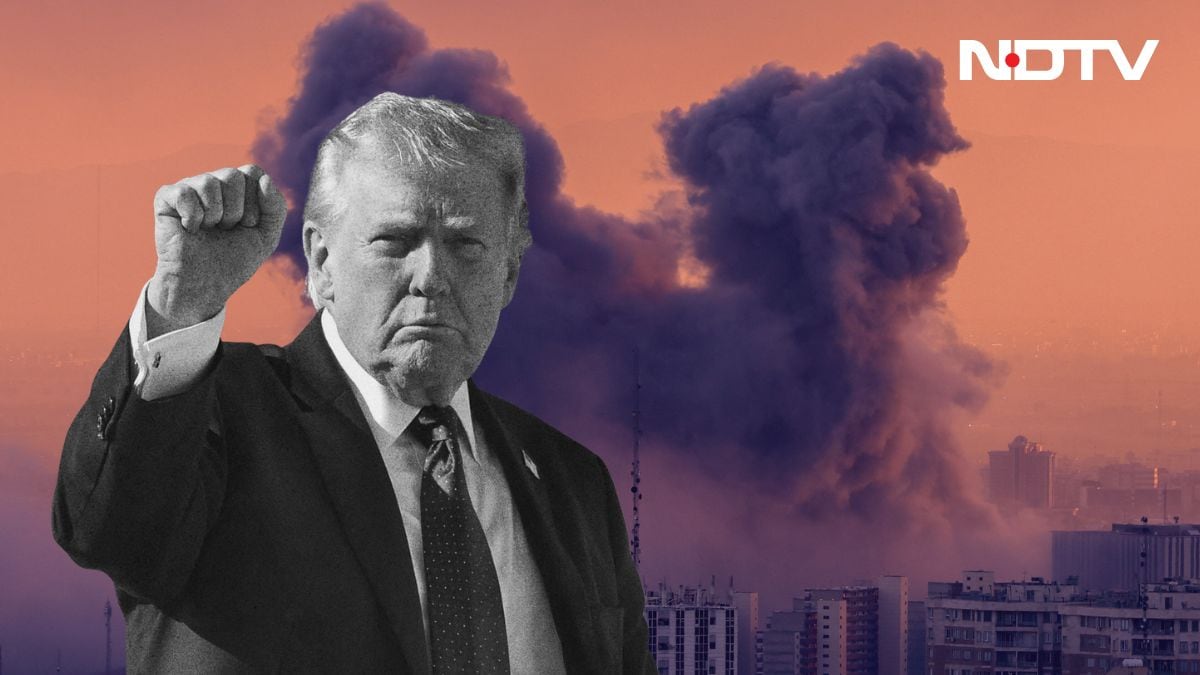
Donald Trump is heading to the Summit of the Americas with a different set of tools. He isn't bringing the usual diplomatic platitudes or the soft-focus language of "partnership" that has defined regional summits for thirty years. He is bringing a ledger.
Consider a small-scale coffee farmer in the highlands of Guatemala or a logistics manager in a bustling port in Barranquilla. To them, "the Summit" is a series of motorcades and closed-door sessions that rarely change the price of a bushel or the safety of a street. But this time, the stakes have shifted from abstract cooperation to a cold, hard competition for the soul of the hemisphere.
The "roof" isn't just leaking anymore. It is being rebuilt by someone else.
The Dragon in the Backyard
For the last twenty years, while Washington was preoccupied with the sands of the Middle East, another guest was quietly making the rounds in Latin America. China didn't come with lectures on democracy or demands for judicial reform. They came with checkbooks.
When a nation needs a bridge, a dam, or a 5G network, and the U.S. offers a white paper on "institutional strengthening," the choice for a local leader isn't ideological. It’s practical. This is the reality Trump faces as he prepares to take the stage. He is trying to pivot the American giant back toward its own borders, not out of sudden neighborly affection, but out of a realization that the backyard is currently being paved over by a rival superpower.
The strategy is "America First," but in this theater, it has to look like "The Americas First." If the U.S. wants to curb the influence of Beijing, it cannot simply tell its neighbors to say no to Chinese investment. It has to offer a better deal.
The Friction of the Border
You cannot talk about the Summit of the Americas without talking about the ghost in the room: migration.
To a policy analyst, migration is a set of data points, a fluctuating graph of "encounters" and "apprehensions." To the people on the ground, it is a desperate gamble. Imagine a father in San Salvador who sees no future in the local economy, where the shadow of the gang is longer than the shadow of the church. He doesn't want to leave. No one truly wants to walk a thousand miles into the unknown. He leaves because the gravity of his home has failed him.
Trump’s approach to this is famously transactional. He views the border not just as a line of defense, but as a point of leverage. His message to the leaders of Mexico, Guatemala, and Honduras has been consistent: if you want access to the American engine, you must be the brakes for the migrant flow.
It is a high-wire act. On one hand, the administration wants to drive investment back into the U.S.—onshoring jobs that were lost to overseas markets. On the other hand, if the economies of our neighbors crumble, the pressure on the southern border becomes an unstoppable tide. The Summit is the place where these two conflicting forces must be reconciled.
The Currency of Trust
Economic power is the primary language of this administration. The goal at the summit isn't just to sign a communique that no one will read. The goal is to reshape supply chains.
The world has learned a painful lesson about being overly dependent on a single, distant manufacturing hub. "Near-shoring" is the buzzword of the moment, but for a business owner in Ohio or a factory manager in Costa Rica, it is a matter of survival. Why ship a component across the Pacific when it can be moved across a land border or a short sea lane?
This is where the narrative of the "Great Pivot" begins to take shape. Trump wants to turn the Western Hemisphere into a fortress of commerce. By incentivizing American companies to move operations from Shenzhen to Monterrey or Bogotá, the administration hopes to solve two problems at once: weakening China’s grip on the supply chain and creating the kind of local stability in Latin America that keeps people from fleeing their homes.
But trade requires trust. And trust is a rare commodity in a region that remembers a century of American interventionism.
The Invisible Stakes
We often forget that Latin America is not a monolith. Brazil is a continental power with its own global ambitions. Argentina is a country perpetually teetering on the edge of brilliance and bankruptcy. Venezuela is a wound that won't heal.
When Trump walks into that summit, he isn't just meeting "the neighbors." He is walking into a hornet's nest of local grievances and national pride. The "human-centric" part of this story isn't found in the speeches. It’s found in the regional worker who wonders if the new trade deal will mean a paycheck or a pink slip. It’s found in the student in Santiago who wants to know if their country will be a partner to the U.S. or merely a buffer zone.
The administration’s "Attention to the Western Hemisphere" is often framed as a security issue. And it is. Fentanyl, cartels, and human trafficking are the dark mirrors of the legal trade we seek to build. These are not problems that can be solved with a wall alone. They require a systemic reconfiguration of how the two halves of this hemisphere talk to each other.
The New Monroe Doctrine
There is an old, dusty concept in American foreign policy known as the Monroe Doctrine—the idea that the Western Hemisphere is off-limits to outside powers. For a long time, it was considered an artifact of the 19th century.
It isn't an artifact anymore.
Trump’s focus on the Americas is a 21st-century reboot of that doctrine, updated for a world of digital infrastructure and global debt traps. He is signaling that the era of American indifference is over. The cost of that indifference has been too high.
The tension in the air at the summit will be thick. There will be leaders who resent the "America First" rhetoric, seeing it as a threat to their own sovereignty. There will be others who see it as a long-overdue invitation to the table.
But the real story isn't the handshake in front of the cameras. The real story is the silent shift of capital. It is the containers moving north and south instead of east and west. It is the realization that in an increasingly fractured world, the people you share a fence with are the only ones who truly matter.
The map is being redrawn. The ink is still wet.
The tragedy of the last half-century was our belief that distance didn't matter—that a factory in a distant time zone was the same as a factory next door. We are waking up from that dream. As the motorcades roll through the streets and the diplomats take their seats, the question isn't whether the U.S. will lead the hemisphere. The question is whether we still remember how to be a neighbor without being a boss.
The lights in the summit hall are bright, but the shadows cast by the mountains of the Andes and the skyscrapers of Sao Paulo are long. In those shadows, millions of people are waiting to see if this pivot is a genuine change of heart or just another tactical maneuver in a much larger war.
Wealth, safety, and the very definition of home are on the table. The ledger is open. The world is watching to see who blinks first when the American president demands that the neighborhood finally picks a side.
The map is living. And right now, it is screaming for a direction.
Would you like me to analyze the specific economic indicators of the "near-shoring" trend mentioned in the article?