The Weight of a Phone Call
The diplomatic cables arriving in Jerusalem do not look like history when they first land. They look like administrative chores. They are printed on standard white paper, flagged with red headers, and stacked neatly on desks where the air conditioning hums too loudly. But over the last year, the ink on those pages has grown increasingly cold.
For decades, an invisible tether ran directly from the Oval Office to the Prime Minister’s Office in Jerusalem. It was an axiom of global politics. Governments changed, wars broke out, economies collapsed, but the tether held. If you were an Israeli prime minister, you knew exactly who would answer the phone at 3:00 AM. If you enjoyed this post, you should look at: this related article.
Lately, the line has been filled with static.
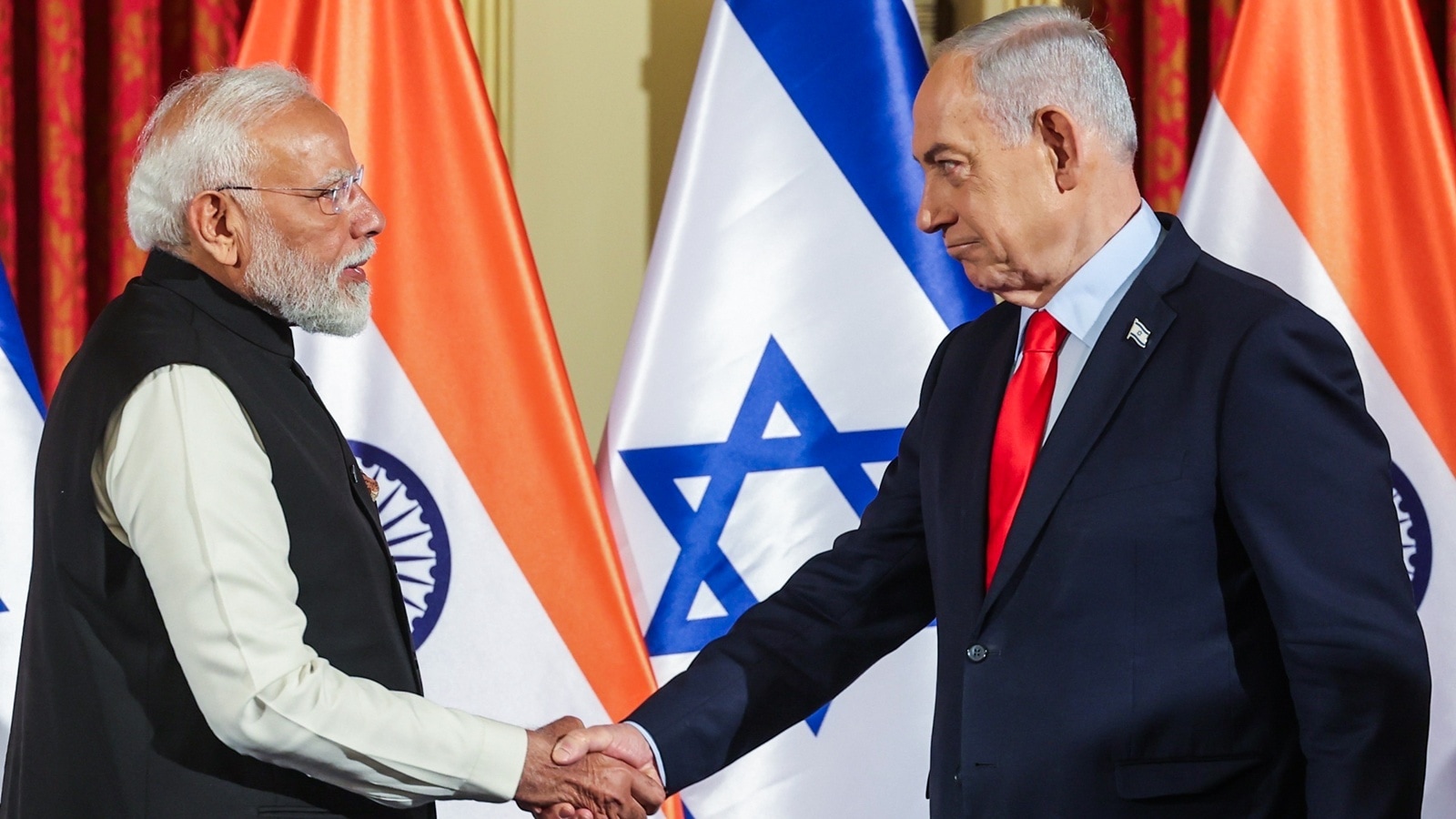
When Benjamin Netanyahu stood before a gathering of international delegates recently, he did not spend his time rehearsing the traditional script of unbreakable Western alliances. Instead, he pointed eastward. He spoke of New Delhi. He spoke of Narendra Modi. He spoke of India not merely as a market or a friendly vote at the United Nations, but as an indispensable anchor for Israel’s future survival. For another perspective on this development, see the latest coverage from The New York Times.
To understand why this matters, you have to look past the press releases and view the world through the eyes of the people who actually have to live inside the geography of conflict.
The Anatomy of Friction
Consider a hypothetical diplomat named David. He has spent twenty years in the Israeli foreign service, navigating the wood-paneled corridors of Washington, D.C. For most of his career, David’s job was predictable. He negotiated joint military exercises, secured intelligence-sharing agreements, and coordinated diplomatic defenses against hostile resolutions. The language was always warm. The assumptions were always shared.
Now, David finds himself sitting in a coffee shop three blocks from the State Department, staring at a notebook full of unanswered questions.
The friction between the United States and Israel isn't a sudden explosion. It is a slow, grinding shift of tectonic plates. The domestic political realities in America have mutated. A younger generation of voters views the Middle East through an entirely different lens than their parents did. Congressional debates over military aid, once a foregone conclusion, have transformed into bitter, public brawls. Washington is tired. It is distracted by its own internal divisions and the looming shadows of other global rivalries.
For Israel, this isn't just a political disagreement. It is an existential vulnerability. When your entire national security architecture relies on the political consensus of a foreign capital thousands of miles away, a shift in that capital's mood feels like oxygen leaving the room.
So, you look for a backup plan. You look for a nation that understands the world the way you do.
The View from New Delhi
Enter India.
To understand why New Delhi is the chosen destination for Israel's new diplomatic offensive, we have to look at how India views its own place in the century ahead. India is not the United States. It does not carry the baggage of a global superpower accustomed to lecturing other nations on internal governance. It operates on a cold, clear philosophy of strategic autonomy.
Imagine an engineer in Hyderabad named Amit. He works for a defense contractor that specializes in drone technology. Ten years ago, his company relied almost entirely on domestic components and occasional imports from Europe. Today, his daily Zoom calls are with software engineers in Tel Aviv. They don't talk about politics. They don't talk about international law. They talk about algorithms, signal processing, and manufacturing scales.
For India, Israel is a golden key. It provides access to sophisticated military hardware, agricultural technology to combat water scarcity, and a partner willing to share proprietary tech without attaching strings or moral lectures.
For Israel, India is a market of 1.4 billion people that cannot be canceled by a change in Western public opinion. It is a rising superpower that shares a profound anxiety about regional extremism and maritime security.
When Netanyahu explicitly names India as a key partner while relations with Washington are strained, he isn't just making a statement about the present. He is drawing a new map for the next fifty years.
The Language of Survival
The shift is visible in the numbers, but it is felt in the culture.
Historically, Israeli tech startups looked straight to Silicon Valley for funding and acquisition. Today, a growing number of those founders are boarding flights to Mumbai and Bengaluru. The capital flowing into Israeli cybersecurity firms is increasingly denominated in rupees, or at least routed through financial institutions that do not answer to the anxieties of Western universities or activist shareholders.
But this pivot is not without its own deep, systemic ironies.
The United States has spent billions of dollars ensuring Israel’s qualitative military edge in the region. That investment cannot be replaced overnight by a new friendship, no matter how enthusiastic. The fighter jets that patrol the skies over the Levant are American-made. The interceptors that knock missiles out of the sky are funded by the American taxpayer.
The real strategy here isn't to abandon the West. It is to create a counterweight. By building an unbreakable economic and technological alliance with India, Israel is attempting to insulate itself from the volatility of American politics. If Washington decides to tighten the screws on aid or diplomatic cover, Jerusalem wants to be able to point to an alternative network of alliances that makes isolation impossible.
The Quiet Reality
This is how empires shift. Not with a sudden declaration of war, but with a series of quiet decisions made by pragmatic people in rooms where the cameras aren't allowed. It happens when an Israeli startup decides to open its second headquarters in Chennai rather than Austin. It happens when Indian ports begin managing supply chains that bypass traditional European bottlenecks.
The human cost of global isolation is a heavy burden for any nation to contemplate. The citizens of Israel know what it feels like to watch the world turn away. The anxiety is palpable on the streets of Tel Aviv, where families wonder if the international support they once took for granted is evaporating.
By turning toward India, the political leadership is trying to offer an answer to that anxiety. They are trying to show that the world is much larger than the consensus of Western capitals.
Whether this gamble will pay off remains an open question. India is a complex giant with its own competing interests, including vital energy dependencies on the Arab states of the Gulf. New Delhi will always walk its own path, balancing its relationships with precision and self-interest.
But for now, the signal from Jerusalem is unmistakable. The old dependencies are being questioned. The old assumptions are being rewritten. A new geopolitical axis is hardening, forged not in the idealistic language of shared democratic values, but in the cold, unyielding fires of national survival.