The sirens do not care about your schedule. They do not pause because you are boiling water for tea, or because you are searching for a missing sock, or because you are trying to remember the exact title of a book you loved when you were twelve. They split the afternoon air with a raw, metallic howl, and in that instant, the perimeter of your entire existence shrinks.
Your world becomes four walls. Then two. Then just the hallway floor where you press your spine against the cold concrete while the glass in the windowpane hums like a plucked cello string, waiting to snap.
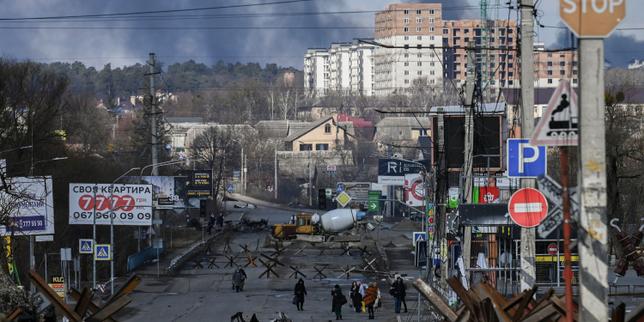
War is rarely filmed in the way we imagine it. We look for the sweeping drone shots of ruined boulevards, the smoking columns of distant armor, the cinematic rubble. But for the millions caught inside its sudden geometry, war is an interior crisis. It is measured in centimeters of space and seconds of hesitation. It lives in the kitchen drawer where the silver forks rattle. It hides in the silence between two neighbors who no longer know if they share the same flag, the same language, or the same memory.
Maria Reva understands this interior geometry better than most.
Born in Ukraine and raised in Canada, Reva has spent her work tracing the invisible shockwaves that ripple outward from geopolitical violence and crash directly into the porcelain cups of ordinary lives. Her fiction does not deal in grand political speeches or maps glowing red on evening news broadcasts. Instead, she pulls her chair right up to the kitchen table of people who were simply trying to live their Tuesday mornings when history kicked their front door off its hinges.
Consider what happens when the ordinary collides with the catastrophic.
Imagine an old apartment building in a city whose name suddenly appears on foreign tickers with terrifying frequency. The elevators have stopped because the grid failed three hours ago. The grocery store down the street is a shuttered husk with plywood over its eyes. Inside a third-floor flat, a retired clerk named Mykola stands by a window that he has taped into a crude crisscross pattern with masking tape. The tape is supposed to keep the glass from turning into a million diamond daggers if a shell lands near the park.
Mykola is not thinking about treaties. He is thinking about his cat, a fat, orange creature named Barsik who refuses to come out from under the sofa. He is thinking about his pension, which exists now only as numbers on a server in a server farm that may have already taken a direct hit. He is holding a tin of sardines.
This is where Reva’s writing begins. She finds the human pulse beneath the debris.
In her inventive narratives, characters are thrust into situations where humor and horror sit side by side on the same worn-out sofa. They trade absurd bureaucratic arguments while artillery thuds three blocks away. They hoard canned goods they will never eat and argue over whose turn it is to empty the bucket because the plumbing has gone silent. It is a brilliant, unsettling reflection of psychological survival. When the external world shatters into jagged pieces, human beings do not instantly turn into statues of pure tragedy or heroic resolve. They become frantic, petty, tender, hilarious, and stubbornly, impossibly normal.
We have a dangerous habit of sanitizing conflict into history. We treat dates and casualty figures like dry autumn leaves we can sweep away into neat piles. We talk about the Ukrainian diaspora, the economic pressures on North American immigrant communities, the shifts in cultural consciousness, as though these were abstract mathematical problems waiting for an Excel spreadsheet to solve them.
They are not. They are heartbeats.
When the news cycle moves on to the next crisis—because the modern attention span is a restless, flickering thing—the people caught in the middle of these tectonic shifts do not get to turn off the television. Their families are split across time zones. Every phone call from a Kyiv or a Kharkiv ringtone carries an unspoken, heavy question: Are you still there?
Reva captures this specific ache with a scalpel. She knows what it is to live in two places at once. To sit in a quiet, sunlit café in Vancouver or Toronto while your mental geography is mapped entirely by the names of towns where your aunts and cousins are watching the horizon turn the color of bruised plums. The physical body is here, ordering a latte and typing on a laptop, but the ghost-self is huddled in a basement three thousand miles away, listening to the thump of anti-aircraft fire.
This dual citizenship in reality and terror changes how a person speaks. It changes how they look at a stranger on the bus who is complaining about a delayed train. You want to shake them gently, or perhaps violently, and say: Do you know how fragile the floorboards are? Do you know how thin the ice is beneath your shiny shoes?
Yet, her stories refuse to curdle into pure despair. That is the trap that lesser writers fall into—the belief that to be serious about tragedy, one must never crack a smile. Reva knows better. She knows that laughter in the middle of a nightmare is not a betrayal of the situation; it is the only remaining oxygen.
When characters bicker over trivialities while the ceiling plaster dusts their shoulders, they are performing an ancient, stubborn rebellion. They are proving to the mortar and the steel that their humanity was checked in before the shelling started, and it will still be standing after the smoke clears, even if the building is not.
We need art that does this. We need books that drag us out of our comfortable numbness and force us to look through the taped-up windowpane. Not to make us feel guilty for living in safety, but to widen our capacity for empathy until it hurts a little. Empathy should hurt. If it is comfortable, it is merely sympathy from a distance.
The ink that Reva uses is mixed with memory, salt, and the stubborn persistence of a culture that refuses to be edited out of existence by an invader's decree. Every sentence is a small act of reclamation. It takes the abstract noun "war" and breaks it down into verbs and nouns we can touch: the rattling tea kettle, the smell of damp wool in a bomb shelter, the frantic scratch of a pen writing a letter that may never find a mailbox.
The sirens will sound again tomorrow. Somewhere, a map will be redrawn by men who have never smelled cordite or heard the whistle of falling iron. But in the quiet spaces between the blasts, someone is turning the page of a book, finding their own reflection staring back from the print, and realizing with a sudden, sharp intake of breath that they are not invisible.
They are seen. They are recorded. They remain.