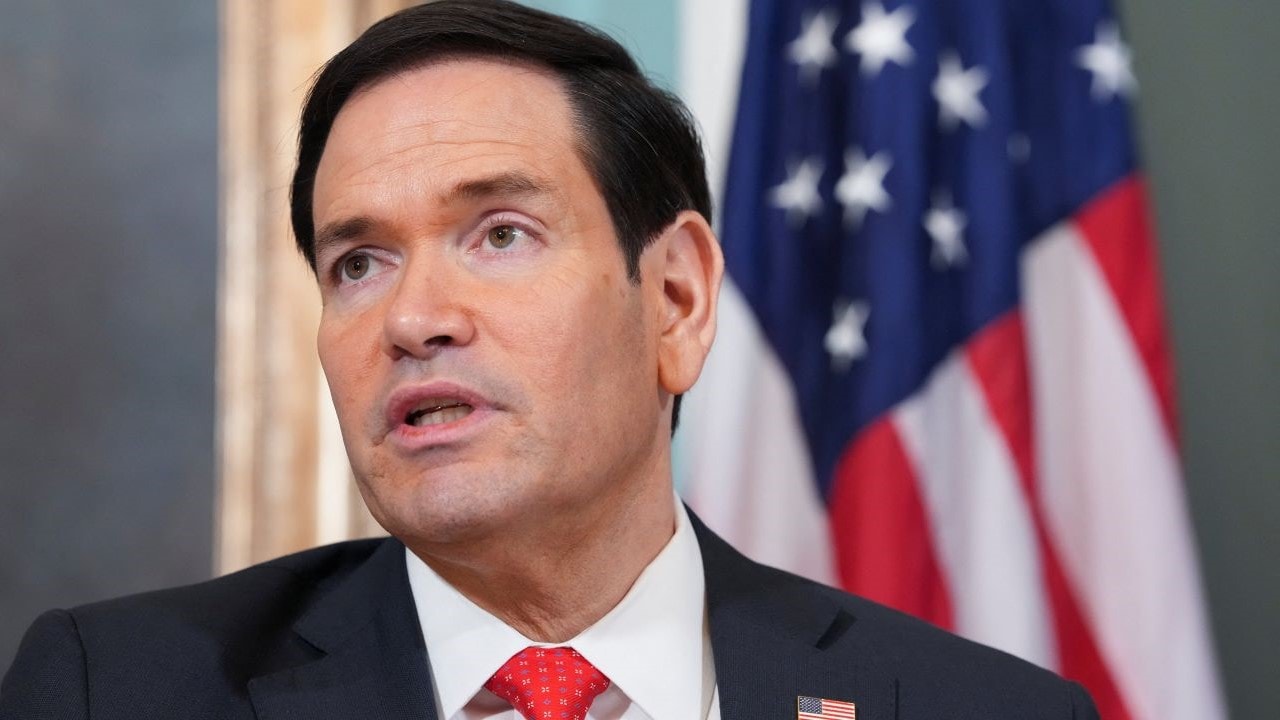
The global foreign policy establishment is currently comforting itself with a comfortable fiction. Landing in Abu Dhabi, US Secretary of State Marco Rubio confidently declared that Iran will not be allowed to levy tolls or fees on vessels navigating the Strait of Hormuz. His argument rests on a textbook legal platitude: "It's an international waterway. No country is allowed to charge tolls or fees on an international waterway. That's existing international law".
It sounds resolute. It sounds authoritative. It is also entirely blind to historical precedent, maritime reality, and the cold mechanics of leverage.
I have spent years watching governments blow billions on naval deployments and legal academic papers while completely misunderstanding how global choke points actually function. The hard truth nobody in Washington wants to admit is that international law does not police strategic waterways—leverage does. By acting as if "existing international law" is a magic shield that automatically prevents maritime taxation, the US is walking blind into a trap. Iran and Oman are already rewriting the rules of the game while American diplomats recite rules from a textbook.
The Legal Mirage of the "Free" Strait
The foundational flaw in the American posture is the assumption that international law cleanly forbids maritime service fees in straits. Rubio is relying on the standard interpretation of the United Nations Convention on the Law of the Sea (UNCLOS), specifically the regime of transit passage through straits used for international navigation.
There are two major problems with using this as an absolute shield:
- The US Never Ratified It: The United States enforces UNCLOS as customary international law but has famously never ratified the treaty. Washington is fundamentally attempting to litigate a contract it refused to sign.
- The "Transit Passage" vs. "Innocent Passage" Loophole: Iran signed UNCLOS but never ratified it either. Tehran recognizes the stricter "innocent passage" regime rather than transit passage for non-signatories. Under innocent passage, coastal states retain far greater authority to regulate maritime traffic for security, environmental, and administrative reasons.
To say "no country is allowed to charge tolls" ignores how maritime geography actually operates. Iran and Oman collectively share sovereignty over the territorial waters that form the strait. The navigable shipping lanes—the deep-water channels where massive VLCCs (Very Large Crude Carriers) must travel—sit squarely within Omani and Iranian territorial seas.
When Iran and Oman issue a joint statement announcing they are actively studying the "administration and maritime services" of the strait, they are not talking about illegal piracy. They are laying the groundwork for a regulatory framework.
How to Monetize a Choke Point Legally
A state does not need to call a fee a "toll" to collect a tax on global trade. Experienced maritime operators know that nations monetize vital waterways every day through a suite of perfectly legal mechanisms. Tehran and Muscat do not need to violate international law to drain billions from international shipping lines; they just need to rebrand the invoice.
Consider the mechanisms already deeply embedded in global shipping infrastructure:
Compulsory Pilotage and Escort Fees
Nations frequently mandate that specialized local pilots navigate high-risk or narrow channels. If Iran and Oman declare the strait an ecologically fragile zone or a high-risk security corridor following months of conflict, they can legally mandate local maritime escorts or pilotage services for transit. Try telling a Lloyd's of London underwriter that your $200 million crude cargo is skipping a mandated safety escort because Marco Rubio said it's an international waterway. The shipping company will pay the fee to secure insurance coverage.
Transit Services and Pollution Levies
The Danish Straits—specifically the Great Belt and the Sound—historically generated massive revenue through "Sound Dues" until the 1857 Copenhagen Convention. While direct tolls were abolished, modern coastal states regularly levy steep fees for environmental monitoring, oil spill response readiness, and search-and-rescue infrastructure. Iran's chief negotiator, Mohammad Bagher Ghalibaf, has already signaled that the Strait of Hormuz "will never return" to its pre-war status. Framing fees as mandatory "maritime safety and environmental services" bypasses the legal definition of a toll while achieving the exact same economic outcome.
The Sovereign Reality
| Waterway | Legal Regime | Primary Monetization Strategy |
|---|---|---|
| Suez Canal | Internal Waterway | Direct Transit Tolls (Sovereign Control) |
| Panama Canal | Artificial Waterway | Dynamic Booking Fees & Flat Tolls |
| Strait of Hormuz | International Strait | Expected: Mandatory Security Services & Environmental Levies |
Why Washington's Bluster is Dangerous
The danger of Rubio’s rhetoric lies in its disconnect from operational realities. US allies in the Gulf—specifically the United Arab Emirates, Kuwait, and Bahrain—are not panicking because they lack legal arguments. They are panicking because they understand that if Iran successfully monetizes the strait, it secures a permanent, sanctions-proof revenue stream directly tied to the global energy supply.
Internal Iranian estimates suggest unhindered oil access and maritime administration could pump upwards of $30 billion annually into Tehran's coffers. Western diplomats are bringing legal briefs to a knife fight. If a shipping conglomerate faces the choice between paying a $50,000 "maritime service fee" to an Iranian-Omani joint administrative body or risking a multi-million dollar vessel seizure that invalidates their insurance, they will pay the fee every single time.
The downside to acknowledging this reality is painful: it forces Washington to admit that the military containment of Iran has structural limits. Short of a permanent, multi-carrier naval escort for every single commercial vessel passing through the Gulf, the nations that flank the bottleneck hold the structural advantage.
Stop asking whether Iran has the right under international law to charge fees. Start asking what concrete leverage the West has to stop them when they inevitably mask those fees behind administrative, environmental, and safety services. The 60-day ceasefire period is ticking away. Right now, Tehran is designing the tollbooth while Washington is still arguing over the zoning laws.


