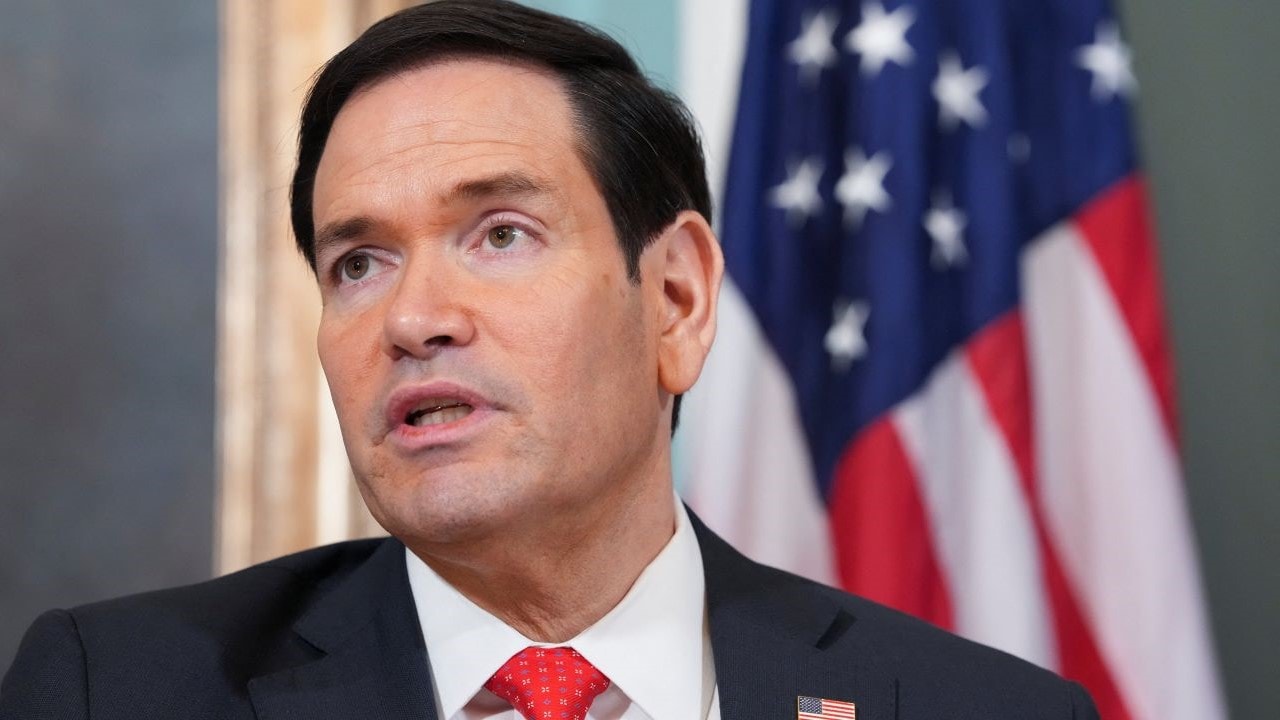
Fixing a broken relationship takes more than just standard diplomatic pleasantries. Right now, US Secretary of State Marco Rubio is discovering exactly how hard that work is going to be.
When Rubio arrived in Kolkata on Saturday, May 23, 2026, he started his four-day tour with a highly symbolic stop at the Mother House of the Missionaries of Charity. It was a calculated, quiet opening to a high-stakes trip meant to salvage what used to be called a "mega partnership." By the time he sits down with Prime Minister Narendra Modi in New Delhi, the polite smiles won't completely mask the reality. The US-India alliance is in serious trouble, and this visit is a frantic effort to patch up the cracks before they become permanent.
Just a year ago, everything looked completely different. In early 2025, Modi was boasting about how "Make America Great Again" and "Make India Great Again" would merge into a historic success story. Fast forward to today, and that enthusiasm has evaporated. Punitive American tariffs, a major military flare-up between India and Pakistan, soaring energy prices caused by the conflict in the Persian Gulf, and sudden changes to US visa rules have left New Delhi feeling burned.
Rubio isn't just visiting to attend next week's Quad foreign ministers' meeting. He's here because Washington realizes it can't afford to lose India.
The Friction Points That Ruined the Honeymoon
You can't understand why this trip matters without looking at how quickly things fell apart over the last twelve months. The relationship didn't just hit a minor speed bump; it completely stalled.
The most sensitive issue goes back to the military clashes between India and Pakistan in Kashmir. When hostilities finally stopped, President Donald Trump claimed credit for de-escalating the crisis. New Delhi was furious. The Indian government publicly shot down that narrative, making it clear that Washington had nothing to do with the peace talks.
Then came the economic hits. The Trump administration slapped heavy tariffs on Indian exports, creating immediate tension with a government that prides itself on national economic pride. Add in sudden spikes to H1B visa fees and restrictive immigration policies, and you get a recipe for deep resentment. For an Indian middle class that views the US as a prime destination for tech talent, the visa crackdowns felt like a direct penalty.
Why Energy Security Trumps Everything Right Now
While diplomats love to talk about shared democratic values, the real urgency behind Rubio's visit comes down to global energy markets. The ongoing hostilities in the Middle East and the closure of the Strait of Hormuz have sent oil prices skyrocketing, hitting India's fast-growing economy incredibly hard.
India relies on imports for the vast majority of its oil. New Delhi has been leaning on discounted Russian crude to keep its economy moving, drawing consistent criticism from Washington. Rubio is arriving with a clear alternative package. The US wants India to shift its energy dependency away from Russia and toward American and Venezuelan suppliers.
Before landing, Rubio called India a "great partner" and explicitly noted that the US is looking for ways to sell the country more oil. It's a pragmatic pitch, but India isn't going to abandon its strategic autonomy just because Washington is offering an alternative supplier. New Delhi has spent decades diversifying its options, and it won't easily give up its ties to Moscow or its complex diplomatic balance with Iran.
Balancing the Quad Against Regional Reality
The formal anchor for Rubio's trip is the upcoming Quad ministerial meeting in New Delhi, where he'll join his counterparts from India, Japan, and Australia. The group has tried hard to present a united front against China's growing naval dominance in the South China Sea, but underneath that shared goal lies a lot of strategic disagreement.
Consider what happened just last week. While Washington was preparing for Rubio's arrival, New Delhi was busy hosting the foreign ministers of the BRICS nations. Sitting at that table were Russian Foreign Minister Sergei Lavrov and Iranian Foreign Minister Abbas Araghchi.
India's willingness to host the very leaders Washington is trying to isolate shows exactly why the US can't treat New Delhi like a standard European ally. India views the Quad as a useful tool for maritime security and supply chain diversification, especially through initiatives like the Critical Minerals Initiative launched last year to challenge China's monopoly on tech resources. But India refuses to let the Quad dictate its broader global relationships.
Recent Moves to Smooth Things Over
Washington isn't arriving empty-handed. The US has quietly made several big moves over the last few weeks to lower the temperature before Rubio's plane landed.
- The Adani Case Dismissal: The US administration recently moved to drop criminal fraud and bribery charges against Indian billionaire Gautam Adani. The move removed a massive political headache that was threatening to spill over into bilateral government discussions.
- Russian Oil Waivers: Washington extended a sanctions waiver on Russian oil that was already at sea. It's a temporary reprieve, but it gave India some breathing room and signaled that the US wants a compromise rather than a public fight.
- Diplomatic Groundwork: Indian Foreign Secretary Vikram Misri spent three days in Washington last month laying the foundation for this visit, trying to ensure that Rubio and Modi can focus on concrete agreements rather than rehashing old grievances.
What Happens Next
If you want to see if this trip actually succeeds, ignore the joint statements about friendship and watch these specific areas over the next few weeks.
First, look at the progress toward a targeted trade deal. If the US doesn't offer real relief from its recent tariff hikes, the economic tension will continue to simmer. Second, watch India's defense and energy procurement numbers. If New Delhi agrees to significant new contracts for American oil or military hardware, it means Rubio's repair job is working.
Stop expecting India to act like a traditional, compliant ally. The Indian government values its independence too much for that. Rubio's task in New Delhi isn't to force India into a corner; it's to convince Modi that the US is still a reliable, predictable partner in an increasingly chaotic world.