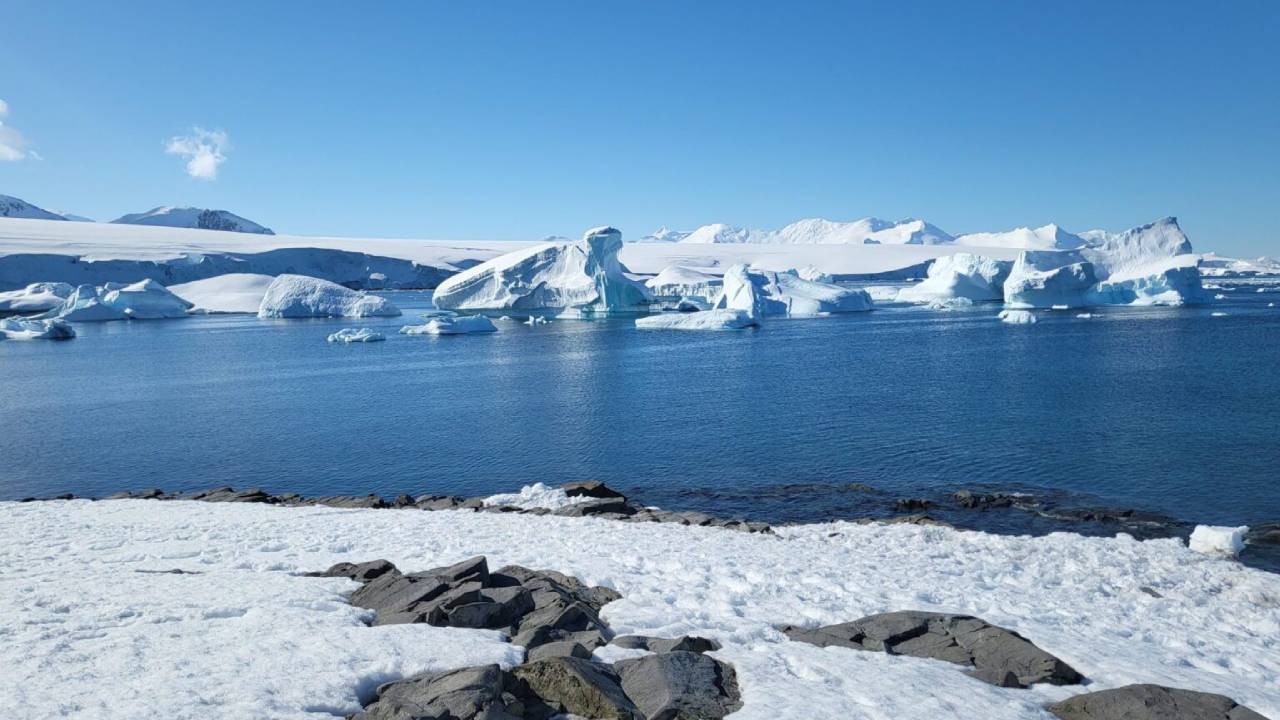
Polar ice sheet discharge is accelerating through a structural shift in global mass balance, driven by sustained atmospheric and oceanic warming over the past four decades. Between 1979 and the present era, Greenland and Antarctica have combined to shed over eleven thousand billion tonnes of ice into the marine environment. This discharge translates directly into a 31.4-millimeter rise in global mean sea level.
Quantifying this volume requires analyzing ice sheets not as static static blocks of frozen water, but as dynamic, non-linear thermodynamic systems. The rate of mass loss is governed by two competing vectors: surface mass balance, which includes snowfall accumulation offset by surface melting and runoff, and dynamic ice discharge, which measures the mechanical flow of glaciers calving directly into the ocean. When thermal forcing increases, both vectors experience positive feedback loops that destabilize the entire system architecture.
The mechanics of Greenland ice loss are dominated by surface melting coupled with outlet glacier acceleration. Arctic air temperatures are rising at roughly twice the global average, a phenomenon known as Arctic amplification. As surface temperatures exceed freezing thresholds during extended summer windows, extensive meltwater pools form across the ice sheet interior. This water drains through crevasses and vertical shafts known as moulins, reaching the bedrock interface. The liquid water acts as a high-pressure lubricant, decoupling the glacial ice from the underlying rock and increasing flow velocities toward the sea.
Simultaneously, marine-terminating glaciers in Greenland face encroaching sub-surface warm water currents. Atlantic water, driven northward by shifting ocean circulation patterns, undercuts the floating tongues and termini of major outlets such as Jakobshavn Isbræ. This thermal erosion removes buttressing forces, allowing the grounded ice upstream to surge forward, thin out, and discharge icebergs at rates exceeding historical baselines.
Antarctica operates under a distinct physical regime, though the net result is identical mass depletion. Because average surface temperatures across the vast interior of the Antarctic continent remain well below freezing, surface melting plays a localized role compared to Greenland. Instead, the primary driver of Antarctic mass loss is marine ice sheet instability, concentrated primarily in the West Antarctic Ice Sheet.
The Amundsen Sea Emigration sector features marine-based glaciers resting on bedrock that slopes downward toward the continent's interior. This topographical configuration creates a vulnerability threshold. As relatively warm circumpolar deep water flows onto the continental shelf, it attacks the grounding lines—the precise geographic boundary where the ice sheet transitions from resting on bedrock to floating on the ocean as an ice shelf.
As warm water melts the grounding line from below, the point of contact retreats inland into deeper basins. The physical removal of ice at the grounding line reduces the back-stress exerted by floating ice shelves on the interior ice streams. Deprived of this structural resistance, the upstream glaciers accelerate, thinning rapidly and dumping massive volumes of ice into the Southern Ocean. The Thwaites and Pine Island glacier systems function as the primary choke points in this mechanism, acting as dynamic drains for a massive watershed that holds several meters of potential global sea level rise.
The global consequence of these combined polar mass deficits extends far beyond a uniform millimeter-by-millimeter expansion of the global ocean surface. Sea level rise is non-uniform due to gravitational redistribution. As massive ice sheets lose mass, their localized gravitational pull on surrounding ocean water diminishes. Consequently, meltwater migrates away from the polar regions toward the low-latitude equatorial oceans, amplifying local sea level rise impacts in densely populated coastal zones and low-lying island nations.
Furthermore, the influx of cold, fresh meltwater into the North Atlantic and the Southern Ocean alters local salinity gradients. This freshwater lens suppresses deep water formation and disrupts global overturning circulation patterns. The Atlantic Meridional Overturning Circulation, which regulates heat distribution between the hemispheres, experiences systemic slowdowns when confronted with massive pulses of glacial meltwater.
Mitigating coastal vulnerability requires shifting infrastructure planning away from static projections toward dynamic risk management frameworks. Coastal engineering projects must account for accelerating rates of change rather than linear historical trends. Global emission reduction pathways remain the only mechanism capable of altering the thermal boundary conditions governing polar mass balance, yet the inertia built into ocean and ice dynamics ensures that century-scale sea level commitment is already locked in by cumulative historical emissions.