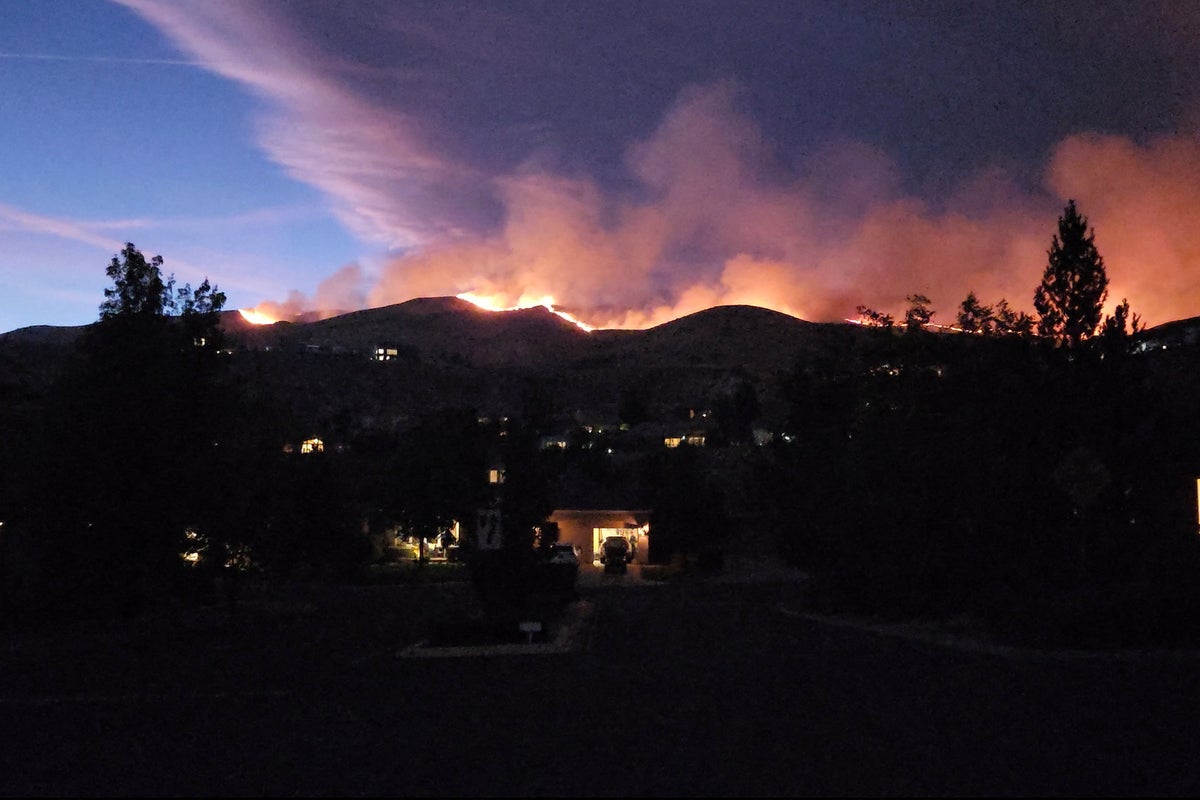
Ash does not fall like snow. Snow drifts, catches the light, and melts against a cheek with a soft, cold kiss. Ash is heavier. It arrives greasy, smelling of scorched sagebrush and melted plastic, staining the skin gray before you even realize the sky has turned the color of a bruised plum.
Ninety thousand people learned that texture on a Tuesday.
They did not learn it from an app alert or a polite knock on the door. They learned it when the horizon vanished. One moment, the foothills outside Reno were a familiar wash of dusty green and ochre; the next, they were swallowed by a boiling, orange-bellied monster that did not care about mortgage payments, sleeping dogs, or the coffee still warm in the pot.
When the Washoe County Sheriff later stepped up to a microphone to deliver the findings, the words came out flat, stripped of poetry. Human-caused.
Two small words. Millions of tons of displaced earth, frantic tailights choking the highway arteries, and ninety thousand lives upended by a spark that should never have been struck.
The Anatomy of a Second
Consider what happens in the brain of someone told they have fifteen minutes to pack a lifetime.
Panic is rarely cinematic. It is not a headlong sprint through explosions. True panic is paralyzed hesitation in a hallway. You hold a photograph of your grandmother in your left hand and a bag of frozen dumplings in your right, completely unable to reconcile the two. Your brain stalls. The fire outside is roaring at two thousand degrees, snapping Ponderosa pines like toothpicks, driven by twenty-mile-per-hour wind gusts that feel like the breath of an open furnace, yet you stand there wondering if you remembered to lock the back door.
That is the human cost of a human-caused disaster.
Wildfires are ancient things. Lightning has sparked them across the Great Basin for millennia, carving out ecosystems that depend on cyclical fire to clear the understory and release dormant seeds. Nature has a rhythm. But human ignition is a different beast entirely. It arrives out of season, out of context, and with a casual cruelty.
Sheriffs and fire investigators spent days sifting through the charred skeleton of the burn scar, crawling on their knees through moonscapes of white powder where homes used to stand. They look for the chevron patterns on charred fence posts, the directional lean of melted aluminum siding, the exact point of origin where the blades of grass fell away from a central source. They play forensic detective with nature's graveyard.
And every single time, the trail leads back to us. A tossed cigarette butt glowing like a dying star in the dry ditch. An unlatched trailer chain dragging sparks against the asphalt. A rogue campfire left to smolder under a deceptive crust of ash while the campers slept three miles away.
The Weight on the Highway
Evacuating ninety thousand souls is an exercise in synchronized terror.
Imagine inching your sedan forward at walking speed while the ridge to your right turns into a wall of flame. The air conditioning is useless; it only pumps the smell of scorched earth through the vents. Children are crying in the back seat, their small hands pressed against the glass, watching the neighborhood they biked through just hours ago turn into a glowing ember.
Emergency responders work in a vacuum of adrenaline and exhaustion. These are men and women who have children in the same schools, cousins in the same neighborhoods. They direct traffic with streaming eyes, waving cars away from the red glow, knowing their own homes are sitting directly in the path of the advancing front.
We talk about disasters in terms of acreage. Five thousand acres. Ten thousand acres. Fifty thousand acres. It is a convenient shorthand that distances us from the reality. Numbers do not choke. Numbers do not weep in the back of a red-cross shelter while a volunteer hands them a styrofoam cup of lukewarm coffee.
When the investigator speaks of human negligence, the blame feels frustratingly abstract. Who is the human? It is rarely a villain in a melodrama twirling a mustache. It is usually just someone who was tired, distracted, or careless for three seconds. Three seconds of looking at a phone screen instead of the sparks flying from a trailer. Three seconds of tossing a glowing amber out a truck window because the ash tray was full.
The Aftermath of the Smoke
The fire eventually slows. Crews cut lines through the dirt, dropping purple retardant from lumbering DC-10 tankers that paint the ridges like giant wounds. The wind dies down. The sky turns back to a sickly, pale blue.
Then comes the return.
Driving back into a burn zone is like walking through a house where someone has died. The mail is still in the box, untouched and pristine, looking absurdly normal against a backdrop of smoking chimneys and blackened car frames. Entire blocks are reduced to neat piles of gray dust and twisted bedsprings, while right next door, a single house stands untouched, spared by some capricious shift in the wind that defies all logic.
The ninety thousand return to a different world. They wear N95 masks to sweep up the remnants of their living rooms. They look at the bare hillsides where the scrub oak used to be, knowing that the first heavy autumn rain will turn those slopes into rivers of black mud.
The sheriff’s report will be filed away in a cabinet. Statistics will be logged into state databases. Insurance adjusters will clip their clipboards and calculate replacement costs down to the drywall.
Yet the hills remain scarred. The sagebrush will take decades to crawl back up the canyons. And somewhere out there, in the dry heat of another afternoon, another hand reaches into a pocket, unaware of how easily a world can burn.