The arithmetic of modern democratic survival has changed. When margins shrink to a fraction of a percentage point, victory ceases to be an endpoint and transforms instead into a multi-month legal battlefield. This reality forms the core of the strategy articulated by political figures confronting the machinery of institutional skepticism. To secure an outcome that withstands engineered doubt, progressive and mainstream coalitions can no longer rely on scraping by with a fifty-plus-one majority. They must build margins so overwhelming that denial becomes logistically untenable.
The Mechanics of Manufactured Uncertainty
In a political climate conditioned by years of persistent challenges to certified tallies, close elections act as gasoline on an open flame. Every provisional ballot, every late-night count shift, and every administrative hiccup gets weaponized. When an election is decided by ten thousand votes across a state of millions, the system creaks under the weight of coordinated litigation.
Consider a hypothetical state where a candidate wins a high-profile Senate seat by 0.4%. Within hours, local canvassing boards face intense pressure from partisan operatives, digital rumor mills begin circulating unverified claims of irregularities, and automated legal teams flood state courts with emergency injunctions. The closeness of the race provides the necessary camouflage for the narrative of theft. It does not matter whether the allegations hold up under scrutiny; the objective is to delegitimize the outcome before the certification papers are even dry.
The antidote, according to analysts who study democratic erosion, is mathematical saturation. A victory margin of ten or fifteen points strips the bad-faith actors of their plausibility cloak. When a candidate wins by a landslide, crying foul requires convincing an entire populace that millions of their neighbors participated in a coordinated conspiracy.
Beyond the Centrist Playbook
For a long time, establishment strategists believed in the virtue of triangulation. The conventional wisdom dictated that a candidate must sand down their rough edges, avoid bold systemic reforms, and chase an elusive block of suburban moderates by offering incremental adjustments. But this cautious approach practically guarantees narrow margins. Incrementalism inspires compliance rather than enthusiasm, keeping turnout depressed and leaving races vulnerable to the whims of low-turnout variance.
When figures like Michigan’s Abdul El-Sayed argue for running up the score, they are advocating for a structural shift in how campaigns define viability. Mobilizing working-class voters who have given up on the political process requires offering material improvements—such as guaranteed health care access or aggressive labor protections—rather than vague appeals to institutional norms. Norms do not turn out voters in December. Hope for economic relief does.
Yet, party leadership has historically feared the very enthusiasm required to build massive margins. Bold platforms attract fierce opposition, and timid leaders often mistake that opposition for electoral poison. The irony is that timidity invites the exact crisis party bosses claim to fear: a dead-heat election where the winner's legitimacy is shredded in partisan courts.
The Cost of a Defensive Posture
Playing not to lose is a failing strategy when the opposing side is actively trying to rewrite the rules of the game. If democratic institutions are treated as fragile glass houses, protecting them by whispering softly inside is an exercise in futility. The protection comes from reinforcing the structure until it is impervious to stones.
Electoral mandates are not handed down by benevolent elites; they must be seized through sheer force of civic participation. When campaigns treat high-turnout areas as afterthoughts or write off entire demographics as unreachable, they hand the advantage to those who specialize in suppression and skepticism.
The path forward requires abandoning the comfort of the forty-nine-percent strategy. Political survival demands an aggressive expansion of the electorate, dragging low-propensity voters into the process by addressing their daily economic struggles head-on. Anything short of a definitive, undeniable mandate leaves the door cracked open for the dismantlement of public trust.
The votes are either gathered in historic abundance or the republic spends its days in courtrooms fighting over the scraps of a broken consensus.
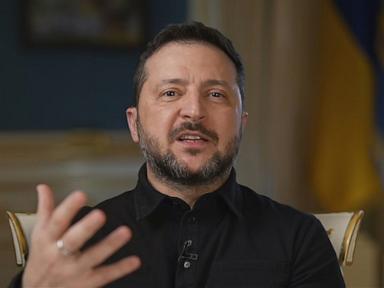
Abdul El-Sayed on Democratic margins
This video provides additional context regarding Abdul El-Sayed's strategy for confronting election denial through high voter turnout.