Epidemiological lag functions as the single greatest multiplier of systemic collapse during a biological crisis. When the World Health Organization confirmed that the current Ebola outbreak in eastern Democratic Republic of the Congo originated in February—months prior to its mid-May declaration—it exposed a structural failure in how health authorities detect, categorize, and respond to viral velocity.
Operating behind an adversary that multiplies faster than the tracking mechanisms designed to catch it results in a permanent deficit. With confirmed cases crossing 4,200 and deaths surpassing 1,900, the trajectory of this outbreak offers a clinical case study in how diagnostic misdirection, operational friction, and genomic blindness compound into a public health catastrophe.
The Diagnostic Misdirection Loop
The primary catalyst for the delayed declaration was a fundamental flaw in initial clinical triage. Early cases presenting in eastern Congo were systematically misattributed to endemic pathologies like malaria and typhoid.
This error stems from overlapping phenotypic presentations during the early stages of filovirus infection. Fever, general malaise, and gastrointestinal distress mirror common tropical diseases, creating a high-noise environment where surveillance systems fail to isolate the signal of a novel pathogen.
Compounding this diagnostic failure was the strain-specific blind spot. The outbreak is driven by the Bundibugyo virus, a rare strain of Ebola for which standard diagnostics, approved vaccines, and targeted treatments do not exist. Early testing protocols deployed in the region were calibrated for Zaire ebolavirus, the more common and historically prevalent variant.
By searching for the wrong molecular signature with assays designed for a different protein structure, health authorities functionally locked themselves out of early detection. This mismatch transformed weeks of silent community transmission into an entrenched viral network before the first official alert was raised.
The Operational Friction Matrix
Once an outbreak achieves critical mass while remaining undetected, the response apparatus encounters severe infrastructural bottlenecks. The operational environment in eastern Congo introduces four distinct friction variables that neutralize conventional containment strategies:
- Surveillance Isolation: Between 60 and 70 percent of new cases are detected entirely outside of monitored contact lists. When the majority of transmission chains occur anonymously, contact tracing transforms from a targeted containment tool into an ineffective retroactive audit.
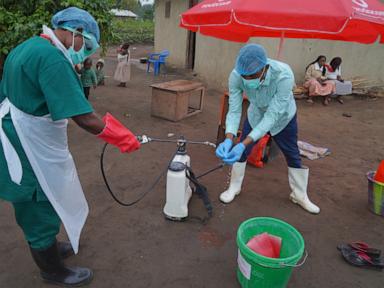
- Supply Chain Breakdown: Health teams operating across remote, unpaved terrain face severe shortages of personal protective equipment. Logistics pathways are frequently severed by rebel group activity, leaving field operators exposed and immobile.
- Human Capital Deficits: Chronic instability has led to strikes by unpaid health workers, starving the response of experienced clinical personnel precisely when operational density must peak.
- Behavioral Aversion: Years of community trauma, combined with active disinformation campaigns asserting that the virus is fabricated, drive vulnerable populations—including pregnant women—away from formal health centers and into hidden community settings.
These variables create a negative feedback loop. Insecurity restricts logistics, broken logistics reduce clinical capacity, and reduced capacity amplifies community distrust, which in turn fuels more violence and operational obstruction.
The Cost Function of Delayed Recognition
The financial and human cost of a delayed declaration follows an exponential curve rather than a linear one. In an optimized response model, detection occurs within the first two incubation cycles, allowing local ring vaccination and quarantine protocols to suffocate transmission chains.
When detection is delayed by a quarter of a year, the virus escapes containment thresholds. The current outbreak is killing individuals at a faster rate than the 2014-2016 West Africa epidemic, which previously held the record for sheer velocity. That historical precedent required roughly eight months to reach 1,000 deaths; the current crisis achieved similar lethality milestones under compressed timelines due to the absence of prophylactic countermeasures against the Bundibugyo strain.
Furthermore, viral reproduction rates in localized hot spots are outpacing the capacity of intervention teams to deploy isolation units. When case doubling rates outstrip deployment logistics, the strategy shifts from containment to mitigation, an operational retreat that guarantees higher morbidity and mortality.
Strategic Realignment for High-Velocity Pathogens
Reversing systemic vulnerability in complex operational zones requires dismantling legacy surveillance models that rely solely on passive clinical reporting.
Health authorities must decouple initial diagnostic algorithms from specific strain assumptions by scaling metagenomic sequencing directly at the provincial level. Relying on centralized laboratories to process genetic sequences weeks after symptoms first appear guarantees tactical failure.
Surveillance architecture must integrate wastewater monitoring and syndromic screening for unexplained community deaths before clinical manifestations trigger hospital admissions.
Concurrently, security protocols must be baked into epidemiological deployment plans. Treating logistics and security as secondary concerns in conflict zones ensures that medical countermeasures arrive after the transmission curve has already peaked.
The strategic imperative moving forward is clear. Intelligence-led pathogen tracking must replace reactive declaration protocols. Until detection speed matches viral replication velocity, health systems will continue to chase an adversary that is always several steps ahead.