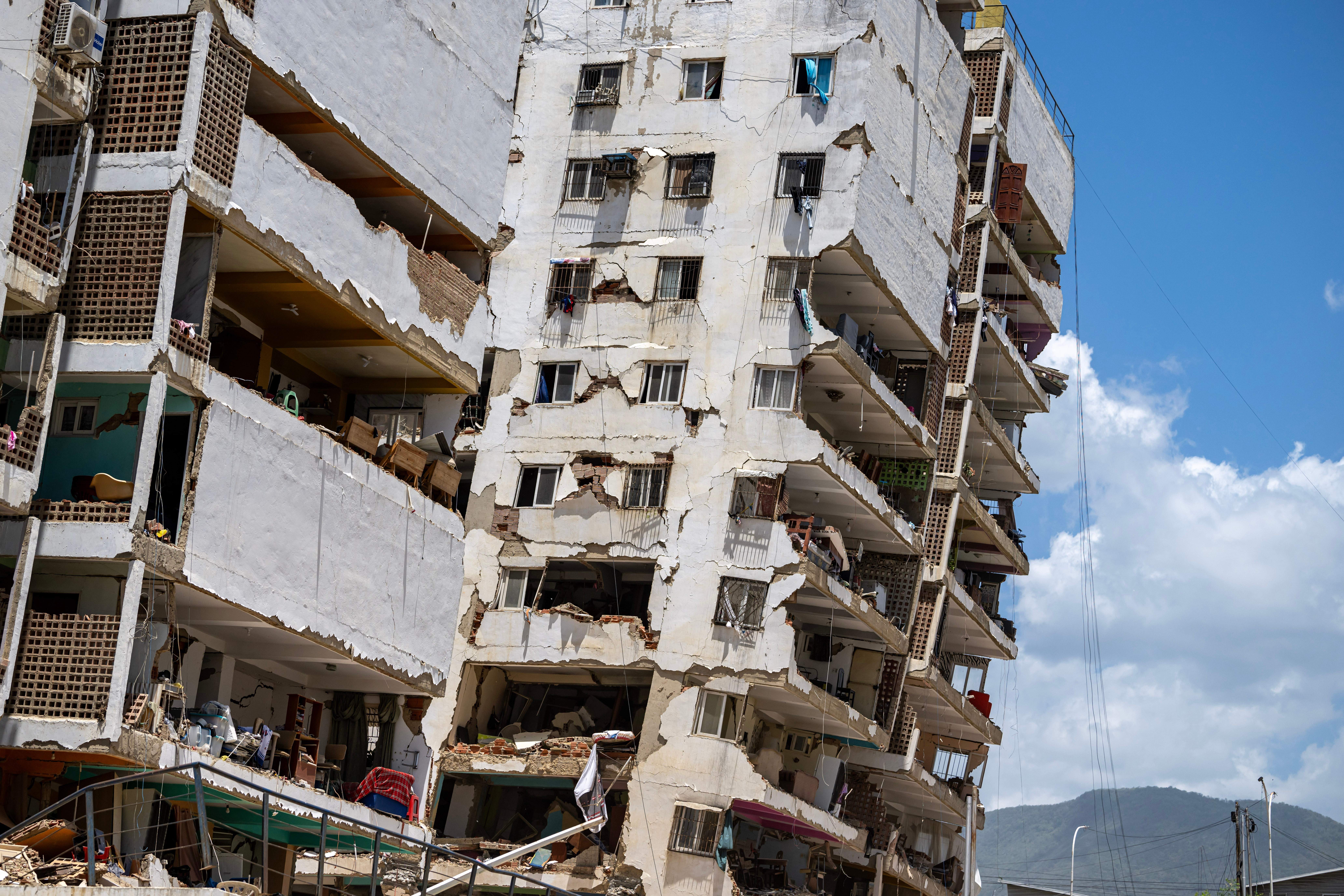
When seismic disasters strike regions experiencing protracted economic and institutional collapse, standard international aid models routinely fail. The intersection of severe geophysical shock with pre-existing supply chain degradation creates a complex operational bottleneck. In environments like Venezuela, institutional paralysis means that official relief pipelines face systemic delays due to bureaucratic friction, infrastructural decay, and security deficits. Consequently, effective disaster response frequently devolves to ad hoc, hyper-local networks initiated by stranded foreign nationals or local actors. Understanding the operational mechanics of these informal networks requires analyzing resource acquisition, localized supply chain security, and capital deployment under hyperinflationary or sanctioned conditions.
The primary constraint in an immediate post-earthquake environment is not a lack of global capital, but the absolute failure of last-mile delivery. Large non-governmental organizations (NGOs) rely on centralized hubs, standardized procurement protocols, and state clearances. When an earthquake compromises physical infrastructure such as bridges, roads, and electrical grids, these centralized systems stall. An agile, independent actor operates under a different cost function, bypassing formal institutional checkpoints to source and distribute survival assets directly at the micro-level. Discover more on a connected subject: this related article.
The Tri-Phasic Framework of Decentralized Disaster Response
Ad hoc humanitarian interventions follow a distinct tri-phasic operational trajectory. Each phase demands a shift in resource allocation and risk management strategies.
Phase One: Asset Assessment and Immediate Liquidity
The initial seventy-two hours post-disaster represent the critical window for survival optimization. In a fractured economy, formal banking systems are typically non-functional due to power grid failures or communication network blackouts. The immediate operational requirement is liquidity. More reporting by TIME highlights comparable perspectives on the subject.
- Hard Currency Domination: Digital transactions vanish. Access to physical foreign currency or highly liquid local physical assets dictates procurement capacity.
- Localized Sourcing: Supply acquisition must happen within a restricted geographic radius to minimize transit risks through compromised infrastructure.
- Direct Asset Conversion: Standard commercial operations cease, requiring direct negotiation with local merchants to secure existing inventories of potable water, non-perishable caloric inputs, and medical consumables before hoarding behaviors deplete available stocks.
Phase Two: Network Assembly and Micro-Logistics
Once immediate liquidity secures initial supplies, the operational challenge shifts from procurement to distribution. Institutional vacuums breed opportunistic security threats, making unsecured transport a high-probability loss vector.
- Informal Consensus Mapping: Establishing operational legitimacy requires explicit coordination with informal neighborhood leaders, municipal actors, or localized security elements. This minimizes the risk of asset seizure.
- Decentralized Warehousing: Rather than utilizing centralized storage facilities—which act as high-value targets for theft—supplies must be distributed across multiple low-profile, discrete locations.
- Asymmetric Transit Methods: Utilizing light transport mechanisms, such as motorcycles or foot paths, circumvents roadway blockages caused by structural debris and bypasses formal checkpoints where cargo expropriation is common.
Phase Three: Sustainable Sourcing and Scaled Funding
An ad hoc initiative cannot sustain operations long-term on finite personal capital. Transitioning to a sustained model requires plugging into international capital flows without triggering regulatory or security red flags within the host nation.
- Cross-Border Remittance Integration: Capital injection shifts to digital channels, using international wire systems, alternative digital assets, or peer-to-peer remittance networks to bypass domestic banking friction.
- Bulk Procurement Realignment: As immediate local inventories deplete, procurement must scale to secondary markets or adjacent regions unaffected by the seismic event, necessitating longer supply lines and formal transport manifests.
- Institutional Hand-Off: The final stage of an ad hoc initiative involves transferring localized data and distribution networks to larger, better-funded international entities once they successfully establish a domestic footprint.
The Cost Function of Last-Mile Delivery in Volatile Environments
To quantify the efficiency of an independent aid operation compared to a bureaucratic entity, we must evaluate the Total Cost of Delivery ($C_d$). This can be modeled through the interaction of procurement costs ($P_c$), logistical friction ($L_f$), and security overhead ($S_o$).
$$C_d = P_c + L_f + S_o$$
In a standard institutional model, logistical friction ($L_f$) escalates exponentially due to compliance protocols, customs delays, and large-scale transportation requirements. For an independent, on-the-ground actor, $L_f$ remains low due to immediate field-level decision-making and adaptive routing. However, security overhead ($S_o$) rises significantly due to the lack of institutional protection or diplomatic immunity.
The strategic advantage of an ad hoc operation lies entirely in the minimization of $L_f$. When an earthquake cuts off a municipality, a stranded individual leveraging local relationships can negotiate immediate access to a private warehouse or secure localized transport faster than an international agency can clear a customs manifest at a port of entry. This operational agility directly reduces the time-to-delivery metric, which correlates directly with mortality reduction in the acute phase of a crisis.
Capital Deployment Dynamics Under Hyperinflation and Sanctions
Operating in an economy like Venezuela introduces severe macroeconomic distortions that complicate humanitarian procurement. When hyperinflation devalues local tender on a daily basis, cash holdings represent a rapidly depreciating asset.
The primary defense mechanism against this asset erosion is immediate conversion into hard assets or the strict utilization of stable foreign currencies. Independent operators must function as micro-currency traders, calculating the real-time purchasing power of available funds against the fluctuating black-market exchange rates.
Furthermore, international sanctions restrict standard banking protocols, rendering foreign credit instruments useless. Capital must enter the operational ecosystem through complex, multi-tiered remittance paths. This introduces a structural vulnerability: reliance on informal financial intermediaries increases the transaction cost and introduces counterparty risk. If an intermediary fails to deliver physical cash in the field, the entire procurement apparatus collapses instantly.
Structural Vulnerabilities and Strategic Limitations
While independent humanitarian operations offer unmatched speed and localized penetration, they possess distinct structural limitations that prevent them from replacing macro-level aid architectures.
- Scale Saturation: Ad hoc networks scale poorly. The informal relationships that allow an individual to secure food for five hundred people cannot easily expand to feed fifty thousand.
- Single-Point Failure Risks: These operations depend heavily on the survival, health, and liberty of the primary organizer. If the independent operator faces injury, illness, or legal detention by suspicious state authorities, the entire network dissolves.
- Lack of Specialized Capabilities: Complex post-earthquake interventions—such as heavy urban search and rescue, structural engineering assessments, and advanced epidemiological containment—require specialized capital equipment and highly trained personnel that informal networks cannot deploy.
The strategic play for independent operators is not to mimic large-scale NGOs, but to act as high-speed tactical vanguards. By establishing immediate distribution channels and mapping localized ground realities, they create the operational foundation that larger institutional forces can exploit once they finally arrive on the scene.