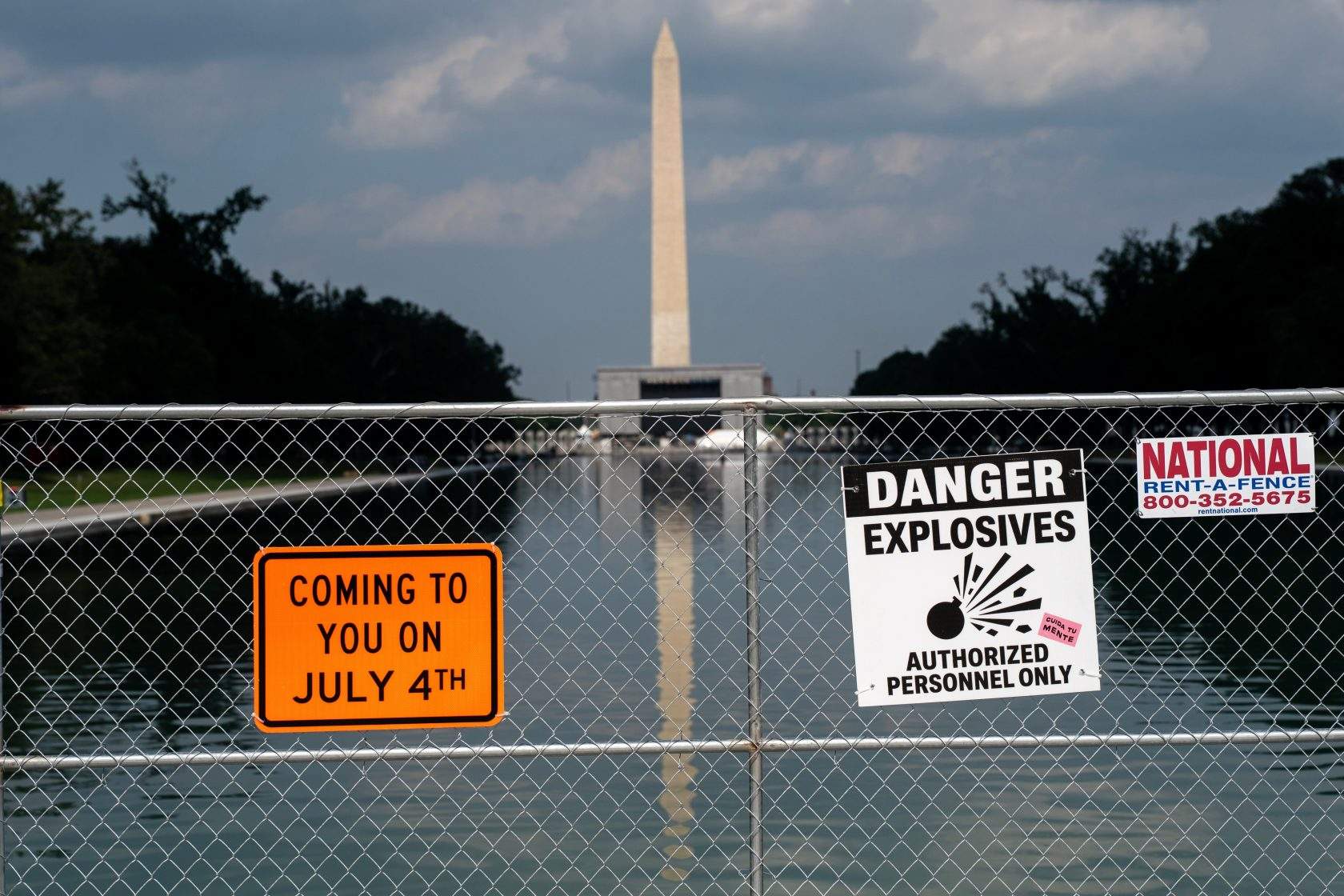
The federal indictment of three-time U.S. Olympic canoeist David Hearn on a felony charge of malicious destruction of property elevates a municipal maintenance failure into a high-stakes legal precedent. Announced by U.S. Attorney Jeanine Pirro, the charge carries a maximum penalty of 10 years in prison for allegedly causing more than $1,000 in damage to the Lincoln Memorial Reflecting Pool. While the prosecution frames the incident as an act of violent vandalism against a national monument, the defense points to a systemic failure in the asset's recent $14.7 million renovation.
To evaluate the validity of the case, the situation must be broken down into two distinct component variables: structural adhesion physics and the statutory definition of criminal intent.
The Materials Science Factor: Adhesion Failure vs Interfacial Degradation
The structural integrity of any aquatic basin lining depends on three interconnected mechanics: substrate preparation, chemical bonding, and environmental shear stress. The Trump administration’s $14.7 million rehabilitation project intended to coat the 1922 concrete basin with a specialized "American flag blue" sealant. The rapid degradation of this liner, which began peeling and floating to the surface days after installation, points to a fundamental breakdown in the material’s application lifecycle.
[Substrate Preparation Failure] ➔ [Interfacial Ingress of Water/Algae] ➔ [Delamination & Peeling]
When a coating system separates from a concrete base, the failure typically follows a specific causal chain:
- Inadequate Mechanical Profile: If the concrete surface is not sufficiently blasted or etched, the liquid polymer cannot form a mechanical interlock.
- Osmotic Blistering and Moisture Vapor Transmission: Concrete absorbs moisture. If a non-permeable membrane is applied over a saturated substrate, hydrostatic pressure forces water upward, blistering the liner.
- Algae-Driven Interfacial Ingress: Once a micro-tear or delamination point occurs, biological matter and water migrate beneath the film. The National Park Service's documented struggle with an immediate algae bloom accelerated this process, lowering the peel strength of the membrane to near-zero values.
Hearn—who operates a company specializing in composite materials for watercraft—stated that during a bike ride, he observed a piece of the liner flapping in the water and touched it to evaluate its texture, characterizing it as "rubbery." From a materials engineering perspective, a composite or sealant that can be manually removed with "bare hands"—as the prosecution alleges—has already experienced total adhesion failure. The force required to peel a correctly bonded polyurea or polyurethane liner from a prepared concrete substrate exceeds human physical capabilities.
The Legal Threshold: Quantifying Damage and Intent
The U.S. Attorney’s office must prove two distinct elements beyond a reasonable doubt to secure a felony conviction under D.C. Superior Court guidelines: that the physical damage exceeded the $1,000 statutory threshold, and that the damage was inflicted with malicious intent.
The Cost Function of Repair
The government claims Hearn forcefully pulled up approximately two square feet of the bottom liner. In municipal public works, the cost function for specialized coating repair is non-linear. The expense is rarely dictated by the raw material volume; instead, it is driven by fixed mobilization costs.
$$\text{Total Repair Cost} = \text{Mobilization Costs} + \text{Draining/Drying Time} + (\text{Area} \times \text{Material Unit Cost})$$
Because repairing a specific section requires localized draining, drying, surface prep, and chemical curing, a two-square-foot patch can easily exceed $1,000 in operational costs. Therefore, the government's economic valuation of the damage may be technically accurate based on contract repair invoices, regardless of who caused the initial delamination.
The Burden of Proving Malice
The core vulnerability in the prosecution’s case rests on proving state of mind. Under federal property destruction statutes, the government must establish that the defendant acted willfully and with malice, rather than out of curiosity or negligence.
The evidence profile presented by the U.S. Attorney relies heavily on eye-witness testimony from National Park Service employees, who allege Hearn was verbal and uncooperative when confronted. The prosecution argues this behavior indicates a hostile mindset. Conversely, the defense argues that Hearn's actions lacked criminal intent, describing a citizen inspecting an obviously defective public asset that was already peeling independently.
Systemic Risks and Prosecutorial Precedent
The aggressive pursuit of a felony conviction against an individual for interacting with failing infrastructure introduces clear institutional risks.
The first limitation of this legal strategy is that it conflates material degradation with deliberate sabotage. If the pool liner was already experiencing systemic delamination—evidenced by chunks floating to the surface prior to Hearn's arrest and an ongoing investigation into an unrelated 300-foot gash—isolating a specific two-square-foot area and attributing its failure entirely to human intervention introduces severe analytical bias.
The second bottleneck is operational. By framing infrastructure defects as criminal acts, public works departments risk avoiding necessary audits of their procurement protocols. The contract for the reflecting pool renovation was awarded on a no-bid basis to an entity previously utilized for private commercial swimming pools. Treating the breakdown of this installation as a law enforcement issue masks underlying procurement and engineering oversights.
Legal counsel representing municipal and infrastructure clients should monitor this trial's evidentiary phase closely. If the court accepts a repair invoice driven by fixed mobilization costs as sufficient proof of a felony-level dollar threshold—while ignoring preexisting material delamination—the liability boundary for citizens interacting with deteriorating public assets will shift significantly toward the state. Defense strategies must focus heavily on cross-examining the National Park Service's maintenance logs to establish the baseline structural state of the pool prior to June 19.