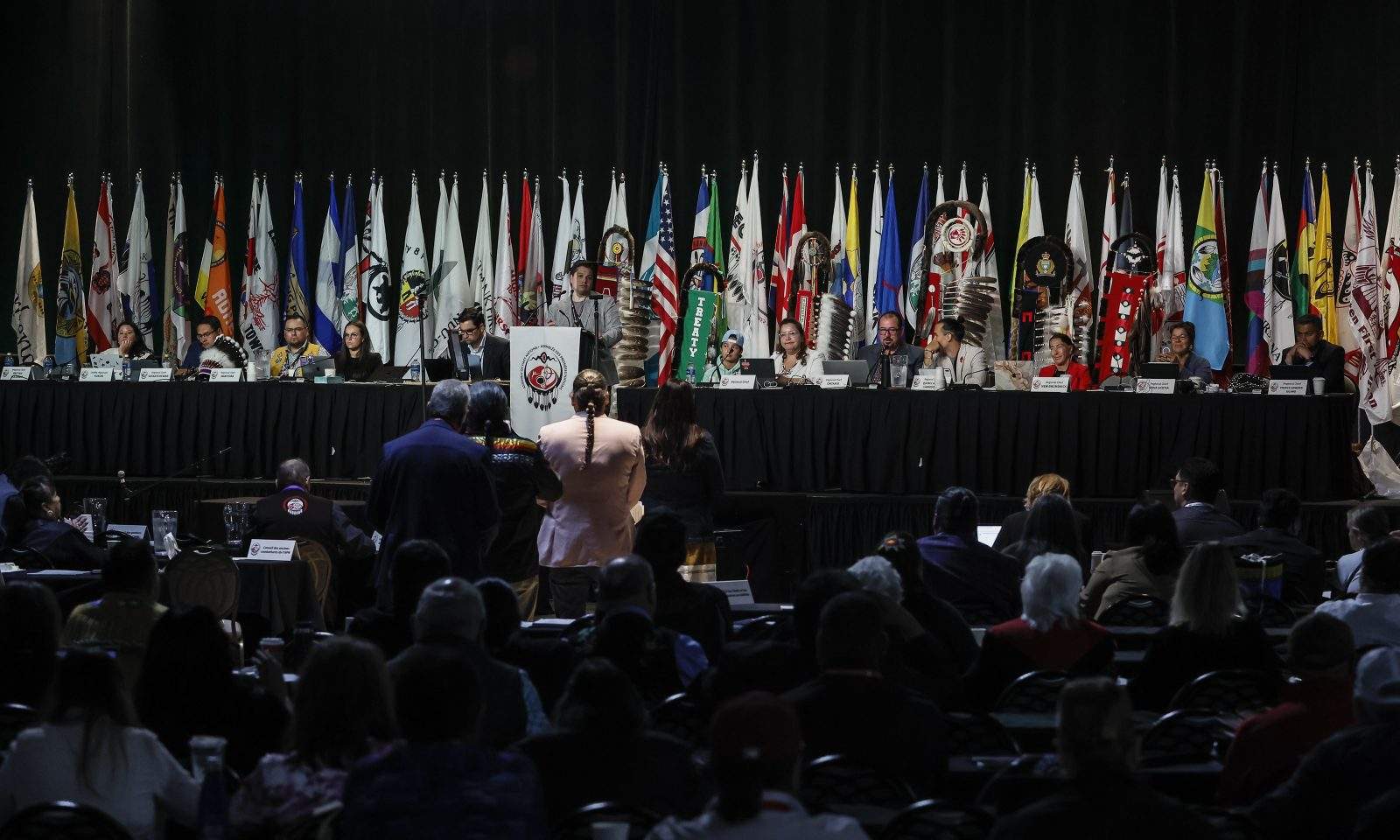
High-level summits between First Nations leadership and the federal government in Ottawa routinely fail to produce structural change because participants treat political theater as operational execution. When First Nations chiefs convene in the capital to voice priorities ahead of historic meetings with the Prime Minister and Cabinet, the public narrative reduces complex constitutional, fiscal, and jurisdictional disputes into generalized pleas for "reconciliation" and "consultation." In reality, these summits represent high-stakes negotiations over capital allocation, regulatory veto power, and sovereign jurisdiction. Understanding the actual mechanics of these meetings requires stripping away diplomatic rhetoric and examining the underlying institutional friction between the Indian Act framework, Section 35 constitutional rights, and federal fiscal transfer mechanisms.
To analyze what First Nations leaders are actually demanding when they enter Ottawa, one must categorize their priorities into four distinct operational pillars: fiscal autonomy, jurisdictional transfer, infrastructure parity, and resource revenue sharing. Standard media coverage treats these as a uniform wishlist. In practice, they represent competing and interdependent structural reforms that challenge the core administrative architecture of the Canadian state.
The Structural Friction of Federal-First Nations Governance
The baseline problem in Ottawa is an asymmetric principal-agent dilemma. Under the historical terms of the Indian Act and the modern administrative apparatus of Indigenous Services Canada (ISC) and Crown-Indigenous Relations and Northern Affairs Canada (CIRNAC), the federal government acts as both the fiduciary trustee and the primary budgetary gatekeeper. First Nations governments carry the operational burden of delivering municipal-level services—water, housing, policing, education, and health—without possessing the independent taxation base or borrowing authority available to provinces and municipalities.
When First Nations leaders arrive in Ottawa ahead of a major summit, their primary objective is to alter this balance of power. A summit is not an information-gathering session; it is a leverage point. By coordinating their messaging prior to entering the room, regional chiefs and national advocacy bodies like the Assembly of First Nations (AFN) attempt to prevent the federal government from executing a classic divide-and-conquer strategy, wherein bilateral deals are cut with compliant bands while broader systemic reforms are stalled in working groups.
The Fiduciary Bottleneck
The first mechanism governing these negotiations is the fiduciary bottleneck. The Crown holds a constitutional duty to act in the best interests of Indigenous peoples, a principle established through Supreme Court jurisprudence such as Guerin and Sparrow. However, in administrative practice, this fiduciary duty has mutated into a risk-averse compliance regime.
Federal departments require exhaustive reporting, multi-year contribution agreements, and granular line-item approvals before releasing capital. For a First Nation community, this creates severe capital drag. If a community receives funding for a water treatment plant or housing development, the lag between budgetary announcement in Ottawa and actual cash disbursement on the ground often spans multiple construction seasons. In northern and remote communities, missing a single winter road window delays project execution by a full calendar year, driving up material costs through inflation and eroding the purchasing power of the original grant. Therefore, when leaders demand "sustainable, predictable funding," they are specifically targeting the elimination of year-to-year contribution agreements in favor of statutory, multi-year block transfers akin to the Canada Health Transfer.
Deconstructing the Four Core Priorities
Every major policy demand voiced by First Nations leaders prior to an Ottawa summit maps directly onto one of four operational deficits. Analyzing these deficits reveals why partial concessions from the federal government rarely resolve the underlying disputes.
1. Infrastructure Parity and the Capital Deficit
The most visible priority on the Ottawa agenda is the closing of the infrastructure gap—specifically regarding clean drinking water, housing stock, broadband connectivity, and all-season roads. Mainstream reporting frames this as a humanitarian issue. From a systems engineering perspective, it is an asset management failure driven by chronic underfunding of operations and maintenance (O&M).
Historically, Ottawa has favored capital expenditure (CapEx) announcements—funding the construction of a new facility—while capping operational expenditure (OpEx) at unrealistic levels. Under standard federal formulas, a First Nation might receive capital to build a modern water treatment facility, yet the O&M budget allocated to run it covers only a fraction of the actual cost of certified operators, chemical reagents, and replacement parts. Without adequate OpEx, capital assets depreciate at an accelerated rate, resulting in the recurring cycle of boil-water advisories. When chiefs press Ottawa on infrastructure, the critical metric is not the headline dollar figure for new builds, but the reform of the O&M funding formulas to reflect true lifecycle costs and remote logistics premiums.
2. Jurisdictional Transfer and Legislative Displacement
The second priority centers on self-determination, which in operational terms means the displacement of federal statutes by First Nations laws. Under Section 35 of the Constitution Act, 1982, Aboriginal and treaty rights are recognized and affirmed, yet the precise boundaries of jurisdiction remain contested.
First Nations leaders push for federal legislative frameworks that recognize inherent jurisdiction over specific sectors, most notably child and family services, education, policing, and land management. The passage of federal legislation like Bill C-92 (An Act respecting First Nations, Inuit and Métis children, youth and families) illustrates the mechanism at work. The statute affirms that Indigenous peoples have an inherent right of self-government in relation to child and family services, allowing First Nations laws to prevail over conflicting provincial and federal laws.
However, legislation without fiscal backing creates an unfunded mandate. If a First Nation assumes jurisdiction over policing or child welfare, it inherits the legal liability and operational risk of those systems. Consequently, leaders entering Ottawa refuse to accept jurisdictional transfer agreements unless they are paired with statutory funding guarantees that account for historical backlogs, preventative programming, and administrative overhead.
3. Resource Governance and the Veto Paradox
The third priority involves economic participation, environmental stewardship, and the implementation of the United Nations Declaration on the Rights of Indigenous Peoples (UNDRIP). In Canada, the legal baseline is the "duty to consult and accommodate," established by the Supreme Court in Haida Nation. Under this doctrine, the Crown must consult with First Nations when contemplating conduct that might adversely affect potential or established Aboriginal or treaty rights.
The friction point in Ottawa is the gap between "consultation" and "free, prior, and informed consent" (FPIC), as articulated in UNDRIP and codified in Canada's UNDRIP Act. Corporate proponents and federal ministries frequently treat consultation as a procedural checklist—a series of meetings to be logged before issuing a permit for a pipeline, mine, or hydroelectric project. First Nations leaders view FPIC as a substantive standard requiring co-governance and mutual agreement.
This creates a regulatory bottleneck that directly impacts national economic output. Major resource and infrastructure projects cannot secure institutional financing if they face prolonged litigation over inadequate consultation. First Nations leaders use this economic reality as leverage in Ottawa. Their priority is to move away from late-stage impact benefit agreements (IBAs)—which offer modest cash payments and entry-level jobs after a project is already designed—toward early-stage equity ownership, joint environmental assessment boards, and direct resource revenue sharing with the Crown.
4. Policing, Justice, and Essential Service Designation
A recurring priority in pre-summit briefings is the crisis in community safety and the legal status of First Nations policing. Across Canada, First Nations police services operate under the First Nations and Inuit Policing Program (FNIPP). Unlike municipal or provincial police forces, which are governed by provincial police acts and funded as permanent, essential services, First Nations policing is structured as a discretionary federal grant program.
The operational consequences of this classification are severe:
- Recruitment and Retention: Because funding agreements expire every few years, First Nations police services struggle to offer long-term pension security or competitive pay parity with the RCMP or provincial forces.
- Capital Deficits: Detachment facilities and holding cells often fail to meet basic occupational health and safety standards because capital upgrades are not automatically built into program renewals.
- Jurisdictional Gaps: Officers frequently operate in complex legal gray zones regarding the enforcement of band bylaws versus the Criminal Code.
When leaders demand that Ottawa declare First Nations policing an essential service, they are demanding a transition from discretionary grant funding to statutory, legislated funding obligations.
The Asymmetry of Negotiation Incentives
To predict the outcome of any historic meeting in Ottawa, one must evaluate the divergent incentive structures of the two sides.
The federal executive operates on a four-year electoral cycle. Its primary incentive is to achieve visible, low-friction political wins that play well to urban swing voters while minimizing immediate fiscal outlays and avoiding constitutional crises with provincial premiers. Provinces hold constitutional jurisdiction over Crown lands and natural resources under Section 92 of the Constitution Act, 1867. Whenever the federal government makes concessions to First Nations regarding land use, resource revenue, or child welfare, it risks triggering a jurisdictional backlash from provincial capitals.
First Nations leaders operate on a fundamentally different horizon. Hereditary leaders think in generational timelines; elected chiefs operate on two-to-four-year band council cycles (unless they have transitioned to custom election codes) while remaining directly accountable to tight-knit communities experiencing acute, immediate crises in housing, addiction, and economic stagnation. A First Nations chief cannot return from Ottawa with a non-binding memorandum of understanding (MOU) and present it as a victory when community members lack basic shelter.
This asymmetry produces a predictable failure mode during summits:
- The Rhetoric-Execution Gap: Ottawa agrees to high-level principles (e.g., adopting UNDRIP, committing to close the infrastructure gap).
- The Bureaucratic Dilution: The political commitment is handed off to civil servants at the Department of Finance, Treasury Board, and Justice Canada to draft implementation mechanisms.
- The Mandate Narrowing: Treasury Board applies strict fiscal containment rules, while Justice Canada narrows the legal definitions to minimize Crown liability.
- The Collapse of Trust: By the time the policy reaches the community level, it has been stripped of the autonomy and funding required to work, prompting First Nations leaders to reject the framework and prepare for the next round of litigation or public protest.
Limitations of the Summit Model
It is a strategic error to assume that a single historic meeting in Ottawa, regardless of the seniority of the attendees, can resolve systemic governance failures. The summit model itself carries inherent structural limitations.
First, national bodies like the Assembly of First Nations are advocacy organizations, not governing authorities. The AFN National Chief does not hold legal authority to sign treaties or bind individual First Nations to fiscal agreements. Inherent rights and treaty rights are held at the nation or community level—by the Cree, the Haudenosaunee, the Anishinaabe, the Coast Salish, and hundreds of distinct nations with divergent legal histories (numbered treaties, historic peace and friendship treaties, modern land claims, or unceded territories). A policy framework designed in Ottawa to satisfy a First Nation under Treaty 6 in Alberta may be legally incompatible with the governance structures of an unceded First Nation in British Columbia.
Second, federal cabinet ministers frequently lack the unilateral authority to override Treasury Board spending controls or provincial regulatory vetoes. Even a Prime Minister committed to rapid reform faces institutional drag from a federal civil service trained to protect the Consolidated Revenue Fund from open-ended liabilities.
Tactical Execution for the Negotiating Table
To break the cycle of symbolic summits and stalled implementation, First Nations leadership and federal negotiators must abandon broad, aspirational communiqués in favor of hard structural mechanisms.
First Nations negotiators should refuse to enter working groups that lack a pre-approved Treasury Board funding mandate. Time spent negotiating policy frameworks without committed capital is a net loss of leadership bandwidth. Every agenda item brought to the Prime Minister must be tied to a specific statutory amendment, a binding fiscal transfer formula, or a defined timeline for the transfer of asset ownership.
Simultaneously, the federal government must shift its risk calculus. Currently, Ottawa views the transfer of unencumbered block funding and regulatory veto power to First Nations as a financial and legal risk. The empirical reality demonstrates the opposite: the status quo of bureaucratic micromanagement, chronic O&M underfunding, and procedural consultation generates billions of dollars in class-action settlements, lost resource investment, and compounding social infrastructure deficits.
The definitive play for both parties is the establishment of independent, joint fiscal and regulatory institutions—entities modeled on arms-length infrastructure banks or statutory transfer commissions—that remove day-to-day capital allocation from the political whims of Cabinet and the risk-averse compliance loops of federal departments. Until negotiations in Ottawa shift from debating the recognition of rights to engineering the financial and legal plumbing required to exercise them, historic meetings will continue to yield historical repetition.