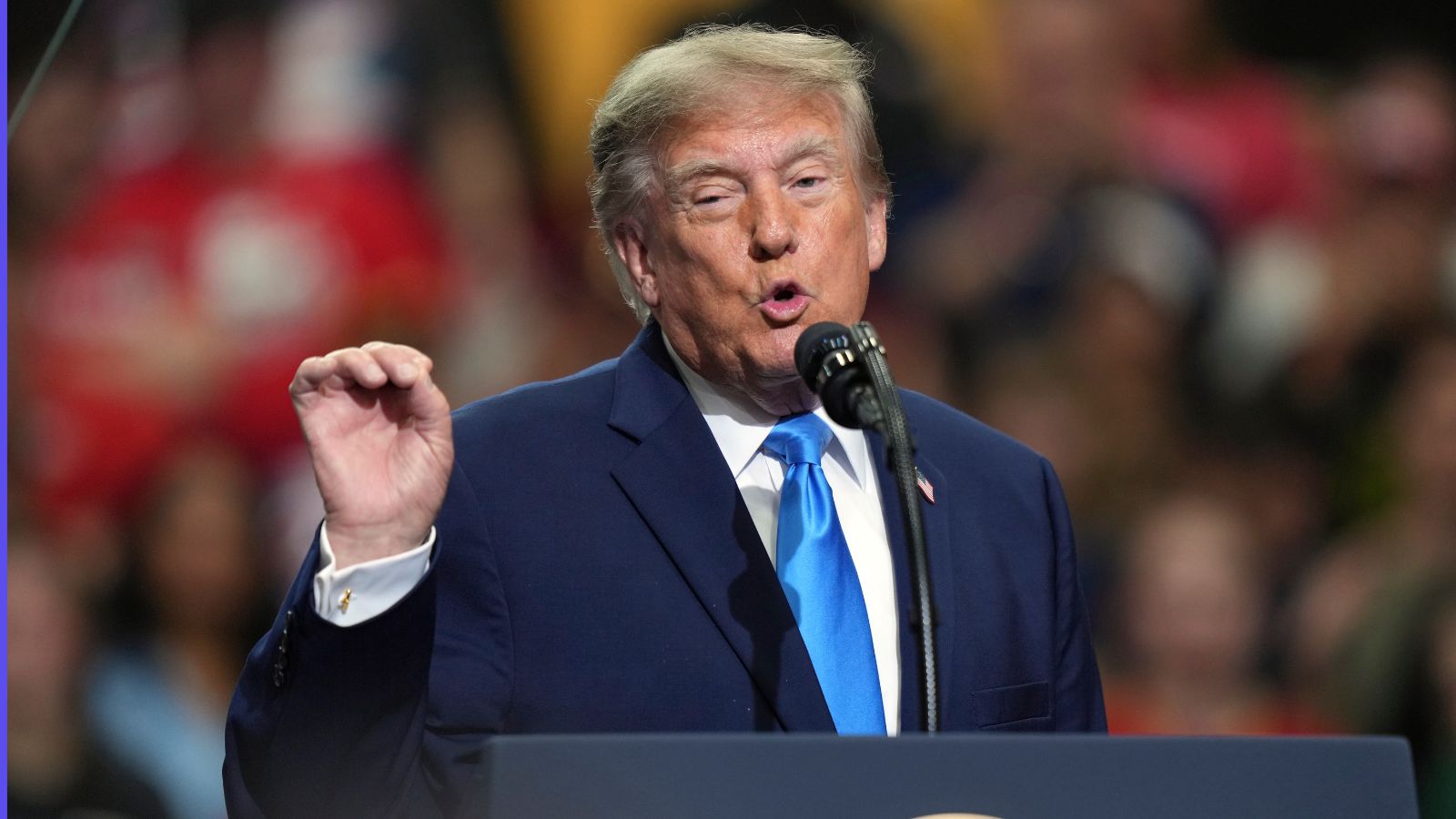
President Donald Trump waived key sanctions and tariff provisions under the Lindsey O. Graham Sanctioning Russia and Iran Act of 2026 in mid-October 2026, suspending statutory authorities that threatened duties of up to 100 percent on major buyers of Russian crude oil and gas—including India and China—and up to 500 percent on Russian energy imports. To understand why Washington enacted a sweeping bipartisan sanctions statute in September only to exercise presidential waiver authority days before its secondary tariff triggers took effect, analysts must separate statutory design from market physics. The waiver does not erase the underlying legislation or permanently resolve trade friction between New Delhi and Washington. Instead, it converts a sharp punitive cliff into a reversible executive lever shaped by Middle Eastern supply disruptions, refinery metallurgy, and domestic price pressures.
Standard news coverage of the waiver typically treats the episode as a binary reversal: Congress built a tariff weapon against Russian energy buyers, and the White House set it down. That framing misses three structural dynamics that govern how secondary sanctions operate in energy markets. First, secondary tariffs on large commodity buyers carry steep boomerang costs for the imposing economy when global supply chains are already tight. Second, statutory waiver clauses inside sanctions laws function as pressure-relief valves built by drafters who anticipate real-world chokepoints. Third, suspending a tariff authority under a national-interest certification leaves the legal architecture intact, preserving bargaining leverage for subsequent diplomatic and commercial negotiations.
Deconstructing Conventional Coverage and Its Analytical Gaps
Conventional reporting on the waiver around October 16–17, 2026, focuses primarily on headline relief for New Delhi and political reactions in Washington and Moscow. Articles note that the Graham Act passed Congress in September 2026, that it authorized steep duties on countries purchasing Russian crude oil or gas or facilitating sanctions evasion, and that President Trump issued a waiver under national-interest authority ahead of implementation. They also point to diplomatic engagement around the United Nations General Assembly, upcoming bilateral visits, and parallel energy moves such as diesel supply arrangements tied to disruptions from the Iran conflict.
Where standard coverage falls short is in connecting these isolated events into a single causal chain. Treating the waiver merely as a diplomatic favor to India overlooks why secondary tariffs of up to 100 percent on broad baskets of goods from major trading partners are notoriously difficult to enforce during a multi-front energy shock. When Middle Eastern oil flows and global refined fuel balances are strained, penalizing major buyers of Russian crude or restricting refined product channels can tighten global supply further and raise fuel costs inside the United States.
A second analytical gap involves distinguishing between established facts and educated hypotheses. It is a documented fact that Congress passed the Lindsey O. Graham Sanctioning Russia and Iran Act of 2026 in September 2026, that President Trump signed it into law on September 18, and that Executive Order 14436 on October 16 invoked Section 115(a) waiver authority while submitting a national-interest certification to Congress. It is also a documented fact that the executive order addressed duties under the Act's tariff sections—including steep duties on Russian goods and authority targeting major purchasers of Russian crude oil or gas—and that Russian officials welcomed the relief while domestic critics in the United States attacked the move. By contrast, claims about the exact weight assigned to domestic fuel affordability versus bilateral trade talks or diplomatic outreach represent educated hypotheses inferred from observable timing and public statements, because executive waiver certifications do not always disclose every internal trade-off in full detail.
The Four Pillars of the Sanctions-and-Waiver Mechanism
Evaluating how this policy shift affects India, the United States, and global energy markets requires examining four interlocking pillars rather than viewing sanctions as a standalone switch.
- Statutory authority versus executive discretion: Congress creates secondary tariff and sanctions powers by statute, but executive waiver provisions—such as Section 115(a) of the Graham Act—allow the president to suspend enforcement upon certifying that doing so serves the U.S. national interest. A waiver suspends operational enforcement without repealing the underlying law, keeping the statutory trigger dormant rather than dead.
- Refinery configuration and crude fungibility: Crude oil is not a single uniform commodity; refineries are engineered around specific slate characteristics such as API gravity and sulfur content. Indian refiners have long processed medium sour crudes alongside other grades, meaning sudden displacement of one supply stream requires re-optimizing crude slates, shipping routes, and margins across alternative suppliers.
- Global energy balances and product markets: Secondary pressure on crude buyers interacts directly with global refining capacity and middle-distillate markets like diesel. Disruptions in the Middle East and the 2026 conflict involving Iran heighten sensitivity to refined fuel availability and price pass-through across importing economies.
- Bilateral trade leverage and legal durability: Tariff threats and waivers sit inside broader commercial negotiations, including India-U.S. trade discussions, while also interacting with prior judicial constraints on executive tariff authority—such as the Supreme Court's ruling in Learning Resources, Inc. v. Trump limiting tariff use under the International Emergency Economic Powers Act (IEEPA). Express congressional authorization in the Graham Act matters legally, even when currently waived.
Why Secondary Tariffs Create a Cost Function with Sharp Asymmetries
In trade economics, a secondary tariff on a third country's exports to punish its purchases from a sanctioned supplier operates through an indirect cost function. The imposing country threatens to tax goods entering its own market from the third country—here, India or China—unless that country curbs its energy imports from Russia. In theory, the threat raises the cost of continuing sanctioned trade above the cost of switching suppliers.
In practice, that cost function turns asymmetric whenever the target country has high switching costs and the sanctioning country faces domestic inflation sensitivity. Consider a simplified operational example. Suppose an Indian refiner relies on discounted or accessible medium sour crude to keep domestic refining margins viable amid tight Middle Eastern supply. If Washington imposes up to a 100 percent tariff on Indian exports to the United States, exporters selling into the U.S. market face severe margin compression or volume loss. Yet forcing an immediate halt to Russian crude purchases can simultaneously tighten global crude and product markets, pushing energy prices higher for U.S. consumers and businesses. Policymakers weighing both effects confront a classic trade-off: maximum economic pressure on Moscow's energy revenue can collide with domestic price stability and broader geopolitical alignment in Asia.
Cause-and-Effect Chains Standard Coverage Misses
To see how the waiver reshapes incentives across capitals and supply chains, trace three causal pathways that headline summaries often compress into a single line.
The first pathway runs from Middle Eastern supply risk to refinery procurement flexibility. When conflict affects Middle Eastern oil transit or regional output—as highlighted by tensions involving Iran and the Strait of Hormuz—buyers with fewer alternative barrels face heightened exposure to price spikes and supply bottlenecks. Indian officials have emphasized that refinery configurations and energy security needs constrain how abruptly crude sourcing can be rerouted. Waiving secondary tariffs removes an immediate external shock to Indian exporters while allowing refiners to manage crude sourcing without an abrupt cliff-edge tariff penalty.
The second pathway links statutory waiver mechanics to negotiation leverage. Because the waiver relies on presidential authority rather than legislative repeal, the Graham Act's tariff and sanctions provisions remain on the books. From a negotiating standpoint, a suspended penalty is a reversible concession. Washington can point to the waiver as goodwill during bilateral diplomacy and trade talks with New Delhi, while retaining the legal option to revisit or narrow the waiver if policy priorities shift or if compliance benchmarks are contested.
The third pathway connects legal history to executive strategy. Earlier in 2026, the Supreme Court's decision in Learning Resources, Inc. v. Trump curtailed reliance on IEEPA as a general tariff authority, prompting unwinding of IEEPA-based duties. Against that backdrop, Congress enacted explicit statutory tariff authorities in the Graham Act, and the president then chose to waive those statutory duties via executive order. That sequence shows that legal authority to impose a tariff does not automatically make imposing it optimal at a given moment in the business and geopolitical cycle.
Operational Playbook for Trade, Energy, and Risk Teams
Organizations exposed to U.S.-India trade flows, Russian or Middle Eastern energy markets, or secondary sanctions compliance should treat the waiver as a conditional pause rather than a permanent regime change.
- Map exposure by tariff line and supply origin: Identify which product lines move between India and the United States and trace upstream crude or feedstock dependencies. Do not assume immunity from trade friction simply because the Graham Act's secondary tariffs are waived; general trade negotiations, sector reviews, and other statutory tools can still affect specific goods.
- Audit sanctions-evasion and shipping counterparties: Even when broad secondary tariffs under a specific act are waived, underlying maritime, insurance, banking, and sanctions-evasion rules remain a focal point of regulatory scrutiny. Verify vessel histories, ownership structures, and general license boundaries rather than treating a tariff waiver as blanket clearance for all transactions.
- Stress-test contracts for sudden reactivation: Because waivers under statutory national-interest provisions can be modified or revoked without fresh legislation, build contingency clauses into commercial contracts covering tariff pass-through, force majeure or regulatory change-in-law triggers, and alternative sourcing lanes.
- Track official implementation notices and diplomatic milestones: Monitor executive orders, Office of Foreign Assets Control or Treasury general licenses, U.S. Trade Representative reviews, and bilateral trade-drafting milestones rather than relying on secondary commentary.
Limitations and Failure Modes of This Playbook
No compliance or commercial hedging framework eliminates policy volatility. The primary limitation of scenario planning around geopolitical waivers is non-linear escalation: an unexpected shock in Middle Eastern energy shipping, a sharp turn in negotiations over Ukraine, or domestic political shifts in Washington can trigger policy reversals faster than supply chains can retool. A second limitation is scope ambiguity: waivers often apply to specific statutory provisions or come alongside targeted general licenses, meaning a firm that over-reads a headline waiver as a full lifting of restrictions risks compliance breaches. Finally, defensive contract clauses and multi-sourcing reduce shock severity, but they carry direct carrying and transaction costs that erode competitiveness if stability holds.
Strategic Recommendation
Treat the Graham Act waiver as a tactical window to lock in durable commercial terms while keeping statutory reactivation risk priced into operations. For Indian and U.S. commercial stakeholders negotiating bilateral trade arrangements, the immediate priority should be advancing concrete market-access and customs terms while secondary-tariff pressure is off the table. For corporate risk and energy procurement leaders, the right move is to maintain dual-track contingency plans—preserving compliant supply optionality and contractual tariff-allocation language—so that if the waiver is narrowed or revoked in a future geopolitical turn, operations adjust through pre-negotiated rules rather than emergency improvisation.



