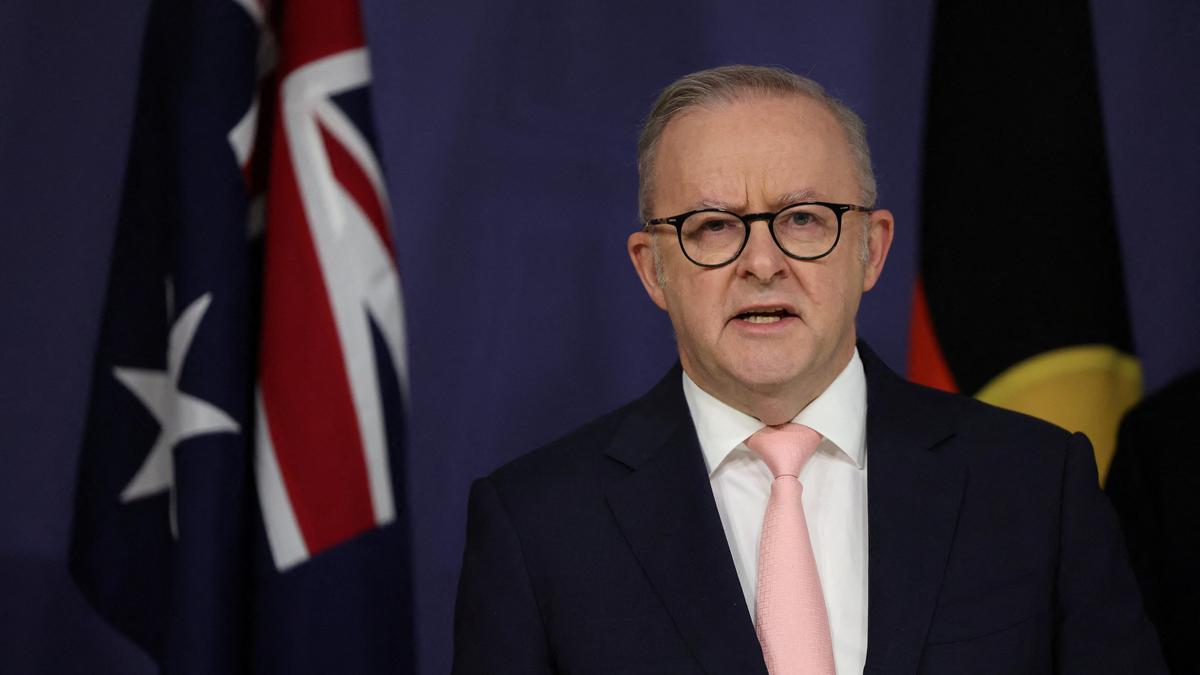
The diplomatic rhetoric surrounding bilateral meetings between G20 nations frequently obscures the underlying macroeconomic realities driving state behavior. When the Australian Prime Minister publicly validates India’s economic trajectory, the exchange must not be viewed merely as geopolitical courtesy. Instead, it signals a calculated alignment of two distinct economic architectures seeking to hedge against supply chain vulnerabilities, capital misallocation, and shifting demographic dependencies across the Indo-Pacific.
The relationship between a resource-rich, capital-exporting economy like Australia and a rapidly industrializing, labor-abundant economy like India operates on fundamental principles of complementary endowments. To understand the strategic trajectory of this partnership, we must deconstruct the bilateral interaction into its component economic drivers, structural bottlenecks, and the capital flows that define the corridor.
The Tri-Pillar Framework of Australia India Economic Integration
The economic relationship between Canberra and New Delhi is anchored by three structural pillars. Each pillar addresses a specific deficit in one nation by utilizing a surplus in the other.
+-------------------------------------------------------------------------+
|                THE TRI-PILLAR COMPLEMENTARITY FRAMEWORK                  |
+-------------------------------------------------------------------------+
| 1. Critical Mineral Security  --> Powers India's EV/Grid Infrastructure |
| 2. Educational & Human Capital--> Solves Australia's Skilled Labor Void |
| 3. Institutional Capital Flow --> Diversifies Australian Pension Funds  |
+-------------------------------------------------------------------------+
1. The Critical Mineral Supply Chain and Energy Transition
India’s domestic industrial strategy, specifically the Production Linked Incentive (PLI) schemes targeting advanced chemistry cell batteries, electric vehicles, and renewable energy infrastructure, faces a severe upstream bottleneck: raw material scarcity. Australia controls vast reserves of lithium, cobalt, manganese, and rare earth elements.
The economic link here is a classic vertical integration model scaled to international trade. By securing long-term off-take agreements with Australian miners, Indian industrial conglomerates stabilize their input cost functions, insulating their manufacturing operations from the high volatility of spot-market mineral pricing. For Australia, this relationship mitigates the systemic risk of over-reliance on a single sovereign buyer for its resources.
2. Human Capital Arbitrage and Educational Integration
Australia faces a structural labor shortage in highly specialized sectors, including engineering, data analytics, and healthcare, driven by its domestic demographic curve. Conversely, India produces a massive annual surplus of tertiary-educated technical talent looking for global mobility.
The bilateral strategy uses institutional mechanisms, such as the Mutual Recognition of Qualifications and streamlined visa pathways, to formalize this labor arbitrage. By integrating educational standards, Australian universities establish offshore campuses within India (e.g., Deakin University in GIFT City), capturing tuition revenue early in the value chain while creating a direct, vetted pipeline of human capital to sustain Australia's domestic services economy.
3. Institutional Capital Allocation and Infrastructure Financing
Australian superannuation funds manage one of the largest pools of pension capital globally, yet domestic opportunities yield diminishing marginal returns due to market saturation. India requires hundreds of billions of dollars in infrastructure investment to sustain its targeted 7% GDP growth rate.
The strategic alignment involves routing Australian institutional capital into Indian greenfield and brownfield infrastructure assets, facilitated by targeted sovereign tax concessions. This provides Australian funds with long-duration, inflation-hedged yields while giving India the non-debt-creating capital inflows required to build out its national logistics network.
Deconstructing the Trade Velocity Model
The India-Australia Economic Cooperation and Trade Agreement (AI-ECTA) serves as the primary policy instrument regulating trade velocity between the two nations. To evaluate its efficacy, we must analyze the net tariff reductions and their direct impact on consumer surplus and deadweight loss.
Prior to the agreement, high tariff barriers functioned as an artificial tax on supply chains, restricting bilateral trade volumes well below potential capacity. The removal of customs duties on over 95% of tariff lines from Australia—including critical inputs like coking coal, alumina, and metallic ores—directly reduces the marginal cost of production for Indian steelmakers and manufacturers.
The mechanics of this shift are straightforward:
$$Cost\ Reduction = \Delta T \times V$$
Where $\Delta T$ represents the tariff differential and $V$ represents the import volume. This cost reduction passes through the supply chain, enhancing the global price competitiveness of Indian manufactured exports.
In reverse, Indian textile, agricultural, and pharmaceutical exporters gain zero-duty access to the Australian consumer market. This creates an immediate expansion of the consumer surplus in Australia, as cheaper imported goods replace higher-cost domestic or third-party alternatives.
However, the real test of trade velocity lies not in initial tariff elimination, but in the non-tariff barriers that remain. Strict sanitary and phytosanitary (SPS) measures applied by Australia to Indian agricultural products, alongside complex rules of origin criteria, represent frictional costs that continue to suppress the total volume of trade.
Supply Chain Resiliency and the Geopolitical Risk Premium
The geopolitical impetus for the renewed warmth between New Delhi and Canberra cannot be separated from the concept of friend-shoring. Global manufacturing networks constructed over the past three decades optimized exclusively for just-in-time financial efficiency, ignoring sovereign concentration risks. The vulnerabilities exposed by global supply chain disruptions have forced both nations to reprice the geopolitical risk premium of their trade portfolios.
Australia and India, alongside Japan, anchor the Supply Chain Resilience Initiative (SCRI). The strategic objective is to construct an alternative manufacturing and logistics architecture that cannot be disabled by a single geopolitical choke point.
[Traditional Concentrated Supply Chain]
Raw Materials -> Single Processing Hub -> Global Markets (High Concentrated Risk)

[Resilient Diversified Architecture (SCRI)]
Australia (Raw Minerals) -> India (Processing & Assembly) -> Indo-Pacific Markets (Distributed Risk)
This structural shift requires significant capital expenditure to build redundant processing facilities and secure maritime shipping lanes. While this diversification strategy introduces near-term capital inefficiencies and higher initial unit costs, it serves as an economic insurance policy against catastrophic supply chain halts.
Structural Bottlenecks and Execution Risks
A rigorous analysis requires identifying the systemic friction points that threaten to derail the execution of this bilateral strategy. No economic framework is without operational limitations.
The Asymmetric Regulatory Environment
The primary friction point lies in the divergence between the regulatory frameworks of the two nations. Australia operates a highly transparent, predictable, legalistic system with stringent environmental, social, and governance (ESG) mandates. India’s regulatory landscape, while improving via digitization, remains a complex matrix of state and federal jurisdictions, evolving tax laws, and bureaucratic delays in contract enforcement.
Australian institutional investors, accustomed to clear regulatory horizons, encounter significant friction when navigating Indian land acquisition laws and local environmental clearances. This regulatory mismatch slows down capital deployment, leaving a wide gap between committed capital and actual asset deployment.
Logistics and Infrastructure Deficits
Although India is investing heavily in National Highways and Dedicated Freight Corridors, the domestic logistics cost as a percentage of GDP remains uncompetitively high at approximately 13-14%, compared to single digits in advanced economies. This internal friction partially erodes the cost advantages gained from tariff reductions under AI-ECTA. Until internal port-to-factory transit times are minimized, the velocity of Australian raw inputs entering the Indian manufacturing ecosystem will face physical limitations.
Divergent Trade Architecture Objectives
While both nations have signed the interim AI-ECTA, negotiations for the Comprehensive Economic Cooperation Agreement (CECA) frequently stall over sensitive domestic sectors.
- Australia seeks deeper access to India’s highly protected dairy and agricultural markets, aiming to capture the consumption growth of India's expanding middle class.
- India fiercely protects its agrarian sector due to the immense political and economic vulnerability of its rural workforce, which accounts for nearly half of the country's employment.
- India demands greater liberalisation in the movement of natural persons (Service Sector visas), an area where Australia faces domestic political pressure regarding immigration thresholds and housing stock constraints.
Strategic Playbook for Market Participants
To capitalize on the structural reorientation of the Australia-India corridor, institutional investors and corporate strategists must move past diplomatic talking points and execute on the underlying economic trends.
Actionable Directives for Capital Allocation:
- Acquire Upstream-Downstream JV Structuring: Indian manufacturing entities must move away from simple transactional procurement of critical minerals. Strategists should form joint ventures directly with mid-tier Australian mining firms, injecting growth capital in exchange for equity-backed off-take agreements. This internalizes the supply chain within a single corporate structure, shielding operations from geopolitical price shocks.
- Build Local Asset Management Partnerships: Australian superannuation funds should avoid direct greenfield project development in India due to localized regulatory risks. The optimal deployment mechanism is to anchor domestic Indian infrastructure investment trusts (InvITs) or partner with established national asset management firms that possess proven track records in local bureaucratic navigation and land dispute resolution.
- Exploit Educational Co-Location Model: Higher education institutions should aggressively leverage the mutual recognition framework to establish twin-degree programs. By executing the initial two years of curriculum in India and the final two years in Australia, institutions optimize operating margins via lower domestic delivery costs while maximizing high-value international student fees during the completion phase.
- Optimize Logistics Hubbing in the Indian Ocean: Logistics providers must restructure their maritime routes to anticipate the increased volume of dry bulk commodities moving from Western Australia to India's eastern seaboard ports. Investing in deep-water port infrastructure and automated unloading facilities along India's east coast will capture high-margin service contracts as coking coal and critical mineral volumes expand.