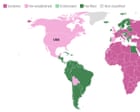
Reversing disease elimination status is rarely the result of a single pathogen mutation; it is almost always the mathematical consequence of localized infrastructure decay colliding with high transmissibility. When a nation loses its measles elimination designation—a status defined by the World Health Organization as the absence of endemic measles virus transmission in a defined geographical area for at least 12 months in the presence of a well-performing surveillance system—the failure is operational, not biological. The measles morbillivirus remains genetically stable, and the two-dose measles, mumps, and rubella (MMR) vaccine retains its approximate 97% efficacy. What degrades is the population-level immunity threshold required to arrest chain-of-transmission dynamics.
To understand how an advanced public health apparatus regresses to pre-elimination transmission levels, we must strip away surface-level political narratives and examine the underlying epidemiological variables, spatial clustering mechanics, and institutional bottlenecks that govern infectious disease containment. Learn more on a connected topic: this related article.
The Mathematical Architecture of Herd Immunity Failure
Measles operates at the extreme upper bound of human viral transmissibility. Its basic reproduction number ($R_0$)—the expected number of secondary cases generated by one infected individual in a completely susceptible population—typically ranges between 12 and 18. By comparison, seasonal influenza operates at an $R_0$ of roughly 1.3, and the ancestral SARS-CoV-2 strain operated near 2.5 to 3.0.
The critical vaccination threshold ($V_c$) required to halt sustained transmission is governed by the equation: More analysis by Everyday Health delves into similar perspectives on this issue.
$$V_c = \frac{1 - \frac{1}{R_0}}{E}$$
Where $E$ represents vaccine effectiveness. Assuming an $R_0$ of 15 and a two-dose vaccine effectiveness of 0.97, the required population immunity sits at approximately 96.2%. Even at the lower bound of $R_0 = 12$, the threshold remains above 94%.
This razor-thin margin creates a brutal operational reality: national or state-level immunization averages are functionally useless as predictive risk metrics. Public health reporting frequently cites aggregate state coverage rates of 92% to 95% as indicators of systemic health. In practice, infectious diseases do not spread through statistical averages; they spread through social and geographic networks.
Spatial Clustering and the Pocket Vulnerability Effect
When vaccine exemptions—whether medical, religious, or philosophical—cluster within specific school districts, religious congregations, or insular municipalities, the localized effective reproduction number ($R_t$) spikes above 1.0 even while the broader county maintains 95% coverage.
- Network Homophily: Unvaccinated individuals disproportionately associate with other unvaccinated individuals. This non-random mixing invalidates standard homogeneous epidemiological models, accelerating outbreak velocity once an index case is introduced.
- The Importation Trigger: Elimination status does not mean zero cases; it means zero sustained domestic chains of transmission. International travel continually introduces index cases from endemic regions. In a high-coverage environment, an imported case hits an immunological dead end within one or two generations of spread. In a clustered pocket of 75% to 80% immunity, a single imported case initiates an exponential cascade.
- Generational Accumulation: Immunity gaps do not reset annually. A 3% annual shortfall in kindergarten MMR uptake compounds over a five- to ten-year cohort, creating a massive, contiguous reservoir of susceptible adolescents and young adults who lack both vaccine-induced and natural immunity.
The Three Pillars of Containment Collapse
When an outbreak breaches the 12-month continuous transmission threshold—the exact criterion that strips a country of its elimination status—the failure can be traced to three distinct operational breakdowns.
1. Pre-Symptomatic and Prodromal Transmission Windows
Measles possesses an insidious clinical timeline that defeats reactive, symptom-based isolation protocols. Infected individuals become contagious approximately four days before the characteristic maculopapular rash appears. During this prodromal phase, symptoms mirror routine upper respiratory infections: fever, cough, coryza, and conjunctivitis.
By the time a clinician suspects measles and orders confirmatory serology or RT-PCR testing, the patient has already spent up to 96 hours circulating in waiting rooms, classrooms, and transit hubs. Because the virus remains viable in aerosolized droplets and on surfaces for up to two hours after an infected person vacates a room, a single unrecognized prodromal patient in an emergency department can expose dozens of susceptible individuals simultaneously.
2. Decentralized Surveillance and Reporting Latency
Effective outbreak containment requires real-time data ingestion and immediate contact tracing. In fragmented healthcare systems, reporting pipelines suffer from severe latency.
- Diagnostic Delay: Many primary care physicians and urgent care clinicians practicing in the post-elimination era have never seen an active measles case. Misdiagnosis as adenovirus, roseola, or a drug reaction routinely delays specimen collection by 48 to 72 hours.
- Laboratory Bottlenecks: Confirming measles requires specialized IgM antibody assays or molecular detection via state public health laboratories, rather than rapid point-of-care antigen tests. Sample transit and batch processing add another 24 to 48 hours of blind time.
- Jurisdictional Friction: Outbreaks frequently cross county and state lines. When local health departments operate on incompatible electronic health record (EHR) architectures or rely on manual fax-based reporting, contact tracers lose the critical 72-hour window required to administer post-exposure prophylaxis (PEP).
3. Resource Depletion in Local Public Health Infrastructure
Containment of a single measles case is extraordinarily capital- and labor-intensive. Unlike seasonal respiratory viruses, measles demands exhaustive backward and forward contact tracing. Public health teams must identify every individual who shared airspace with the index case during the contagious window, verify their immunization records via state registries, and enforce strict 21-day quarantine protocols for non-immune contacts.
When multiple simultaneous outbreaks occur across different jurisdictions, local public health departments hit a hard capacity ceiling. Chronic underfunding of foundational public health capabilities forces agencies to pull staff from routine immunization clinics and chronic disease programs to manage acute contact tracing. This creates a destructive feedback loop: responding to the active outbreak degrades the very preventive infrastructure needed to close the immunity gaps driving the crisis.
The Cost Function of Outbreak Response
Evaluating measles resurgence purely through morbidity and mortality statistics understates its systemic impact. While acute complications—such as pneumonia (occurring in roughly 1 in 20 cases), encephalitis (1 in 1,000), and death (1 to 3 per 1,000 cases in high-income settings)—represent severe clinical burdens, the operational cost function to healthcare institutions is equally destabilizing.
The direct financial cost of containing a single measles case in a hospital or municipal setting routinely ranges from $30,000 to over $140,000, depending on the number of secondary exposures. Major outbreaks involving hundreds of cases generate multi-million-dollar uncompensated liabilities for local governments and hospital systems.
- Clinical Furloughs: Healthcare workers exposed to a confirmed case who lack documented presumptive evidence of immunity must be furloughed from day 5 through day 21 following exposure. In systems already operating with thin nursing and physician staffing margins, losing even ten staff members to quarantine can force unit closures or ambulance diversions.
- Post-Exposure Prophylaxis Logistics: Susceptible contacts must receive the MMR vaccine within 72 hours of exposure, or immune globulin (IG) within six days—particularly for infants under six months, pregnant women, and immunocompromised patients. Sourcing, distributing, and administering intravenous or intramuscular IG at scale strains regional pharmaceutical supply chains.
- Long-Term Immunological Amnesia: Beyond acute hospitalizations, wild-type measles infection destroys between 11% and 73% of an individual's pre-existing antibody repertoire—a phenomenon known as immune amnesia. Survivors face elevated susceptibility to secondary bacterial and viral infections for up to three years post-recovery, driving downstream healthcare utilization that rarely gets attributed to the initial measles outbreak.
Strategic Interventions and Operational Limitations
Restoring elimination status requires driving $R_t$ permanently below 1.0 across every geographic sub-unit, not merely elevating the national mean. Achieving this demands targeted structural interventions, though each carries distinct operational limitations.
Mandatory Immunization Registry Integration
State and regional Immunization Information Systems (IIS) must shift from passive, opt-in repositories to mandatory, bidirectional data exchanges integrated directly into all EHR platforms. Clinicians and school nurses need instant, automated visibility into cohort immunity levels at the zip-code and school-building levels to deploy mobile vaccination units before an importation event occurs.
Limitation: Data interoperability across state lines remains legally and technically fragmented. Privacy statutes and varying consent frameworks prevent seamless querying when populations migrate between jurisdictions.
Elimination of Non-Medical Exemptions
Empirical data from jurisdictions that have eliminated religious and philosophical exemptions demonstrates rapid, measurable increases in kindergarten MMR coverage, closing the susceptibility gap within two to three academic cycles.
Limitation: Removing non-medical exemptions frequently triggers an immediate secondary spike in medical exemption requests from sympathetic or non-compliant clinicians, requiring strict state-level medical board auditing to prevent regulatory arbitrage. Furthermore, aggressive mandate enforcement in low-trust communities can accelerate homeschooling migration, which removes children from institutional tracking while preserving their social network clustering.
Rapid Molecular Triage Protocols
Hospitals and urgent care centers must embed automated clinical decision support (CDS) alerts into triage workflows. Any patient presenting with fever and rash, combined with recent international travel or exposure to an active outbreak zone, must trigger immediate airborne isolation precautions (negative-pressure rooms) prior to registration.
Limitation: Many outpatient clinics and rural emergency departments lack dedicated airborne infection isolation rooms (AIIRs), forcing staff to rely on parking-lot triage or improvised masking protocols that remain vulnerable to human error during peak respiratory virus seasons.
Tactical Execution for Health Systems and Policy Leaders
Reclaiming measles elimination status cannot be achieved through broad public awareness campaigns, which consistently fail to move entrenched vaccine-hesitant cohorts. Public health authorities and healthcare executives must execute a targeted, defensive posture focused on network hardening and rapid containment.
- Audit Micro-Level Immunity: Abandon county-level reporting as a primary KPI. Mandate annual, public, school-by-school and census-tract immunization mapping to identify clusters where coverage drops below 92%.
- Pre-Position Post-Exposure Assets: Establish regional stockpiles of immune globulin and pre-authorize standing orders for emergency department triage nurses to isolate febrile rash presentations immediately, bypassing physician sign-off.
- Enforce Healthcare Workforce Verification: Require hard serological or documented two-dose verification for all hospital and outpatient staff—including non-clinical contractors—eliminating administrative waivers to prevent nosocomial amplification and staffing collapses during an exposure event.
- Deploy Targeted Ring Vaccination: When an index case is confirmed, bypass general clinic scheduling and deploy rapid-response mobile teams directly to the affected schools, workplaces, and residential blocks within 48 hours to execute ring vaccination before the second generation of transmission matures.