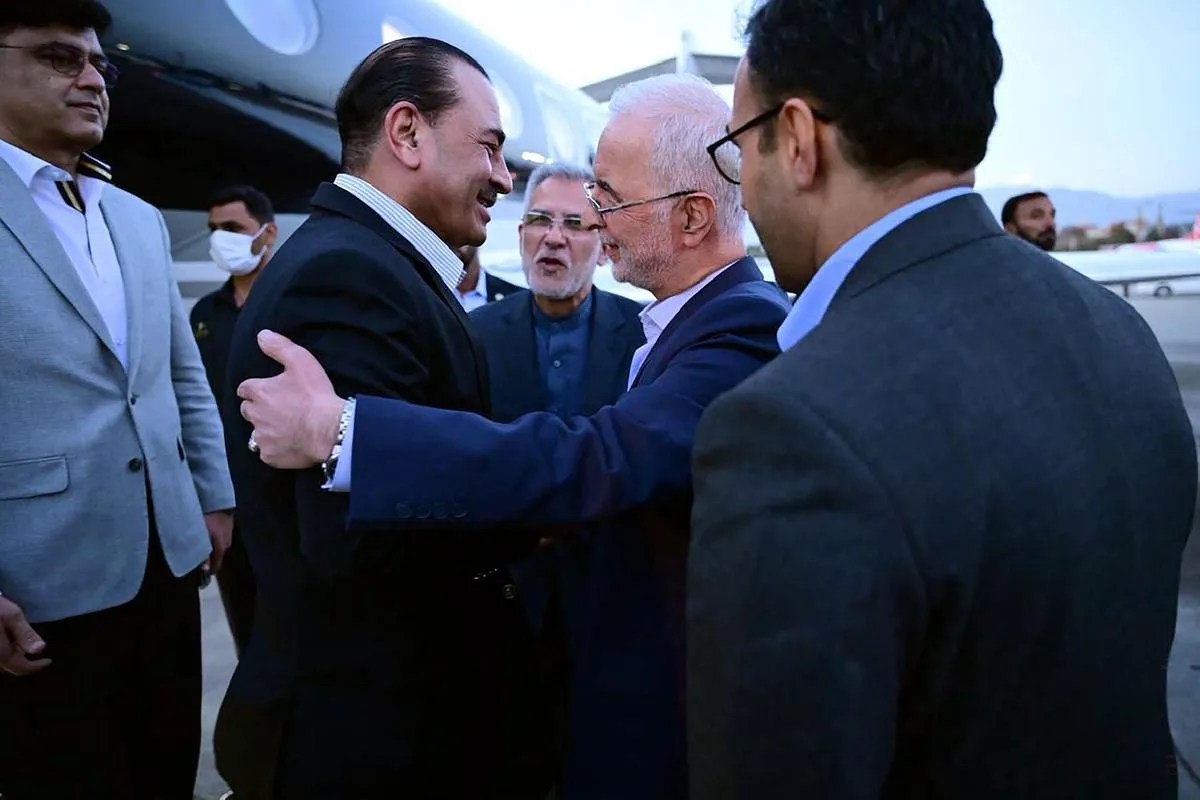
General Asim Munir’s consecutive diplomatic engagements with Tehran and Washington represent a calculated calibration of Pakistan’s external security architecture rather than isolated diplomatic events. Speculation regarding an imminent, transactional "deal" between Islamabad and Washington misinterprets the structural constraints operating on Rawalpindi. Pakistan's military leadership is balancing immediate macroeconomic vulnerabilities against long-term border security requirements. This analysis deconstructs the strategic drivers behind Pakistan's high-level statecraft, mapping the cause-and-effect relationships governing its relations with Iran and the United States.
The Dual Border Dilemma and the Doctrine of Strategic Stabilization
Pakistan’s military leadership operates under a structural constraint defined by simultaneous instability on its western frontiers. The escalation of kinetic friction along the Durand Line with Afghanistan has transformed Pakistan's border management strategy. Rawalpindi can no longer treat its western borders as distinct, isolated theaters; instead, they function as an interconnected security matrix.
[Durand Line Instability] ──> [Troop Deployment Strain]
                                      │
                                      ▼
[Tehran Bilateral Engagement] <── [Need to Secure Sistan-Baluchestan Border]
The primary mechanism driving Pakistan’s outreach to Iran is the containment of low-intensity conflict in Baluchestan. The shared, porous border spanning the Sistan-Baluchestan region presents a persistent internal security vulnerability. For Pakistan, a breakdown in security cooperation with Tehran triggers an immediate redistribution of military assets away from the primary operational theater along the Afghan border.
By executing high-level visits to Tehran, the Pakistani military command seeks to establish a predictable, institutionalized border management protocol. The objective is to deny cross-border sanctuaries to non-state actors, specifically Baluch insurgent factions. This coordination operates independently of Pakistan's ideological alignment; it is a structural necessity designed to minimize the cost of policing a multi-front border.
The Tri-Polar Balance Framework
Pakistan’s diplomatic maneuvers cannot be evaluated through a simple bilateral lens. Rawalpindi’s strategic options are dictated by a tri-polar equilibrium involving Washington, Beijing, and Tehran. Each relationship imposes specific strategic tradeoffs, forcing Pakistan to operate within a tightly defined matrix of constraints.
The Washington Vector
The United States maintains a relationship with Pakistan that has shifted from counter-terrorism dependency to strategic competition management. Washington’s primary geopolitical focus in South Asia is the strengthening of its partnership with New Delhi to counter Chinese regional influence. Consequently, US engagement with Islamabad is transactional, focused on two main areas:
- Nuclear Command and Control Security: Ensuring the institutional stability of Pakistan's strategic assets.
- Regional Counter-Terrorism Intelligence Sharing: Maintaining visibility on transnational threats originating from the Afghan theater.
The Beijing Vector
China functions as Pakistan’s primary economic anchor and defense supplier through the China-Pakistan Economic Corridor (CPEC). This relationship creates structural friction with Washington. Any perceived pivot by Islamabad toward a deeper security arrangement with the US triggers scrutiny from Beijing regarding the long-term viability of its infrastructure investments.
The Tehran Vector
Iran represents a critical energy counterweight and a potential source of regional instability. While Pakistan cannot pursue deep economic integration with Iran due to the enforcement of secondary US sanctions, it must maintain a functional security relationship to prevent the escalation of sectarian tensions and border skirmishes.
Decoding the Rumors of a US-Pakistan Structural Deal
Media narratives suggesting General Asim Munir's regional visits are a prelude to a grand strategic bargain with the United States overlook the lack of structural incentives on both sides. A comprehensive, Cold War-style alignment is structurally impossible under current geopolitical conditions.
The primary impediment to a definitive US-Pakistan deal is the irreconcilable divergence in their long-term strategic objectives. The United States views its relationships in South Asia through the lens of Indo-Pacific strategy. Because India is central to this framework, Washington systematically avoids security agreements with Pakistan that could disrupt its strategic partnership with New Delhi.
Furthermore, Pakistan’s deep institutional integration with China’s defense and economic ecosystems creates a hard ceiling for any potential security cooperation with the United States. Rawalpindi cannot offer Washington the level of strategic access or intelligence-gathering platforms that would justify a major revision of US foreign policy.
What appears to be a "deal" in public reporting is actually a series of tactical recalibrations. Pakistan requires US diplomatic neutrality within international financial institutions, specifically the International Monetary Fund (IMF), to manage its balance-of-payments crisis. In return, Washington expects Pakistan to maintain its neutral stance regarding major power competitions and continue targeted counter-terrorism cooperation that prevents regional external disruptions.
Economic Interdependencies and Sanctions Bottlenecks
The structural limitations of Pakistan-Iran bilateral relations are starkly illustrated by the stagnation of the Iran-Pakistan (IP) gas pipeline project. This initiative serves as an analytical case study for how international financial architecture overrides regional geographic proximity.
Pakistan suffers from chronic domestic energy deficits that slow industrial output and exacerbate its current account imbalances. In theory, importing Iranian natural gas offers the most economically viable solution to this supply bottleneck. However, the international financial system, dominated by US-led clearing networks, penalizes entities engaging in structural commerce with sanctioned Iranian institutions.
The threat of secondary US sanctions creates a severe financial bottleneck for Pakistan. If Islamabad moves forward with the construction of its segment of the pipeline, it risks triggering sanctions that would jeopardize its access to the SWIFT banking network, halt IMF disbursement tranches, and deter Western foreign direct investment.
Consequently, Pakistani military and civilian leadership must employ a strategy of protracted diplomatic hedging. They signal intent to cooperate with Tehran to maintain border stability, while citing international legal and financial constraints to defer execution of the pipeline project, thereby avoiding a diplomatic rupture with Washington.
The Institutional Dominance of the Army Staff in Foreign Policy
Evaluating Pakistan’s foreign policy initiatives through civilian diplomatic channels introduces analytical errors. In matters concerning regional security architectures, nuclear posture, and strategic alignments, the Office of the Chief of Army Staff (COAS) functions as the primary decision-making node.
This institutional arrangement creates a highly centralized negotiation framework for foreign powers. When General Asim Munir engages with foreign leadership, the commitments made carry the weight of institutional permanence, distinct from the shifting political coalitions of Pakistan's civilian parliament. Foreign capitals, including Tehran and Washington, recognize this structural reality. They prioritize direct engagement with Rawalpindi because the military command controls the internal security apparatus and possesses the institutional capacity to execute bilateral security agreements.
This reality alters the traditional diplomatic feedback loop. While civilian diplomats manage routine statecraft and trade agreements, strategic deterrence and regional alignment policies are negotiated directly through military-to-military channels. This dynamic explains why high-level foreign visits by the COAS generate more regional policy shifts than traditional civilian diplomatic delegations.
Strategic Projections for Regional Power Dynamics
The tactical equilibrium managed by Pakistan's military leadership faces ongoing operational pressures. Over the next twelve to eighteen months, several key indicators will determine whether this balancing act succeeds or deteriorates into regional friction.
The first variable is the frequency and intensity of cross-border kinetic actions in the Baluchestan theater. If joint Pakistan-Iran border intelligence mechanisms fail to suppress localized insurgencies, the temptation for unilateral cross-border strikes will rise, testing the limits of the diplomatic agreements reached in Tehran.
The second variable is the conditionality attached to future IMF programs. Should Washington utilize its voting leverage within the IMF to demand explicit geopolitical concessions from Islamabad—such as the formal scaling back of specific CPEC infrastructure nodes or the complete cessation of energy negotiations with Iran—Pakistan’s internal economic stability will be directly pitted against its strategic autonomy.
Rather than looking for a sweeping geopolitical shift or a definitive regional alliance, analysts must watch for incremental, operational adjustments. Pakistan will continue to offer localized counter-terrorism cooperation to the United States while preserving its core strategic alignment with China. Simultaneously, it will maintain a highly transactional, security-focused relationship with Iran to prevent its western border from devolving into an active combat zone. Success for Rawalpindi will not look like a breakthrough treaty; it will look like the preservation of this delicate, highly complex status quo.