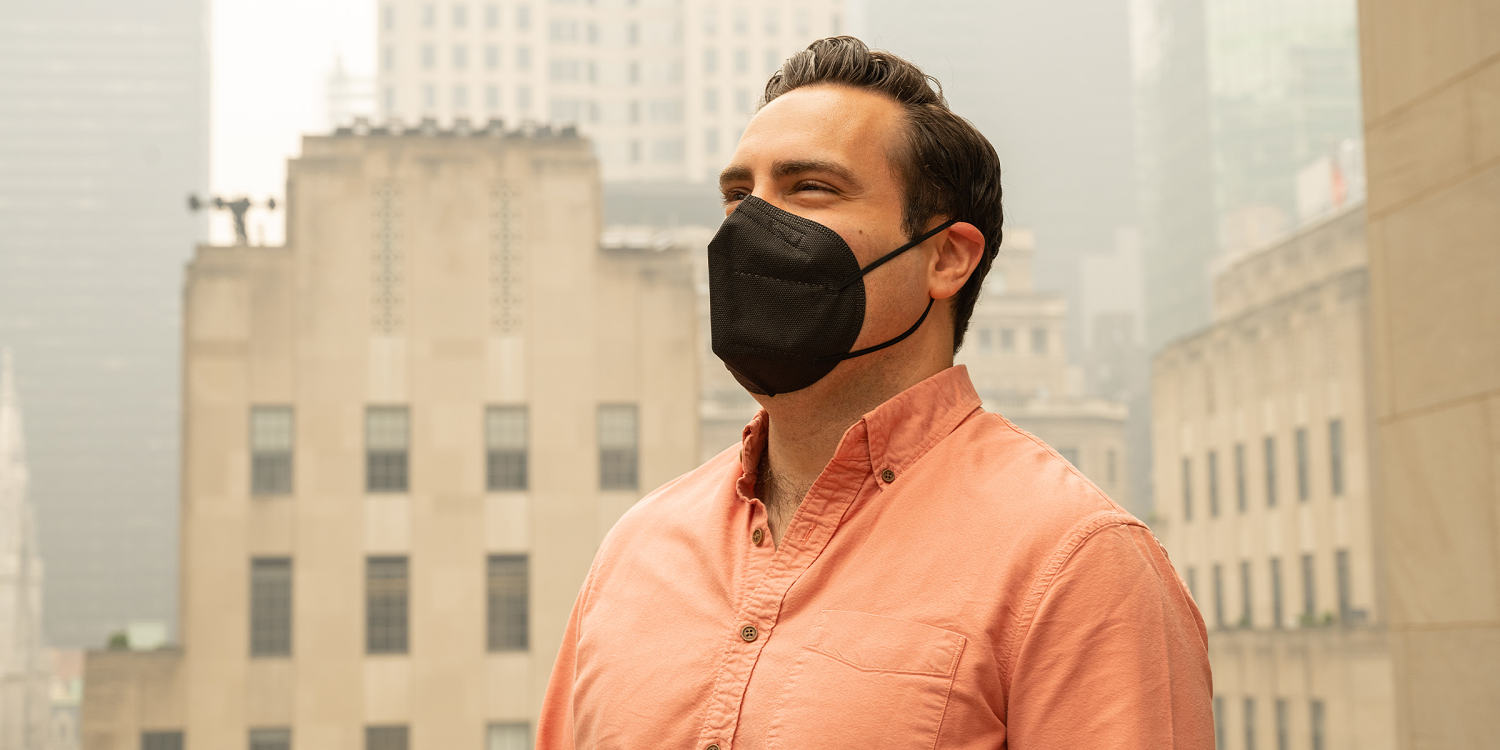
The standard consumer approach to sourcing personal protective equipment relies on superficial markers like celebrity endorsements or comfort metrics. This subjective methodology introduces critical failure points in high-risk airborne environments. To secure true respiratory defense, procurement must shift from lifestyle shopping to quantifiable filtration physics. The performance of a non-powered, air-purifying particulate respirator depends entirely on two variables: the filtration efficiency of the substrate material and the pneumatic seal integrity against the wearer's face.
Vague public health recommendations often treat different mask standards as interchangeable options. This confusion obscures systemic engineering differences between standards like the American NIOSH N95 and the Chinese GB 2626 KN95. Understanding how these standards diverge under technical testing conditions allows users to identify structural weaknesses, optimize their fit mechanics, and spot deceptive counterfeits in the supply chain.
The Dual-Variable Performance Equation
The total inward leakage ($TIL$) of any filtering facepiece respirator determines its protective capability. This metric represents the percentage of ambient particles that enter the respiratory tract through both the filter medium and the border seal gaps. Total inward leakage is expressed through a straightforward structural relationship:
$$TIL = P_{substrate} + L_{seal}$$
where $P_{substrate}$ represents the penetration rate of the material (the inverse of filtration efficiency), and $L_{seal}$ represents the leakage rate occurring entirely through bypass channels along the perimeter.
If a mask uses a high-grade meltblown polymer with a 99% filtration efficiency ($P_{substrate} = 1%$), but suffers from a loose fit that allows a 10% perimeter bypass ($L_{seal} = 10%$), the total inward leakage jumps to 11%. This drops the overall effective protection to 89%. This math shows why a high material rating cannot compensate for structural fit errors.
Substrate Microphysics and Electrostatic Capture
High-efficiency respirators do not operate like simple mechanical sieves. If filtration relied solely on pore size, blocking a 0.3-micron particle would require a weave so dense that breathing resistance would cause physiological distress. Instead, protective substrates combine mechanical interception with electrostatic attraction.
The core filtering layer uses a matrix of micro-fine polypropylene fibers generated via meltblown extrusion. These fibers undergo an electrical charging process to create stable electrets. This gives the material permanent electrostatic properties. When particulates pass through the matrix, they face four physical capture mechanisms:
- Inertial Impact: Large particles possess too much momentum to follow the air stream around fibers. They collide directly with the polymer structure.
- Interception: Mid-sized particles follow the slipstream closely but contact the edges of the fibers as they pass, causing them to stick.
- Diffusion: Very small particles (under 0.1 microns) are hit constantly by gas molecules, causing random Brownian motion. This irregular path increases their chances of hitting a fiber.
- Electrostatic Attraction: The charged electret layer pulls polar and non-polar particles out of the air stream. This captures particles that are otherwise too small for impaction and too large for diffusion.
The hardest particles to catch fall into a specific size range, known as the Most Penetrating Particle Size (MPPS), which typically centers around 0.3 microns. Because this window represents the absolute weakest point in the material's defense, global certification systems base their strict filtration tests on this exact particle size.
Technical Comparison of Global Standards
While both N95 and KN95 architectures target a minimum 95% filtration efficiency against non-oil aerosols at the MPPS, their evaluation protocols and physical designs diverge in ways that alter real-world safety.
| Technical Parameter | NIOSH N95 Standard (42 CFR Part 84) | Chinese KN95 Standard (GB 2626) |
|---|---|---|
| Minimum Filtration Efficiency | $\ge 95%$ at 0.3 microns | $\ge 95%$ at 0.3 microns |
| Test Agent Aerosol | Sodium Chloride (NaCl) | Sodium Chloride (NaCl) |
| Flow Rate Testing Velocity | 85 Liters per minute | 85 Liters per minute |
| Maximum Inhalation Resistance | $\le 350$ Pa | $\le 250$ Pa |
| Maximum Exhalation Resistance | $\le 250$ Pa | $\le 250$ Pa |
| Human Fit Testing Mandate | Required for workplace deployment | Required for certification ($TIL \le 8%$) |
| Primary Attachment Mechanism | Dual elastic head bands | Ear loops (commonly manufactured) |
The regulatory divergence creates a critical operational bottleneck. The NIOSH N95 standard demands dual elastic bands that loop completely around the back of the head. This geometry exerts continuous, uniform inward pressure across the nasal bridge, cheeks, and jawline.
The Chinese GB 2626 standard allows ear loops. While loops make the mask easier to put on and take off for daily civilian use, they struggle to generate the tension needed to compress the mask's edges against the face. Ear loops apply force to the ears, which are flexible structures that bend under high tension. This physical limit makes it difficult to achieve a true, airtight seal on many face shapes without using an adjustable neck clip.
Supply Chain Integrity and Counterfeit Detection
Because the KN95 standard relies on self-conformity and foreign factory audits, the global market sees high rates of counterfeit and sub-standard inventory. Spotting these weak products requires a close inspection of their markings and physical build.
Markings and Verification Frameworks
Genuine KN95 products must show clear, permanent markings directly on the outside of the mask surface. If a mask lacks these exact markers, it should be flagged as unverified:
- Standard Reference: The mask must display the standard version, such as
GB 2626-2019or the olderGB 2626-2006. - Manufacturer Name or Brand: The manufacturer's clear branding or registered trademark must be visible.
- Model Designation: A unique model name or number must be printed alongside the class rating (e.g.,
KN95).
Any product that claims to be "FDA Approved," "CDC Certified," or displays the NIOSH logo on a mask with ear loops is fraudulent. NIOSH does not certify masks with ear loops. Additionally, the FDA does not issue general "approval certificates" to individual factories.
+-------------------------------------------------------------+
|                                                             |
|                         [Brand Name]                        |
|                          Model 1001                         |
|                             KN95                            |
|                         GB 2626-2019                        |
|                                                             |
+-------------------------------------------------------------+
               (Standard External KN95 Markings)
The Nose Wire Failure Point
A common mechanical failure point in cheap masks is a low-quality nose wire. Reliable models use dual-wire aluminum strips or high-strength, single-strip metal thick enough to hold its shape after being bent.
Cheap masks often use thin plastic-coated single wires. These wires slowly spring back to their flat shape over time as you talk and move. This subtle movement breaks the seal over the bridge of the nose, letting unfiltered air bypass the mask completely.
Strategic Fit Optimization and Lifespan Limits
To maximize the performance of a KN95 mask, you must actively manage its fit and monitor the wear on its electrostatic layers.
To check the seal, perform a basic pressure check. Place both hands completely over the outer surface of the mask and inhale sharply. The body of the mask should collapse slightly inward toward your face. Next, exhale. You should feel pressure build up inside the mask, and no air should escape from the edges around your eyes or cheeks. If you feel air leaking out, adjust the nose clip or use a strap joiner behind your head to pull the ear loops tighter.
The lifespan of a KN95 mask is limited by physical dust build-up and the gradual loss of its electrostatic charge. As the electret layer captures particulates over hours of wear, those particles build up and block the open spaces between fibers. This restriction increases breathing resistance, forcing the wearer's lungs to work harder.
This added resistance changes the air pressure inside the mask. As breathing gets heavier, the air naturally seeks the path of least resistance. This pressure difference pushes air toward the edges of the mask, increasing the risk of seal leaks. If a mask becomes visibly soiled, damp, or noticeably harder to breathe through, the electret layers have reached their capacity, and the mask must be replaced.