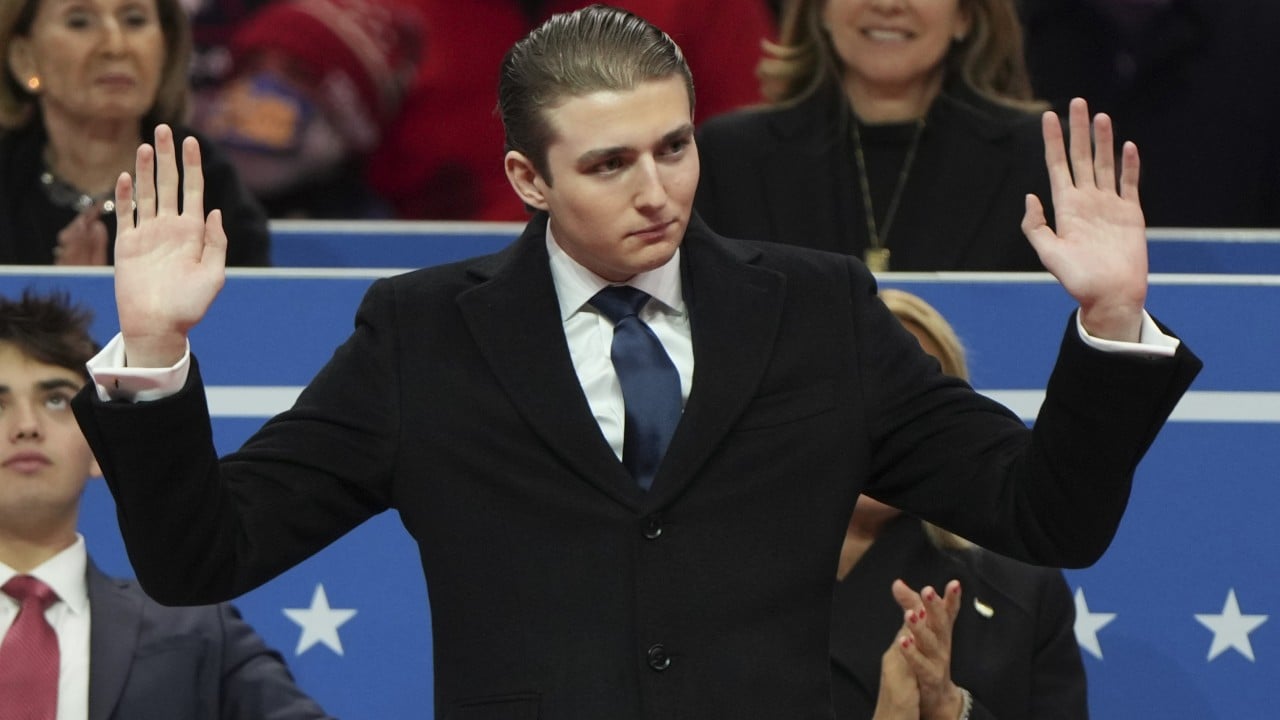
Every newsroom across America is hyperventilating over a three-minute clip broadcasted on Iranian state television. The lazy consensus in mainstream reporting treats this piece of foreign state media as a ticking clock, breathlessly detailing alleged bounties and grainy graphics. It is treated like an operational blueprint.
It is nothing of the sort. You might also find this connected coverage interesting: Stop Believing Pakistan Is Ditching China For Washington.
The media wants you to believe that a foreign government airing an English-language graphic asking where to find a high-profile protectee represents an active, imminent tactical assault. That view misunderstands how modern psychological warfare operates. We are watching a state-sponsored media apparatus manufacture noise, not execute a black-ops wet work program.
Let us look at the mechanics of state-level threats. Real intelligence operations rely on silence, tradecraft, and stealth. They do not drop cinematic trailers on state-run television channels complete with dramatic voiceovers and stylized maps. When a government broadcasts its supposed surveillance and announces a reward on public television, it has abandoned espionage in favor of theater. As discussed in recent reports by Reuters, the effects are notable.
The objective of the broadcast isn't infiltration. It is deterrence, intimidation, and domestic political posturing within Iran following high-profile leadership losses. By broadcasting these clips, Tehran feeds its domestic hardliners and tries to impose a psychological tax on Washington. The media falls for it every single time, amplifying the signal and handing the foreign propaganda unit free distribution.
The U.S. Secret Service response has been predictably standard. A spokesperson acknowledged awareness of the footage, stating the agency investigates anything perceived as a threat toward protectees. That is boilerplate protocol. Every single piece of hostile digital detritus gets logged, vetted, and run through threat-matrix models. Conflating standard protective intelligence procedures with an active security breach is sloppy analysis.
Imagine a scenario where a major corporate executive receives a crude, public death threat on an open internet forum. Does the security detail panic and abandon protocol, or do they audit the threat level, recognize it as low-fidelity noise, and maintain baseline defensive posture? They maintain posture. State-level protection works identically, just with vastly more zeros on the budget and far stricter operational security constraints.
The chatter about localized tracking, campus routines, and online gaming handles relies heavily on OSINT—open-source intelligence—that anyone with an internet connection can scrape together. Finding out where a college student registers for classes or what public venues they frequent does not require elite state-sponsored infiltration. It requires basic web literacy. Dressing up public directory data as a high-level intelligence coup is a sleight of hand designed to create maximum panic with minimum effort.
We need to stop treating every hostile rhetorical escalation from adversarial regimes as a masterclass in tradecraft. Most of it is digital paper-mache. When analysts confuse psychological operations with tactical capability, they misallocate attention and reward the adversary with free panic cycles.
Stop hyperventilating over state TV broadcasts. Real threats move in the dark.