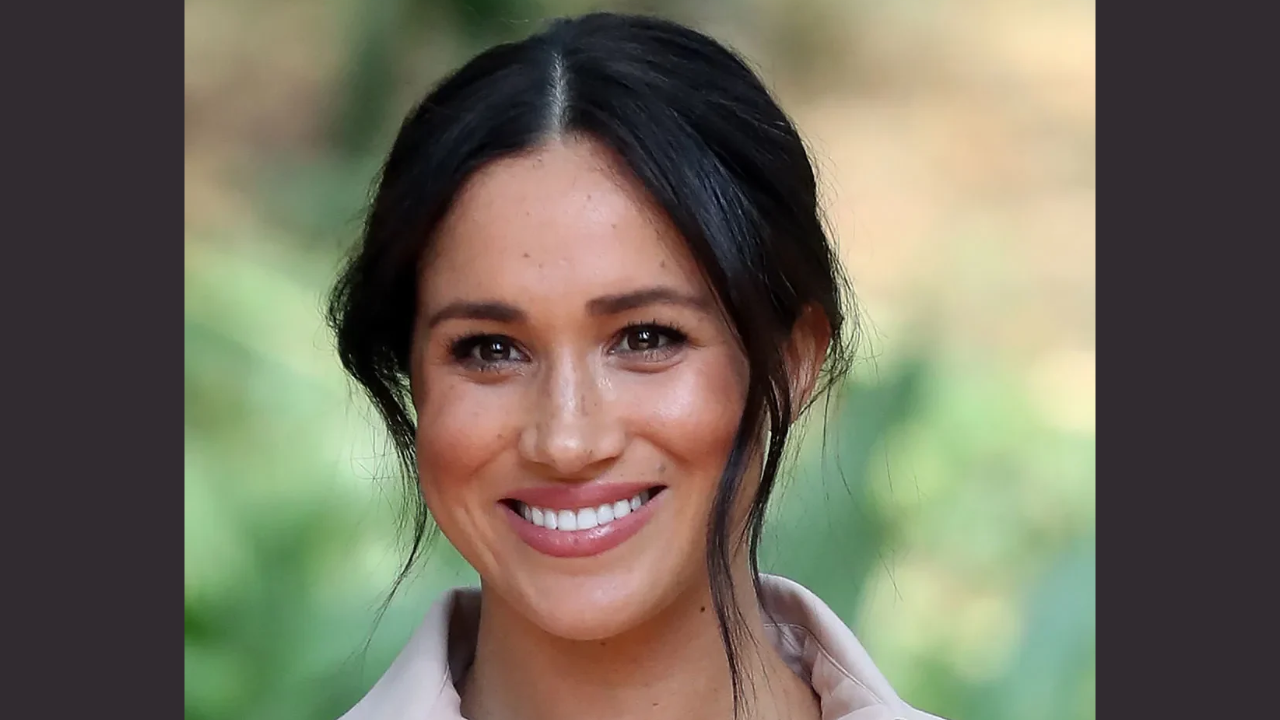
Standing in front of fifty glowing smartphone screens inside the European Parliament should have been a joint moment for the Duke and Duchess of Sussex. Instead, Meghan Markle sat quietly in all black while Prince Harry took the microphone alone.
Most tabloid coverage reduced the November 10, 2026 appearance in Brussels to a simple PR calculation. It wasn't. Four days earlier, federal agents in Florida had arrested Meghan's estranged 82-year-old father, Thomas Markle Sr., on charges involving child sexual abuse material. When your work centers on protecting children from digital harm, walking onto a global stage hours after a family member is accused of exploiting children creates an impossible collision.
Meghan still showed up. She skipped the podium, offered zero remarks to the shouting press outside, and let Harry carry the policy weight of the Archewell Foundation's latest European push. Understanding why that decision mattered requires looking past the royal gossip and examining what actually happened in Brussels—and what is currently unfolding in both U.S. federal courts and European regulatory chambers.
What Happened at the European Parliament in Brussels
On Tuesday, November 10, 2026, Harry and Meghan arrived at the European Parliament in Brussels to inaugurate the Lost Screen Memorial. Originally unveiled in New York City in April 2025 before traveling to Los Angeles and Geneva, the installation displays fifty oversized, illuminated smartphone lock screens. Each screen shows the photograph and time of death of a young person who died following online harm, submitted by grieving families through Archewell's Parents' Network.
Meghan had been scheduled to deliver a joint address alongside Harry. Roughly twenty-four hours before the event, word broke that she was pulling out of the speaking slot. According to reporting from The Telegraph and People, a source close to the situation explained that she was "just not strong enough, emotionally, to be doing any public speaking right now".
She did not cancel the trip. Wearing a tailored black Mackage coat and a red remembrance poppy, she walked into the building holding Harry's hand tightly. Reporters outside called out asking how she was coping with her father's arrest. She kept walking without a word.
Inside, the focus stayed locked on the families in the room. Meghan spent time listening to parents like Sandra Spitaels, whose 15-year-old son Glenn died by suicide in 2017 after a nude image of him was circulated online. By removing herself from the stage, Meghan prevented her family crisis from hijacking the headlines meant for those fifty victims.
The Charges Against Thomas Markle Sr. Explained
To grasp the pressure Meghan faced walking into that room, you have to look at the timeline of her father's legal trouble.
- October 2026: Thomas Markle Jr. reported his father to police in the Philippines and to the FBI after allegedly discovering illegal images among his father's belongings in Cebu City. He also tipped off federal authorities about two Los Angeles storage units his father had rented for nearly two decades.
- November 6, 2026: FBI agents arrested Thomas Markle Sr., 82, in Florida following the seizure of material from those Los Angeles facilities. Following an initial court appearance in Tampa, he was granted conditional release under home detention and electronic monitoring.
- Mid-to-Late November 2026: Authorities took Markle Sr. back into custody in Florida after he removed his electronic monitoring tag. By November 24, First Assistant U.S. Attorney Bill Essayli for the Central District of California confirmed formal federal charges for possessing child sexual abuse images—offenses carrying up to 20 years in prison per count if convicted.
Markle Sr. has repeatedly denied the accusations, calling them "sick lies," and remains presumed innocent until proven guilty.
Meghan has been estranged from her father since the chaotic weeks leading up to her May 2018 wedding to Harry. Prior to the November 6 arrest, a representative for the Duchess stated she was "deeply distressed" by the allegations. Reports citing The Guardian also noted she made clear she wants to "fully cooperate" with FBI investigators and relevant authorities.
Even with an eight-year estrangement on the record, public perception rarely separates a public figure from a parent's criminal charges. Had Meghan stepped up to a podium to lecture lawmakers on child exploitation four days after her father's arrest on similar charges, every news broadcast would have split the screen between her speech and his mugshot. Stepping back was the only move that kept the room's attention where it belonged.
Prince Harry's Solo Keynote and the EU KIDS Act
With Meghan seated among the attendees, Harry delivered the keynote address alone before joining a closed-media panel titled Beyond Promises: Building a Digital Future That Works for Children.
He framed his remarks around parenthood rather than royal status. "I'm not here as an expert or a politician. I'm here as a father. My wife, a mother," Harry told lawmakers, referencing their seven-year-old son Archie and five-year-old daughter Lilibet.
His message targeted the business model of major social networks directly:
- Algorithmic accountability: During the panel discussion, Harry described the addictive architecture of modern platforms as "brainwashing on an extraordinary scale".
- Design standards over self-regulation: Challenging tech executives directly, he urged companies not to put anything in front of other people's children that they wouldn't put in front of their own.
- Legislative urgency: Pointing to the fifty glowing lock screens behind him, he reminded European officials that they already possess the technical tools to fix these systems—they simply need the political will to enforce them.
The timing in Brussels was deliberate. Harry's appearance coincided with active European Parliament debate over the EU KIDS Act, a sweeping regulatory framework proposed by the European Commission in September 2026.
European Commissioner Dubravka Šuica spoke at the same event, laying out the hard numbers driving Brussels toward stricter enforcement. Across the European Union, 97% of children go online every single day. One in three young Europeans reports that social media leaves them feeling sad, stressed, or isolated. One in ten teenagers has faced pressure on social platforms to share intimate images.
Unlike earlier voluntary pledges, the proposed EU KIDS Act mandates safety by design, restricts addictive infinite-scroll features, and requires default protective algorithms backed by binding fines—building on recent EU enforcement actions against platforms like X, Temu, and AliExpress.
What Most Commentators Get Wrong About Strategic Silence
If you work in crisis communications or high-stakes public advocacy, you recognize what happened in Brussels immediately. Critics online accused Meghan of seeking attention by attending without speaking. Others claimed she had been quietly pushed off the stage by organizers.
Both takes miss how effective issue advocacy actually works when personal crisis collides with public mission.
When an advocate becomes the story, the policy message dies. You see this constantly in corporate and political communications. If a spokesperson carries a breaking personal scandal onto a dais, journalists ignore the legislation being debated and write exclusively about the optics. Skipping the trip entirely would have signaled retreat and left Harry standing alone at an event they built together through Archewell. Delivering the speech would have handed critics an easy hypocrisy narrative.
Attending quietly split the difference. Meghan demonstrated solidarity with the fifty families who traveled to Belgium while refusing to give cameras a soundbite that would overshadow the EU KIDS Act debate. Sometimes the smartest thing a public figure can do is yield the microphone.
How Parents Can Protect Kids Online Right Now
Legislation like the EU KIDS Act takes months—sometimes years—to move from parliamentary committees into enforceable platform code. Parents don't have the luxury of waiting for Brussels or Washington to force tech companies into safer defaults.
If you want to reduce the exact risks highlighted by the Lost Screen Memorial, start with four concrete changes today:
- Turn off algorithmic feeds where possible: Switch social apps from "For You" recommendation streams to chronological feeds showing only accounts your child actively follows. Recommendation engines drive the steepest rabbit holes.
- Lock down direct messaging defaults: Set Instagram, Snapchat, TikTok, and gaming platforms so strangers cannot send unsolicited messages, photos, or group invites. Most sextortion cases—like the one that claimed Glenn Spitaels's life—begin with an unsolicited message.
- Keep devices out of bedrooms overnight: Charge phones and tablets in a central kitchen or living area an hour before sleep. Late-night isolation amplifies anxiety and removes parental visibility when impulsive decisions happen.
- Build a non-punitive reporting pact: Tell your kids explicitly that if someone pressures them for an image or threatens to leak one, they will never be punished for coming to you. Fear of getting in trouble is the single biggest reason teenagers hide online extortion until it spirals out of control.
Save the Lost Screen Memorial digital archive and Archewell Parents' Network resources if your family or local school district needs support tools for navigating online harm. Policy battles in Brussels will shape the next decade of internet safety, but the boundaries you set at your own kitchen table tonight matter far more.