The air in Norilsk tastes of sulfur and ancient ice. Winter there is not a season; it is a permanent condition punctuated by brief, violent bursts of thaw. In this frozen crucible above the Arctic Circle, machines groan against the cold, and men shovel ore that holds the industrial weight of empires. They mine nickel.
To the casual observer, nickel is a dull gray commodity buried in spreadsheet rows on commodities exchanges in London or New York. It is a metric ton price, a ticker symbol, an input cost for stainless steel sinks and electric vehicle battery packs. But nickel is something else entirely. It is the invisible sinew holding modern machinery together. When the world broke open in February of 2022, and the machinery of international trade seized up under the sudden, crushing weight of Western sanctions, this gray metal did not stop moving. It simply changed hands, crossed rivers, and slipped through the quiet, open doors of the East.
To understand how a single bank in Beijing can alter the geopolitical weather, you have to look past the grand speeches in Geneva or the solemn pronouncements of finance ministers in Washington. You have to look at the plumbing.
Global trade is a plumbing system. For decades, that system relied on a single set of pumps, pipes, and valves denominated in US dollars and monitored by Western compliance departments. If you wanted to buy nickel from Russia’s mining titans, you went through specific European clearing houses. You used SWIFT messaging systems. You played by rules written in Western capitals.
Then the war in Ukraine arrived like a sledgehammer to the pipes.
Sanctions fell like iron curtains. Traditional Western lenders—the cautious, suits-and-tie institutions of Frankfurt, London, and New York—fled the Russian market overnight. They did not leave because of sudden moral awakenings; they left because the legal liability of touching Russian assets became radioactive. Every transaction carried the silent threat of secondary sanctions, blocked accounts, and institutional ruin. For Norilsk Nickel, the world’s largest producer of refined nickel, the financial lifelines snapped.
Or so it seemed.
Consider a desk on the forty-second floor of a bank tower in Shenzhen or Beijing. The room is quiet, hummed over by air conditioning and the rhythmic clicking of keyboards. A trade finance officer—let us call him Chen—looks at a digital manifest. On the screen sits a request for letters of credit, millions of dollars in trade financing destined to keep Siberian ore moving toward Asian ports.
Chen does not see a geopolitical crisis. He sees an opportunity, a risk calculation, and a structural alignment of interests.
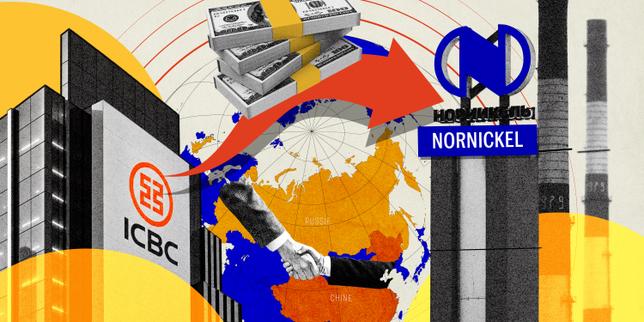
While Western banks slammed their doors shut, Chinese commercial and policy banks found themselves staring at a unique opening. Russia, cut off from Western capital markets, needed a new financial partner. China, hungry for raw materials and eager to insulate its economy from the long arm of Western financial hegemony, needed a steady, discounted stream of commodities.
Trade finance is the oil that keeps the engine of international commerce turning. Without letters of credit, cargo ships do not leave port, suppliers do not get paid, and multi-billion-dollar supply chains grind to a halt. When Western banks withdrew their credit lines, Chinese financial institutions stepped into the vacuum. They did not do this out of casual charity. They did it because the transaction was profitable, safe from domestic regulatory blowback, and settled safely outside the architecture of the dollar.
This is where the story shifts from dry economics to human reality.
Money, like water, always finds the lowest crack. When formal channels freeze, informal or alternative channels widen. Chinese banks began issuing letters of credit denominated in renminbi, settling trades through alternative clearing mechanisms that bypassed Western oversight entirely. The nickel left the Siberian ports, navigated eastern maritime routes, and flowed directly into the hungry manufacturing hubs of East Asia.
Here is the paradox that haunts modern globalization: you cannot easily decouple two economies that have spent thirty years weaving themselves into each other’s nervous systems.
When a Chinese bank backs Russian nickel during an active European war, it is not just financing a metal shipment. It is underwriting an alternative financial reality. It is drawing a thick, ink-black line on the map of international power, proving that the world is no longer unipolar. If Washington says no, but Beijing says yes, the transaction happens anyway.
The consequences ripple outward in concentric circles.
In a battery factory in South Korea or a stainless steel plant in Jiangsu, workers weld components together using metal that originated in the snow-blind expanse of the Russian north. That metal was paid for with currency cleared through institutions that answer to a different flag than the ones flying over Brussels. By the time that nickel is refined, shaped, and embedded into the chassis of an electric vehicle or the turbine of an industrial machine, its origin story has been laundered through a dozen intermediaries.
The Western consumer drives an electric car, believing they are participating in a clean, green transition away from fossil fuels. They do not think about the sulfur smoke of Norilsk. They do not think about the quiet conferences in Beijing where risk officers weighed the cost of compliance against the profit of convenience. They simply turn the key, press the pedal, and move forward.
This is the invisible stakes of our current era. We live in a fractured house. One half of the world tries to starve an aggressor of capital; the other half provides an alternate sustenance, keeping the wheels turning because its own survival depends on cheap energy and raw materials.
The bank in Beijing did not start a war. It merely ensured that the war’s economic gravity did not crush its northern neighbor entirely. In doing so, it rewrote the unwritten rules of global finance. It proved that sanctions are only as effective as the willingness of the rest of the world to honor them. And the rest of the world, it turns out, is much larger, more pragmatic, and far more fractured than Washington ever cared to admit.
Down on the docks of Vladivostok, a crane operator hoists a heavy crate of refined nickel into the belly of a container ship. The metal is cold. It does not care about SWIFT codes, geopolitical strategy tables, or the angry words shouted in parliamentary chambers thousands of miles away. It is simply mass and matter, moving from where it was ripped from the earth to where it is needed to build the future.
The ship pulls away from the pier, cutting a dark path through the gray water, carrying its heavy cargo into a world that will never look the same again.