The strategic deployment of cultural branding to transform economically depressed or socially complex urban zones relies on a foundational thesis: targeted micro-economies can alter consumer foot traffic and capital allocation independent of macro-level municipal interventions. The recent institutionalization of Canada’s first "Mexican Barrio"—an area spanning 19 to 24 businesses across the geographic boundary of Vancouver’s Gastown and the Downtown Eastside (DTES)—serves as a real-time stress test for this thesis. Spearheaded by a coalition between the Gastown and Hastings Crossing Business Improvement Associations (BIAs), this initiative leverages the immediate demand shock of the FIFA World Cup to establish an authentic cultural enclave.
However, the structural sustainability of this initiative depends on a complex interplay between shifting demographic trends, consumer psychology, and localized security challenges.
The Structural Mechanics of the Cultural Enclave
The formation of the Mexican Barrio is not a top-down municipal zoning directive; it is an organic, supply-side shift driven by changing immigration patterns and local entrepreneurship. The perimeter is defined by Cambie Street to the west, Powell and Water Streets to the north, Pender Street to the south, and Gore Avenue to the east.
   [Water / Powell St.]
   +-------------------+
   |  MEXICAN BARRIO   |
[C] |   (19-24 Shops)   | [G]
[a] |                   | [o]
[m] |   [W. Hastings]   | [r]
[b] |   Retail Hub      | [e]
[i] |                   | [v]
[e] +-------------------+ [e]
     [Pender Street]
To evaluate the long-term viability of this cluster, the economic framework must be broken down into three primary operational pillars.
The Organic Clustering Effect
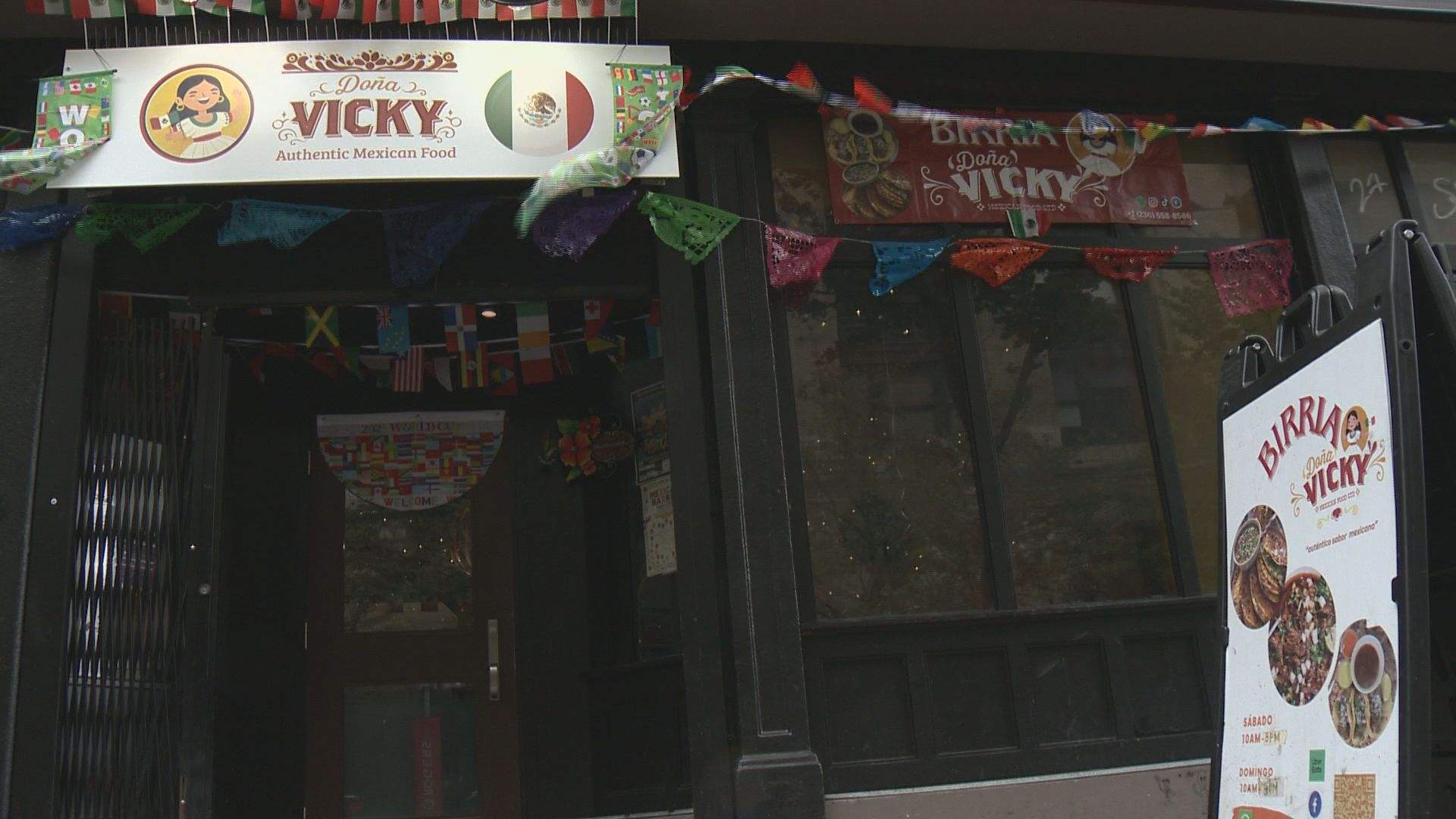
Historically, commercial enclaves form when initial market entrants lower the barrier to entry for subsequent businesses within the same vertical. In this instance, the anchor tenant model began with early adopters like NAHUAL Cannabis on West Hastings near Abbott Street, which navigated a high-barrier retail environment starting around 2022. The multi-year stabilization of this storefront created a localized reduction in perceived market risk. Over a 36-month horizon, this single footprint attracted complementary Mexican-owned enterprises, including full-service restaurants like Doña Vicky Mexican Food, barbershops, and specialized retail venues. This cluster behavior directly reduces supply chain costs for international goods and concentrates marketing efforts.
The Event-Driven Demand Shock
The timing of the official launch aligns with the immediate horizon of the FIFA World Cup. This represents a classic external demand shock. Tourism infrastructure, such as newly deployed wayfinding signage around the "Last Mile" FIFA area near BC Place Stadium, functions as a direct mechanism to divert international and domestic foot traffic toward the Gastown-DTES corridor. The short-term strategy relies on matching high-intent, transient tourist spend with high-margin experiential offerings (authentic food, music, and curation).
The BIA Coordination Model
Business Improvement Associations function as localized governance mechanisms that aggregate property levies to fund security, beautification, and marketing. The collaboration between the Gastown BIA and the Hastings Crossing BIA represents an attempt to bridge two radically different socioeconomic zones. By formalizing the "Mexican Barrio" map and digital footprint, the BIAs are attempting to shift consumer perception from an area characterized by street-level vulnerability to one defined by cultural commerce.
The Friction Coefficient: Street-Level Vulnerability vs. Tourist Acquisition Costs
The primary structural bottleneck facing the Mexican Barrio is the immediate proximity of acute socioeconomic distress. The intersection of Carrall and Hastings Streets sits at the center of the DTES, an area characterized by concentrated poverty, open-air drug markets, and systemic underhousing.
The economic challenge of this co-location can be quantified through a consumer friction function:
$$F_c = f(S_p, N_v, I_q)$$
Where:
- $F_c$ represents total consumer friction.
- $S_p$ is the perceived security risk of the physical environment.
- $N_v$ is the density of street-level vulnerability.
- $I_q$ is the clarity and availability of municipal wayfinding infrastructure.
When $S_p$ and $N_v$ cross a specific critical threshold, the friction coefficient outweighs the value proposition of the cultural asset, causing immediate customer churn among risk-averse demographics. Long-term resident testimonies confirm that international and domestic tourists frequently experience cognitive dissonance and disorientation upon entering the perimeter. The immediate visual transition from curated historic storefronts to open-air survival economies creates a psychological barrier that standard marketing materials cannot fully mitigate.
Conversely, supply-side resilience varies by business model. Enterprises that transitioned from casual weekend pop-ups to permanent seven-day operational models, such as Doña Vicky, report negligible operational disruption from their immediate neighbors. This highlights an asymmetric reality: while front-line operational workflows remain viable, customer acquisition costs ($CAC$) scale exponentially for non-local consumers who must actively navigate the physical environment.
The Strategic Trade-Offs of Cultural Rebranding
The transformation of the Gastown-DTES boundary into a branded ethnic enclave carries distinct systemic risks alongside its economic upside.
- The Displacement Risk: Rebranding an area as a commercial tourist destination inherently exerts upward pressure on commercial real estate lease rates. For an area built on non-profit organizations, social enterprises, and low-barrier community spaces, rapid commercial success risks outpricing the foundational social infrastructure that supports the neighborhood's vulnerable population.
- The Authenticity Dilemma: The current value proposition relies on authentic community ownership. If the area undergoes rapid commercialization to serve large-scale international events, there is a distinct risk of shifting from an organic community hub to a hyper-commodified tourist zone, undermining long-term retention of the local Latin diaspora.
- The Security Execution Gap: Business Improvement Associations lack the mandate and budget to address the root causes of urban poverty and substance use disorders. Relying on commercial marketing to paper over deep structural policy failures creates a mismatch between consumer expectations and physical reality.
Optimized Asset Allocation Strategy
To ensure the Mexican Barrio evolves past a temporary marketing campaign into a durable economic engine, local stakeholders must transition from passive promotion to active risk management.
The immediate priority requires the implementation of a dual-track operational strategy. First, the Gastown and Hastings Crossing BIAs must establish a dedicated, non-coercive street ambassador program specifically trained in de-escalation and localized navigation. This team must actively guide tourists through the high-friction corridors of the Last Mile while maintaining collaborative communication with existing peer-led DTES community groups. This minimizes consumer friction ($F_c$) without resorting to aggressive displacement tactics that break community trust.
Second, independent merchants within the 24-business registry must diversify their revenue models away from pure walk-in reliance. By establishing institutional catering channels, digital direct-to-consumer pipelines for imported Mexican goods, and collaborative event cross-programming, these businesses can insulate their top-line revenue from fluctuations in street-level foot traffic. Relying solely on the temporary influx of the World Cup leaves merchants exposed to a sharp post-tournament demand drop. Building sticky, domestic brand equity across greater Vancouver is the only viable path to long-term commercial survival.