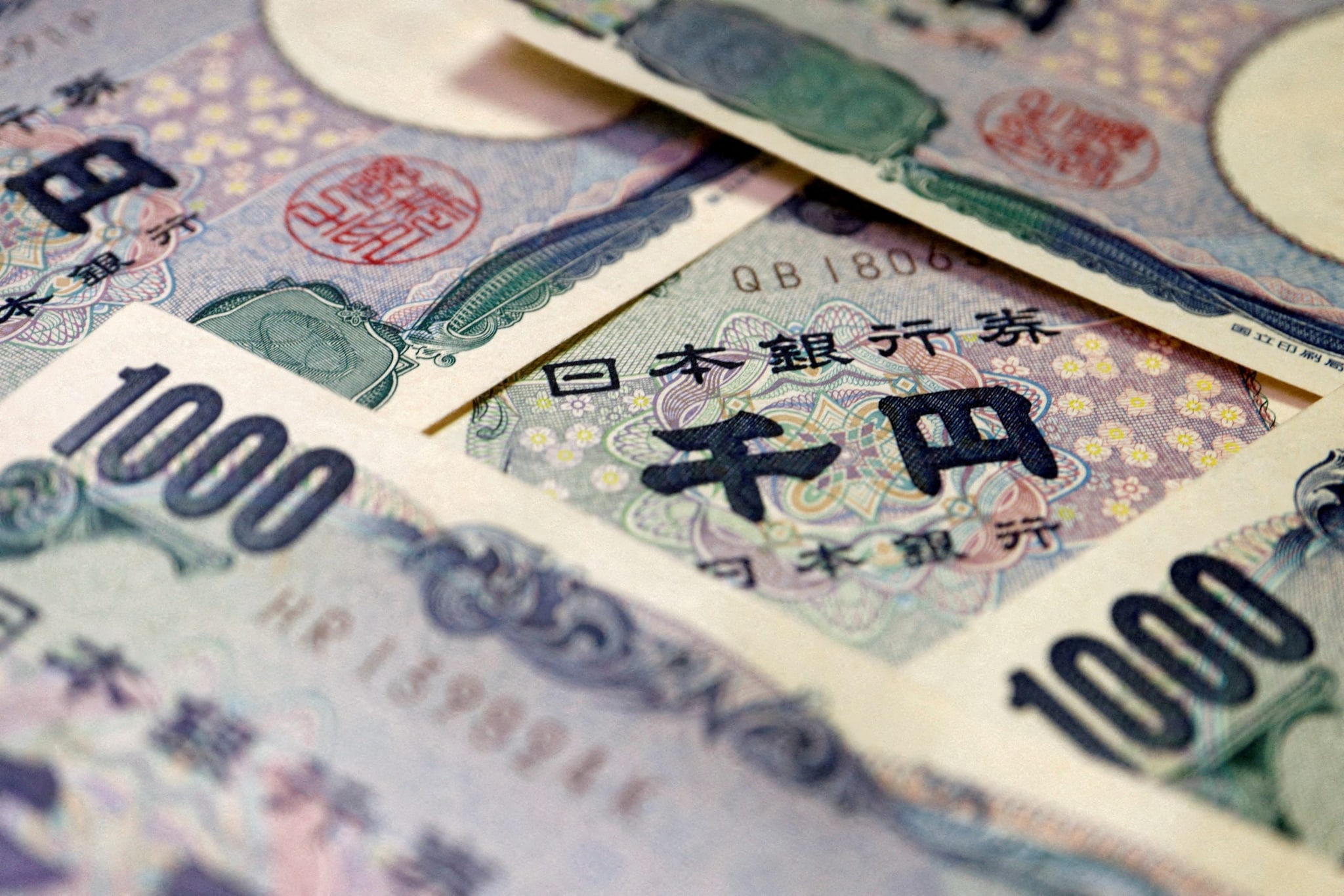
The coffee in the basement of the Ministry of Finance in Tokyo tastes like burnt asphalt at three o'clock in the morning. It is a specialized kind of exhaustion that settles into your bones when you are tasked with defending the economic honor of an entire nation.
Step inside the bureau. Imagine a room stripped of all cinematic glamour. No flashing red alarms. No giant digital maps tracking global threats. Instead, there are just rows of functional desks, mountains of paper bound by plastic clips, and the low, rhythmic hum of air conditioning. On the monitors, green numbers flicker.
The Japanese yen is sliding. Again.
To the casual observer, currency fluctuations are just background noise. They are the minor annoyance of a tourist calculating the cost of a bowl of ramen in Tokyo, or the vague headline skipped over on the way to the sports section. But here, every fraction of a yen lost feels like a slow bleed. When a currency devalues too far, everything a nation imports—from the oil that heats its homes to the wheat that feeds its families—becomes prohibitively expensive.
The people in this room have a mandate: stop the bleeding.
But how do you fight a market that moves $7.5 trillion every single day? You do it by stepping into the shadows and pulling the biggest financial levers available. You do it by selling America’s debt to save your own skin.
The Invisible Ledger
For decades, Japan has been the quiet, dependable accumulator of global wealth. It is the world’s largest foreign holder of US Treasury securities. Think of these treasuries as the ultimate financial safety net. They are IOUs from the American government, backed by the full faith and credit of the world's largest economy. They sit in the vaults of the Bank of Japan, a massive, multi-trillion-dollar fortress built for a rainy day.
The clouds have been gathering for months.
When a central bank wants to protect its currency, it usually dips into its cash reserves—its liquid US dollars. It takes those dollars, dumps them into the open market, and buys up its own currency. Simple supply and demand. By creating an artificial hunger for the yen, the price goes up.
But cash is finite. Even for a economic titan like Japan, the pile of ready greenbacks can dwindle with alarming speed during a sustained market attack.
What happens when the cash runs low? You look at the fortress. You look at the securities.
Market analysts had long assumed Japan would avoid touching its massive pile of US Treasuries. Selling them is a nuclear option. If Japan floods the market with US debt, it risks driving down the price of those bonds, which pushes US interest rates higher, which ironically makes the US dollar even stronger—the exact opposite of what Tokyo wants. It is a financial tightrope suspended over a canyon.
Yet, the data trail tells a story of a desperate move made in the dark.
The Anatomy of a Hidden Intervention
To understand how this plays out in the real world, consider a mid-level fund manager in New York. Let's call him David. David doesn’t care about the social fabric of Tokyo. He cares about yield. He sees the widening gap between the rock-bottom interest rates in Japan and the sky-high rates in the United States.
It is the easiest trade in the world. David borrows money in Japan for next to nothing, converts it to dollars, and invests it in America to pocket a clean profit. Millions of traders are doing the exact same thing. This is the "carry trade," a massive, invisible machine relentlessly grinding the yen into dust.
To stop David and his peers, the Japanese authorities had to strike with overwhelming force.
Official data released regarding foreign reserves revealed a telling anomaly. The drop in Japan’s overall foreign assets was staggeringly large, far outpacing the simple expenditure of cash reserves. The numbers didn't add up unless something else was being liquidated.
The realization rippled through the financial world like a sudden drop in cabin pressure on an airplane. Japan wasn't just spending its pocket money. It was breaking into the vault. It was selling off its foreign securities.
The scale of the intervention was historic. Estimates suggest Tokyo spent north of $60 billion in a matter of days. To put that in perspective, that is more than the entire annual economic output of many nations, vaporized in a weekend just to hold a line on a chart.
The Human Cost of High Finance
Why does this high-stakes game of financial poker matter to anyone outside of a trading floor?
Step away from the monitors and walk into a small bakery in the suburbs of Osaka. The owner, a woman named Mieko, has spent thirty years perfecting her pastries. She doesn't understand the nuances of the Federal Reserve's monetary policy or the mechanics of bond liquidity.
She does, however, understand her flour bill.
Japan imports the vast majority of its wheat. When the yen plummets, the cost of importing that wheat skyrockets. Mieko faces a brutal, daily calculus. Does she raise the price of her bread, risking the loyalty of neighbors who are also struggling, or does she absorb the cost and watch her life's work slowly become unprofitable?
This is the true battlefield. The currency intervention orchestrated by the quiet bureaucrats in Tokyo isn't about bragging rights on Wall Street. It is a shield hoisted to protect Mieko from an economic storm she did nothing to cause.
When the government steps into the market to buy yen, they are trying to artificially suppress the cost of living for millions of citizens. It is a social contract executed via algorithms and sovereign debt liquidation.
The Problem with Playing God in the Market
But the real problem lies elsewhere. Intervention is a drug. It provides a temporary, euphoric spike, but it does nothing to cure the underlying disease.
The fundamental reality driving the yen down is the massive divergence in interest rates. As long as the United States keeps interest rates elevated to fight its own domestic inflation, and as long as Japan maintains its ultra-low rate environment to stimulate its fragile economy, the pressure on the yen will remain relentless.
A central bank can spend billions of dollars in a single afternoon. It can shock the market, burn the speculators who were betting against the currency, and buy a few weeks of breathing room.
Then the dust settles.
The traders return to their desks. They look at the fundamental math. They realize the gap between the two economies hasn't changed. The slow, grinding downward pressure begins all over again.
It raises an uncomfortable question that plagues everyone from the basement of the Ministry of Finance to the trading desks of Manhattan: How long can you keep burning your safety net to buy time?
The Heavy Quiet
The sun rises over the Tokyo skyline, casting a pale orange glow across the glass towers of the financial district. In the bureau, the monitors show the yen has stabilized. For now. The immediate crisis has been averted. The speculators have backed off, wary of the invisible hand that just proved it is willing to sell off its prized assets to defend its territory.
The workers pack their bags. They step out into the crisp morning air, blending into the sea of commuters pouring out of the train stations. None of the people passing them by will ever know the scale of the financial warfare waged while they slept.
They won't know about the billions shifted across borders, or the American securities liquidated to keep the price of morning bread steady.
The fortress is slightly emptier today. A few more blocks of stone have been pulled from the foundation to fortify the walls. It is a victory, undoubtedly, but it is the kind of victory that leaves you wondering how many more times you can afford to win.
On the streets below, the shops open their doors. The neon signs flicker to life. The city moves forward, blissfully unaware of how close it came to the edge, protected by an invisible ledger and the desperate resolve of a few exhausted people in a basement room.