The crystal chandeliers of the banquet hall hummed with a quiet, expensive frequency. Outside, the Washington night was cold, slick with an autumn drizzle that smeared the flashing lights of police cruisers into streaks of blue and red. Inside, the air smelled of beeswax, crushed orchids, and the sharp, metallic tang of anxiety.
History is rarely made in grand declarations from podiums. It is forged in the suffocating silence between courses, where men who command billions whisper across starched white tablecloths, their fingers dancing nervously against the stems of wine glasses.
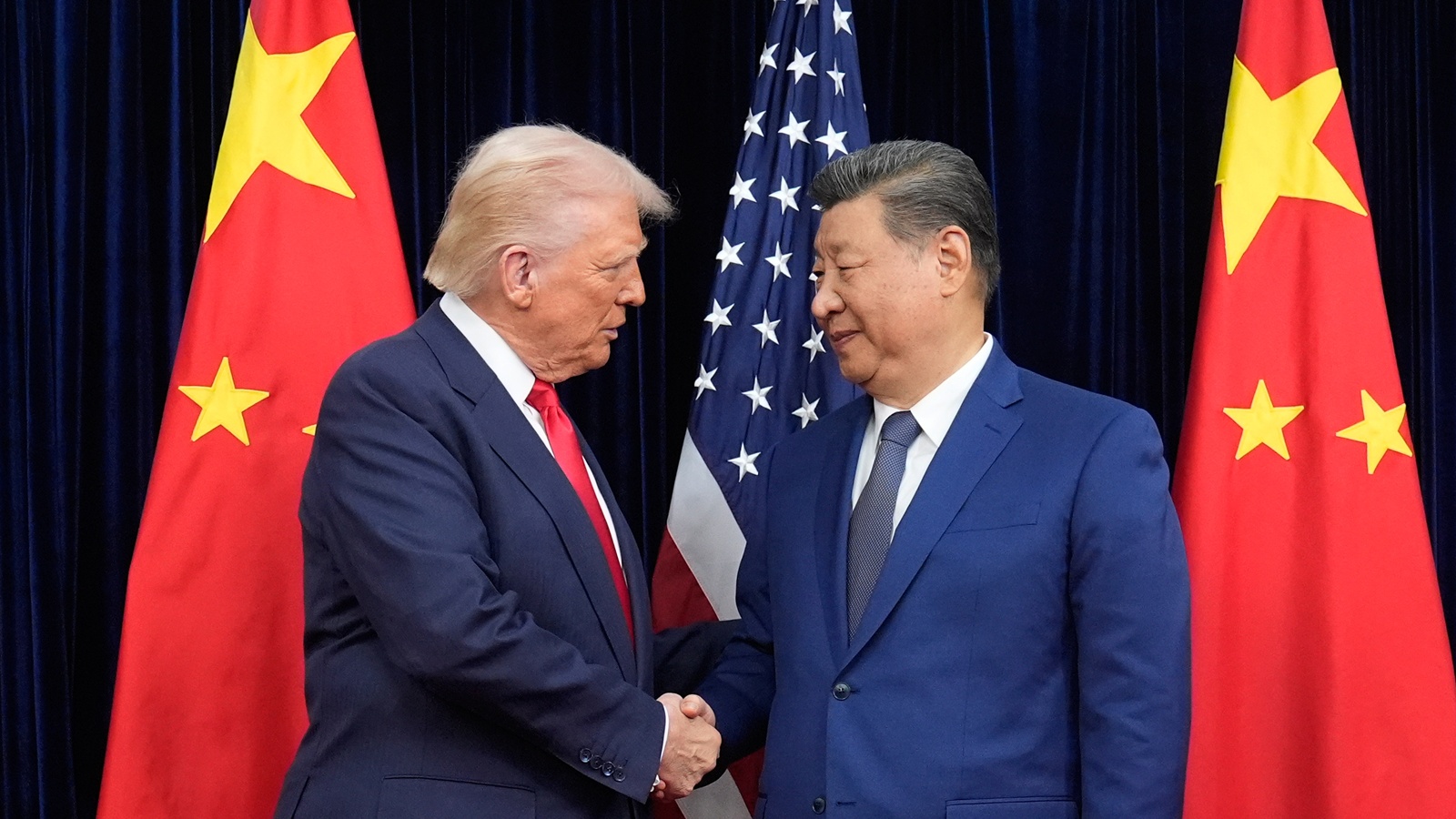
Consider the geometry of power. On one side sits the leader of the American economy, a man whose political survival is tethered to factory floors in Michigan and Ohio, shouting slogans of industrial rebirth. On the other sits the architect of modern China, the guardian of a billion-plus souls who measure ambition in decades, not election cycles. Between them lie microchips, rare earths, cargo ships adrift in stormy Pacific swells, and the precarious, trembling peace of the Taiwan Strait.
And then, there are the guests.
The invitation list to the state dinner reads like a roll call of corporate royalty. These are the men and women who built the digital arteries of the modern world. They fly in on private Gulfstreams, parking their immense wealth just outside the security perimeter. They are not diplomats. They do not wear medals or draft treaties. Yet, their quarterly reports carry more weight than infantry divisions, their supply chains more fragile and complex than any ancient Silk Road.
Imagine sitting in that room. The clink of silver against bone china sounds like falling glass. Every smile is calculated. Every nod is a diplomatic maneuver executed with surgical precision.
To understand why this summit matters, you have to look past the political theatre. For months, trade ministers posture behind podiums. Tariffs rise like medieval walls. Rhetoric sharpens into blades meant to draw blood in evening news broadcasts. Yet, beneath the noise, the machinery of global commerce refuses to stop grinding. Supply chains stretch like taut rubber bands, threatening to snap with every political tremor, plunging stock markets into freefall before anyone can blink.
The American president enters the room with a transactional glare. To him, every handshake is a negotiation, a zero-sum game where someone wins and someone loses. He wants commitments. He wants factories brought home from foreign shores. He wants the trade deficit reduced to a manageable tally that looks good on prime-time television. He speaks in blunt sentences, punctuated by sharp gestures that demand immediate compliance.
Across the table, the Chinese leader listens with the stillness of a stone Buddha. He does not blink. He understands that empires fall not from sudden invasions, but from internal rot and economic exhaustion. He offers cooperation wrapped in firm boundaries. He reminds his listeners that no single nation can wall itself off from the rest of the world without suffocating in its own dust, choking on its own self-righteous isolation.
The corporate titans watch every micro-expression. Their fortunes rise and fall with the rhythm of the conversation.
Take the semiconductor debate. It sounds like an abstract technological argument over silicon wafers and extreme ultraviolet lithography machines. But in reality, it is the heartbeat of modern civilization. Without those microscopic circuits, cars turn into scrap metal, hospitals go dark, and financial markets freeze in milliseconds. When the two leaders lean in to discuss export controls, Apple executives swallow hard. Tesla board members mentally recalculate shipping costs across the Pacific. Boeing planners wonder if their next order of fuselage panels will clear customs or sit rotting on a dock in Shanghai.
This is the hidden theater of state visits. The public sees the pomp, the red carpets, the twenty-one-gun salutes, and the polite handshakes captured by official photographers for morning newspapers. But the true engine of history runs on fear and calculation.
History shows us that great powers on a collision course rarely collide by accident. They drift into conflict because they misread each other's intentions in the fog of suspicion. In past decades, British statesmen failed to grasp the rising industrial might of imperial Germany until the cannons opened fire across European fields. Cold War diplomats spent decades walking a tightrope of nuclear deterrence, terrified that a single miscalculated radar blip would turn the northern hemisphere into a cinder.
Today, the battleground is economic. The weapons are tariffs, currency controls, intellectual property theft accusations, and supply chain decoupling.
When the dessert is served—perhaps a poached pear with a whisper of reduction sauce—the real bargaining begins. The opening speeches are over. The translators lean in close, their breath misting slightly in the drafty room.
The American leader presses hard on intellectual property theft. He tells stories of stolen blueprints, of factories copied overnight in industrial provinces three thousand miles away, of American innovation bleeding out into foreign hands. He demands respect for the rules-based international order. It is a righteous argument, rooted in a tradition of property rights that stretches back centuries through common law and legislative decree.
The Chinese leader nods slowly. He counters with the centuries of humiliation his nation endured at the hands of Western gunboats and unequal treaties. He speaks of national dignity, of technological sovereignty, of a billion people who clawed their way out of agrarian poverty and refuse to be second-best again. It is a narrative of grievance and destiny, delivered with quiet, immovable authority.
Both men are right. Both men are trapped by their own histories.
And the CEOs at the edges of the table are left to navigate the wreckage of this ideological collision. They are citizens of nowhere and everywhere. Their loyalty is to their shareholders, their balance sheets, and their global footprints. They employ millions of workers across hemispheres. If the borders slam shut, their empires crumble into dust.
Listen to the silence between their sentences. That is where the future is written.
When the dinner concludes and the motorcades roar back into the rainy night, the official communiqués will speak of frank exchanges and constructive dialogue. Diplomats will smile for the cameras. Stock markets will open the next morning with cautious relief or sudden panic.
But nothing has truly been solved. The tectonic plates of global power continue their slow, grinding convergence, building pressure along faults that have no safety valves.
The average citizen waking up the next morning in a suburban kitchen will check their phone, read a headline about trade talks, and go back to making coffee. They will not think about silicon wafers or rare earth minerals. They will not feel the invisible pressure of two superpowers wrestling for dominion over the twenty-first century.
Yet, that coffee maker runs on components manufactured across three continents. The electricity powering the stove comes from a grid managed by algorithms built on foreign code. The mortgage rate is dictated by central banks reacting to geopolitical tremors halfway across the planet.
We live in a world knit together by threads so fine we forget they are there. When two giants pull on those threads, the whole fabric trembles.
That is why the midnight table matters. Not because of the pomp, or the state dinners, or the carefully orchestrated photo opportunities. It matters because it is the fragile firewall standing between competition and catastrophe.
Consider what happens next when the sun rises over Beijing and Washington simultaneously. In factory boardrooms, contingency plans are pulled from filing cabinets. Supply chain managers scramble to find alternative sources for lithium, cobalt, and neon gas. Software developers wonder if their code repositories will be blocked by new firewall regulations.
The dance of giants affects every corner of human existence. It dictates whether a college graduate in Seattle finds a job at a tech startup or watches funding dry up overnight. It determines whether a factory worker in Shenzhen sees their wages rise or their plant shuttered due to sudden trade embargoes.
The dinner guests put down their napkins. They dab at their mouths. They offer polite, non-committal smiles to reporters shouting questions from behind velvet ropes.
Then they step into the night air.
The motorcades vanish down the wet asphalt. The banquet hall empties. The waiters clear away the crystal and the silver, leaving the room dark and cold once more.
Somewhere in the Pacific, a container ship pushes through the heavy swells, carrying millions of dollars worth of goods toward a port that may or may not let it dock tomorrow. The captain watches the radar screen, waiting for orders that haven't been written yet.
The night holds its breath. The world keeps spinning.