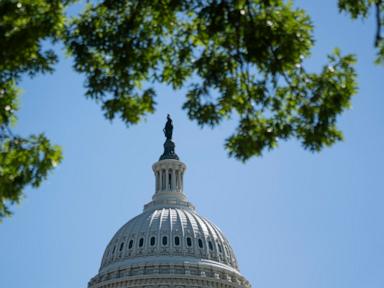
The marble corridors of the Rayburn House Office Building usually smell of floor wax and stale coffee. On a Tuesday night, when the tourists have long vanished and the daylight has bled out of Washington, D.C., the silence is heavy. It is a silence bought and paid for by a continent away.
Think of a small kitchen in Kharkiv. The windows are taped with thick X-shapes to keep the glass from shattering when the sky falls. A woman named Olena—hypothetical in name but brutally real in circumstance—sits by a battery-powered radio. She is not listening to music. She is listening for the specific, low-pitched drone of an incoming Shahed drone. For Olena, and millions like her, the distance between that taped window and the mahogany desks of the United States House of Representatives is exactly zero. They are tethered by a thread of pure survival. In related news, we also covered: The Anatomy of Diplomatic Insolvency: Analyzing Germany’s UN Security Council Ouster.
Back in Washington, that thread was nearly cut.
For months, the machinery of American democracy ground gears over a single, massive question: Do we keep funding a war half a world away when our own house feels so fractured? The headlines called it a legislative logjam. Republican leaders, under immense pressure from a vocal and fiercely determined wing of their party, erected blockade after blockade. They argued about borders, about deficits, about the endlessness of foreign entanglements. These are not empty arguments; they represent a deep, pulsing skepticism felt by millions of Americans who wonder why billions of dollars cross oceans while their own main streets decay. NPR has also covered this important issue in great detail.
But on the House floor, the math of raw survival eventually collided with the math of party politics.
The tension did not break with a dramatic shout, but with the scratching of pens and the quiet shifting of alliances. A coalition of lawmakers, defying the explicit wishes of their own leadership, began to organize in the shadows of the cloakrooms. It was a high-stakes gamble. To break the gridlock, they had to bypass the very people who held the keys to the legislative calendar.
Consider the mechanics of power. A Speaker of the House possesses immense authority to decide what lives and what dies on the floor. To buck that authority is a form of political mutiny. Yet, as the weeks ticked by, the intelligence briefings grew darker. The reports landing on congressional desks were stripped of rhetoric: Ukrainian artillery units were rationing shells to a handful per day. Russian forces, sensing the hesitation in Washington, were pushing forward, capturing villages that had cost thousands of lives to defend.
The debate shifted from abstract foreign policy to a grim timeline.
The turning point arrived when the human cost of delay became impossible to ignore. Lawmakers who had traveled to the region spoke of meeting soldiers who were fighting with little more than small arms and sheer defiance. The realization set in that a vote against the aid package was not just a symbolic stance against spending; it was a functional decision to let a front line collapse.
When the votes finally began to tally, the traditional party lines dissolved. The tally sheets showed a stark reality: a massive, bipartisan majority was ready to override the objections of the leadership. It was a rare, fracturing moment where the sheer gravity of geopolitical ruin outweighed the immediate threat of a primary challenge back home.
The air inside the chamber changed as the numbers ticked upward. The resistance from the hardline factions remained fierce, their speeches filled with warnings of betrayal and fiscal ruin. They spoke for a frustrated electorate, and their anger was palpable. But the momentum had shifted. The bill passed, cutting through the paralysis that had defined Capitol Hill for a generation.
The money approved in that room is not just a ledger entry. It translates into physical reality: steel casings, radar systems, medical kits, and interceptor missiles that can knock a flying bomb out of the sky before it hits a residential high-rise.
The news traveled fast. It bypassed the press rooms and the television studios, flashing across encrypted messaging apps to phones vibrating in dark basements across eastern Europe. In that kitchen in Kharkiv, the radio kept playing. The sirens would still sound, and the winter would still be cold, but the thread had held.
The Capitol eventually emptied out into the damp night air. The lawmakers went home to face the political fallout of their choices, leaving behind a quiet building that had just altered the trajectory of a global war. The decisions made in those mahogany chairs do not stay in Washington. They ripple outward, deciding exactly who gets to wake up to see the morning sun on the other side of the earth.