The marble halls of the Rayburn House Office Building usually carry a cold, antiseptic silence long after the sun dips below the Potomac. But on this particular evening, the air felt thick, heavy with the frantic energy of a machine grinding its gears. There is a specific kind of exhaustion that settles into the eyes of a lawmaker when the clock strikes midnight and the ideological floor gives way beneath them.
This wasn't a debate about bridge funding or tax brackets. This was about the digital ghosts we all leave behind. It was about Section 702 of the Foreign Intelligence Surveillance Act (FISA), a legal skeleton key that allows the government to intercept the communications of foreigners overseas—and, by a mathematical certainty, the millions of "incidental" messages from American citizens caught in the net.
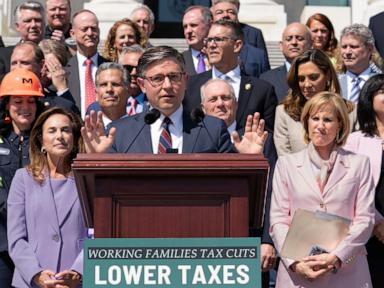
The tension broke when a revolt within the Republican ranks effectively spiked a plan to overhaul the program. The result? A desperate, short-term extension tucked into a defense bill, kicking the can to April 30.
To understand why this matters, stop thinking about lawbooks. Think about a person we will call Sarah.
Sarah is a freelance journalist living in Chicago. She spends her mornings interviewing sources in Eastern Europe and her afternoons texting her brother about his upcoming wedding. She believes her digital life is a series of closed doors. She assumes that when she sends an encrypted message, it stays between her and the recipient.
Under Section 702, Sarah doesn’t exist as a person. She is a data point. If her foreign source is being tracked, Sarah’s side of the conversation—her private thoughts, her location data, her casual mentions of her family—is swept into a massive federal database. This isn't a hypothetical conspiracy. It is the architecture of modern intelligence.
The battle in the House wasn't just about security; it was a civil war over the Fourth Amendment. On one side stood the intelligence hawks, fueled by the terrifying memory of what happens when we don't know enough. On the other, a jagged coalition of civil libertarians and hardline conservatives who fear what happens when the government knows too much.
The Ghost in the Database
The core of the "late-night revolt" centered on a single, searing question: Should the FBI be required to get a warrant before they search the Section 702 database for an American’s information?
It sounds like a simple request. If the police want to walk into your house and flip through your physical mail, they need a judge’s signature. But in the digital realm, the rules are blurred. Currently, the government can "query" the existing database for US person identifiers without that judicial hurdle. They argue that requiring a warrant would be like asking a librarian for a permit every time they look at a book they already own.
The dissidents, however, see it differently. They see a backdoor. They see a loophole where the government can bypass the Constitution by simply waiting for your data to be swept up "incidentally" and then digging through it later at their leisure.
The House floor became a theater of the absurd. Amendments were proposed and discarded. Alliances shifted like sand. The GOP leadership, desperate to keep the lights on and the surveillance tools sharp, found themselves blocked by their own members. These were lawmakers who had seen enough "accidental" misuses of the database—the FBI has admitted to hundreds of thousands of non-compliant searches in the past—to lose their appetite for trust.
A Temporary Peace in a Permanent War
When the dust settled, nobody truly won.
By extending the powers until April 30, the House chose a tactical retreat. It is a stay of execution for a program that many believe is the crown jewel of counter-terrorism, and others believe is the ultimate betrayal of the American promise.
Consider the weight of that date: April 30. It is a deadline written in ink, but the underlying rot remains unaddressed. We are living in a prolonged state of legal limbo.
The people who work inside the National Security Agency or the FBI aren't villains in a spy novel. They are often dedicated professionals who believe, with every fiber of their being, that these tools prevent another 9/11. They see a world of encrypted threats and shadows. To them, a warrant requirement is a lead weight tied to the feet of a lifeguard.
But for Sarah in Chicago, the lifeguard looks a lot like a stalker.
The tragedy of the modern surveillance debate is that it forces us to choose between two different kinds of fear. We are told to fear the terrorist who hides in the static of the internet. We are also told to fear the state that has the power to listen to every heartbeat of our digital lives.
The "revolt" in the House was a rare moment where the machine stalled. It was a moment where the sheer complexity of the issue—the overlap of national security, privacy, and political posturing—became too much for the system to process.
The Invisible Stake
We often treat these legislative battles like sports scores. Who won? Who lost? Who stayed up the latest?
But the real stakes are invisible. They are tucked away in the servers of data centers in the desert. They are embedded in the code of the apps you use to tell your partner you love them or to complain about your boss.
Every time a FISA extension is passed without a warrant requirement, the boundary of what is "private" shifts an inch to the left. We get used to it. We accept the trade-off because we don't see the immediate cost. There is no blood on the floor when a privacy right is violated; there is only a silent entry in a log file.
The April 30 deadline isn't just a calendar entry for Congress. It is a ticking clock for the rest of us. It is a reminder that our representatives are still bartering over the value of our secrets.
The House members went home that night, catching a few hours of sleep before the next cycle of outrage. The lights in the Capitol dimmed. But across the country, the servers stayed humming. The data continued to flow. The net remained cast wide, waiting for the next incidental catch.
We are a nation built on the idea that a man’s home is his castle. We just forgot to check if the same rules applied to our pockets.
The April 30 deadline is approaching. The debate will return, louder and more fractured than before. We will be told again that we must choose between safety and liberty, as if they are two ends of a see-saw rather than the very ground we stand on.
Until then, the watch continues. The midnight oil burns in Washington, and the digital ghosts of three hundred million people wait for a judge who may never come.