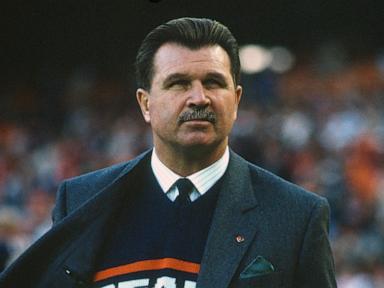
Football lost its most stubborn icon when Mike Ditka passed away at age 86. We won't see another one like him.
The man known everywhere simply as "Iron Mike" wasn't just a sports figure. He was a cultural touchstone who embodied an entirely different era of American sports. Long before corporate media training flattened every athlete and coach into a walking press release, Ditka yelled, stomped, argued, and won.
He didn't care about pleasing the room. He cared about winning. And that uncompromising attitude shaped the way millions viewed the game.
The Player Who Rewrote the Tight End Position
Before Ditka arrived out of the University of Pittsburgh in 1961, tight ends were essentially extra offensive tackles who occasionally caught a pass if nobody was looking. Ditka shattered that mold instantly.
Drafted fifth overall by the Chicago Bears, he took the NFL by storm with 1,076 receiving yards and 12 touchdowns in his rookie year alone. Those numbers weren't just good for a rookie; they were unheard of for the position. He played with a fiery, bruising intensity that left defensive backs dreading contact.
He wasn't merely a pass-catcher. He was a blocker who looked for fights.
After stints with the Philadelphia Eagles and Dallas Cowboys, Ditka secured a championship ring as a player in Super Bowl VI with Dallas. By the time he hung up his cleats, he held the record for most receptions by a tight end in NFL history. When he entered the Pro Hall of Fame in 1988, he became the first tight end ever given that honor. That foundation alone would have secured his legacy. But Ditka was only getting started.
Building the Monsters of the Midway
Transitioning to the sideline, Ditka returned to Chicago as head coach in 1982. He inherited a proud franchise that had lost its way. Within a few short years, he turned them into an absolute juggernaut.
The peak arrived in 1985. The '85 Bears defense remains a baseline standard for defensive dominance, steamrolling opponents on their way to a 15-1 regular season and a 46-10 demolition of the New England Patriots in Super Bowl XX.
Ditka's coaching style relied heavily on raw intimidation and absolute accountability. He clashed constantly with his legendary defensive coordinator Buddy Ryan, creating a friction-filled pressure cooker that somehow produced brilliance. They didn't care if you liked them. They just wanted to break your spirit on Sunday afternoon.
Winning two Coach of the Year awards (1985 and 1988) cemented his status in Chicago lore. He remains one of the rare few to win an NFL title as a player, an assistant coach, and a head coach.
Flaws, Authenticity, and Cultural Impact
Ditka's career wasn't a straight line of triumphs. His stubbornness could work against him.
After his legendary run in Chicago ended following the 1992 season, a later stint coaching the New Orleans Saints from 1997 to 1999 proved disastrous, yielding a dismal 15-33 record. He took heavy criticism for the infamous Ricky Williams trade, where the Saints traded their entire draft class to select one running back.
Yet, even his failures felt authentic. Ditka never hid behind PR consultants or blamed assistants. He owned his mistakes with the same gruff defiance he used when celebrating a touchdown.
Off the field, his transition to broadcasting made him a household name for a whole new generation of fans who watched him spar on television screens every Sunday morning. He brought the same unfiltered opinions to the analyst desk that he brought to the locker room.
The modern NFL is sleek, analytical, and heavily managed. Coaches wear corporate quarter-zips and speak in monotone clichés about execution and metrics. Mike Ditka wore a sweater vest, smoked cigars, yelled at refs, and wore his heart entirely on his sleeve.
Football is richer because he lived, and a little quieter now that he's gone.