State-level defense acquisition corridors depend on a combination of industrial capacity, geopolitical alignment, and lifecycle logistics management. The expansion of defense ties between Poland and the Philippines, anchored by large-scale aerospace acquisition contracts, offers a case study in how middle-tier defense exporters can establish long-term footholds outside their traditional regional spheres. Deconstructing this shift requires looking beyond bilateral rhetoric to examine the cost structures, industrial dependencies, and strategic imperatives driving both nations.
The Industrial Vector of Medium Powers
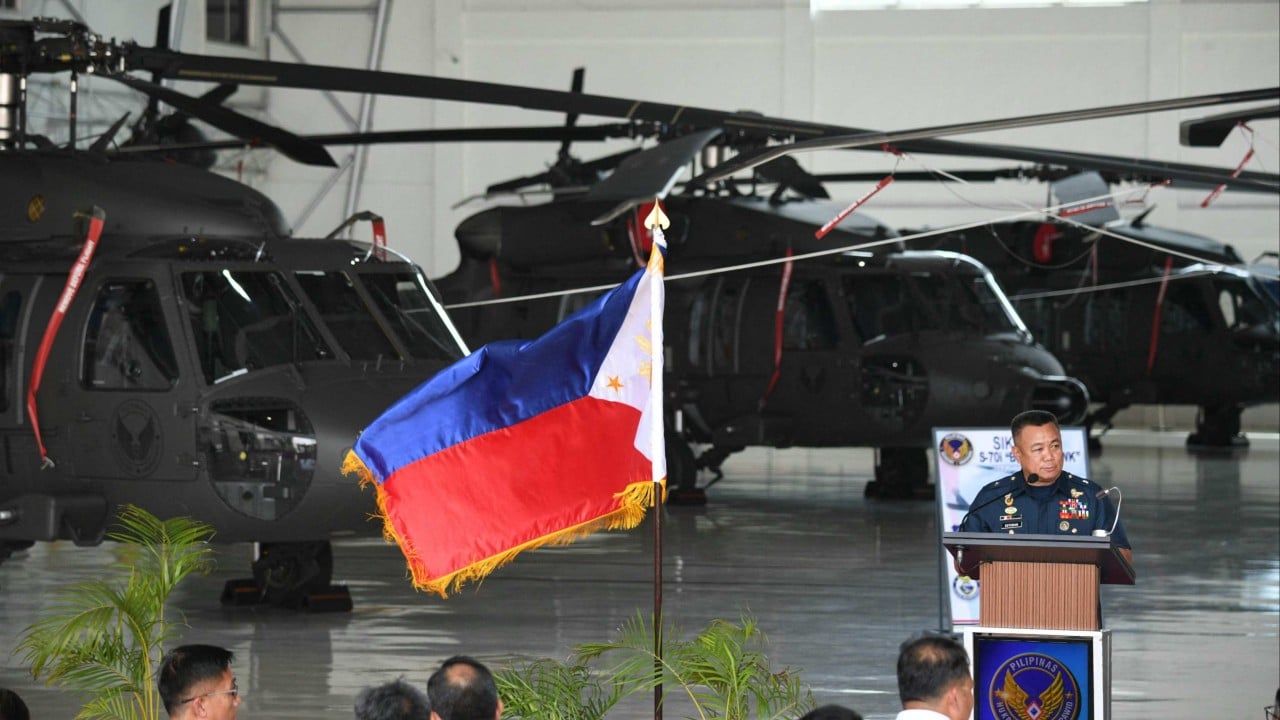
Poland’s emergence as a defense exporter of scale to Southeast Asia is driven by the operational output of PZL Mielec, a subsidiary of Lockheed Martin based in southeastern Poland. The execution of the contract for thirty-two S-70i Black Hawk multi-role helicopters for the Philippine Air Force established a baseline of industrial trust.
When evaluating procurement decisions of this magnitude, military planners do not merely purchase hardware; they absorb a complex cost function that includes:
- Capital acquisition outlay per unit.
- Ground support equipment and tooling expenses.
- Pilot and maintenance crew training pipeline costs.
- Long-term spare parts availability and obsolescence management.
By completing the final deliveries of the thirty-two-unit fleet, the Polish supplier demonstrated a vital metric for military buyers: schedule integrity. In an era of global supply chain compression, defense ministries prioritize suppliers who can deliver operational assets within contracted timeframes without catastrophic cost overruns.
Strategic Diversification and the Indo-European Security Nexus
For the Philippines, diversifying defense partnerships is a structural necessity dictated by territorial maritime disputes in the South China Sea and the limits of legacy supplier bases. Relying on a single primary defense partner introduces unacceptable supply chain vulnerability and geopolitical risk.
Poland presents an attractive alternative for several reasons:
- Absence of restrictive political conditionalities that often accompany acquisitions from larger superpowers.
- Direct alignment on sovereignty and territorial defense principles, reinforced by Poland's geopolitical positioning in Eastern Europe.
- Access to mature NATO-standard technology produced at competitive European labor cost structures.
Conversely, for Poland, expanding its export footprint into the Indo-Asia-Pacific region mitigates its heavy reliance on immediate continental European security dynamics. Bilateral engagement at the executive level, highlighted by recent diplomatic exchanges in Manila, signals an effort to transition from transactional arms sales to systemic industrial cooperation.
The Economics of Upstream Expansion
The next phase of defense industrial cooperation between Warsaw and Manila focuses on diversifying beyond rotary-wing platforms into ground defense and electronic warfare systems. Proposals under discussion include reconnaissance and combat drones, radar equipment, anti-aircraft missiles, and modern armored personnel carriers.
The mechanics of this expansion rely on an industrial offset and maintenance framework. Because the Philippine Air Force has positioned itself as a major operator of the S-70i platform, the operational footprint is large enough to justify localized maintenance, repair, and overhaul (MRO) capabilities.
Establishing an in-country MRO hub changes the economic equation for the buyer:
- It reduces aircraft downtime by eliminating the latency of shipping components back to European or North American facilities.
- It builds domestic technical capital, transforming the military from a passive consumer into an active maintainer.
- It creates a recurring revenue stream for the exporter through authorized parts distribution.
Systemic Limitations and Friction Points
Despite the upward trajectory of this bilateral defense corridor, structural constraints remain. Middle-tier defense exporters like Poland operate within tight margins when competing against domestic manufacturing initiatives or heavily subsidized conglomerates from traditional defense giants.
Furthermore, defense acquisitions in the Philippines are subject to strict legislative budget cycles and macroeconomic pressures, including foreign exchange volatility and shifting fiscal priorities toward domestic infrastructure or disaster resilience. A major depreciation of the Philippine peso against the dollar or Euro directly impacts the purchasing power of the Department of National Defense, stretching procurement timelines across multi-year modernization horizons.
Strategic Forecast
The durability of the Poland-Philippines defense corridor will not be measured by diplomatic communiques, but by the institutionalization of joint training pipelines, technology transfer agreements, and localized supply chain integration. If Warsaw successfully positions its defense industrial base as a reliable, non-hegemonic supplier of tactical aviation, radar systems, and unmanned platforms, Manila will serve as a beachhead for a broader Central European industrial presence across Southeast Asia. The strategic imperative for both capitals is to convert political goodwill into binding, long-term industrial interdependence before macroeconomic headwinds disrupt defense budget allocations.