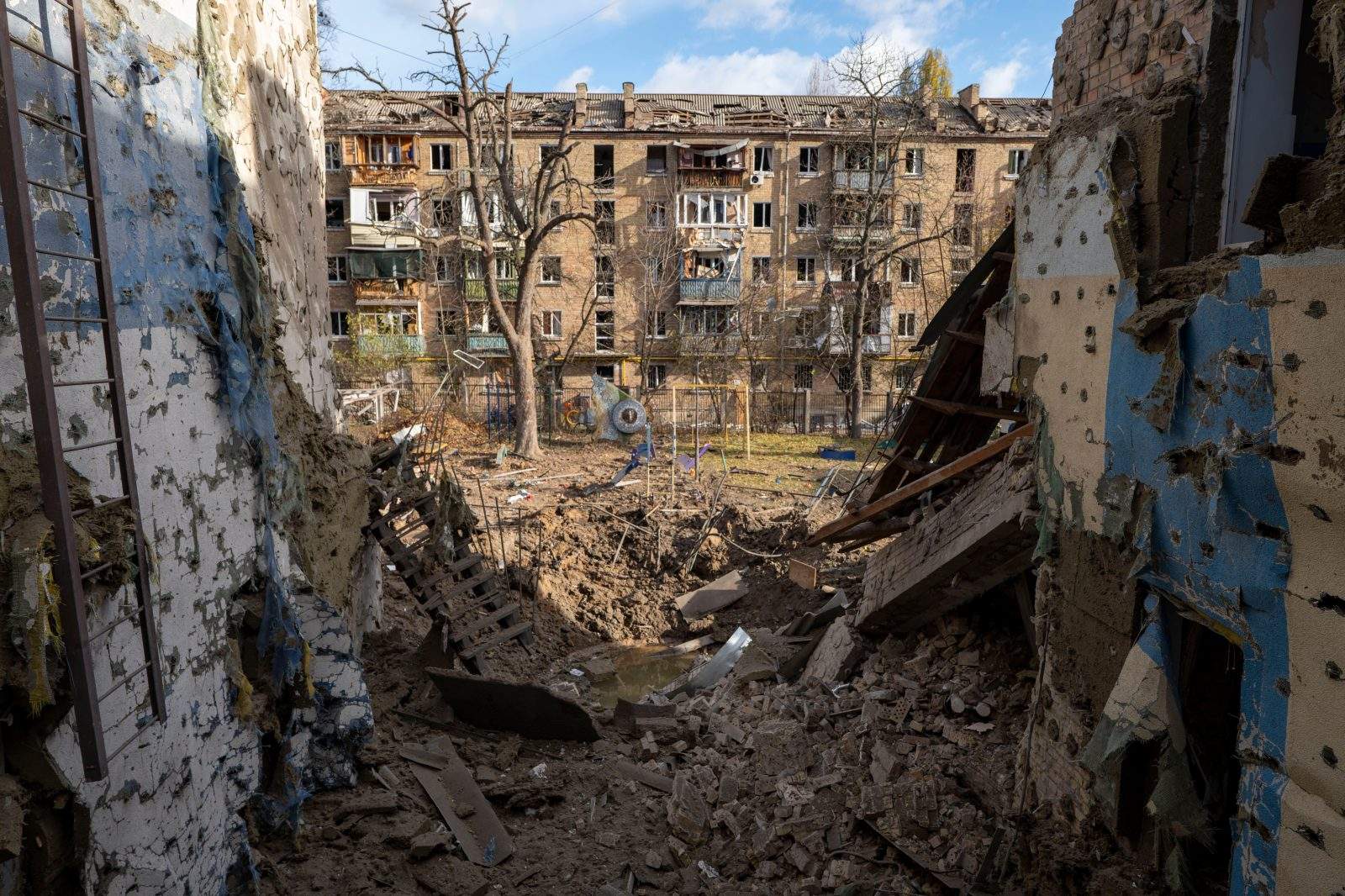
Mainstream foreign policy coverage treats pre-negotiation missile strikes like a contradiction. A headline reads that nine people were wounded in Ukrainian cities just hours before delegations from Kyiv, Moscow, and Washington sit down at the negotiating table, and the conventional commentary immediately spirals into predictable hand-wringing. Pundits call it bad faith. Analysts frame it as proof that diplomacy is dead on arrival.
They are completely wrong.
If you have ever spent time inside high-stakes geopolitical crisis rooms or studied the cold mechanics of asymmetric conflict, you recognize this exact sequence immediately. Escalation right before talks is not a sign that negotiations are failing. It is the clearest possible indicator that the parties are finally taking the table seriously enough to fight for leverage before the ink dries.
The Lazy Consensus Around Pre-Talk Violence
Standard wire-service journalism relies on a comforting moral binary: either you are shooting, or you are talking. When a barrage hits civilian infrastructure and wounds nine people on the eve of trilateral discussions involving Ukraine, Russia, and the United States, the lazy consensus interprets the attack as sabotage.
That framing misses the fundamental nature of coercive diplomacy.
In real-world statecraft, military force and diplomatic negotiation are not alternating phases. They are parallel instruments playing the exact same score. When a belligerent launches long-range strikes minutes before boarding a flight to a neutral capital, they are not walking away from the table. They are setting the opening bid.
I have watched dozens of ceasefires, hostage exchanges, and territorial settlements collapse precisely because outside observers—and inexperienced mediators—demanded a sanitized, peaceful atmosphere before allowing talks to begin. Requiring calm before conversation hands a permanent veto to whichever side prefers the status quo. If every rocket automatically cancels a summit, the side winning on the ground simply fires one rocket a week and never concedes an inch.
What the Headlines Miss About Coercive Leverage
To understand why these strikes happen right now, stop looking at the casualty count as a standalone tragedy and start reading the operational geometry behind it.
- Demonstrating Cost-Imposition Capacity
A delegation entering talks with Washington and Kyiv needs to prove that its strike complex remains intact despite sanctions, air-defense saturation, and attrition. Wounding nine people in a coordinated salvo signals to American planners that escalation dominance has not been exhausted. - Testing Domestic Political Elasticity
By striking immediately before talks, Moscow tests whether Kyiv's political leadership can absorb domestic outrage and still sit across from Russian envoys without losing internal legitimacy. - Forcing Agenda Compression
When missiles are actively falling, mediators stop debating long-term reconstruction frameworks and immediately pivot to urgent ceasefire mechanics—which is exactly where a status-quo power wants the conversation anchored.
Thomas Schelling, the Nobel-winning economist who literally wrote the textbook on conflict strategy in Arms and Influence, defined this decades ago. Coercion is not about destroying an adversary's capacity to resist; it is about manipulating their expectations of future pain to extract concessions today.
You Are Asking the Wrong Question
When news breaks of attacks coinciding with diplomatic summits, search engines flood with the same predictable questions. Almost every single one rests on a flawed premise.
Does a missile attack mean Russia is not serious about peace?
No. It means Russia is serious about terms, not peace in the abstract.
Nobody goes to war for peace. States go to war to secure political objectives that diplomacy failed to deliver, and they enter negotiations only when they calculate that locking in current gains—or halting mounting losses—beats continued combat. Launching strikes prior to talks is an effort to price those gains higher before the freeze.
Why doesn't the U.S. walk out until the bombing stops?
Because walking out is a gift to the aggressor.
Imagine a scenario where Washington imposes a strict precondition: zero kinetic activity for seventy-two hours prior to any trilateral meeting. Within forty-eight hours, an untraceable drone or artillery shell lands near the line of contact. The meeting dissolves. Washington looks weak, Kyiv loses a diplomatic channel, and the party holding contested territory keeps every square kilometer without firing a major offensive.
Sophisticated negotiators do not walk out when the shooting gets loud. They walk in, lay the satellite imagery of the strike directly on the table, and use it to demand tighter verification protocols and harder security guarantees.
Can Ukraine negotiate safely while under fire?
Not safely—and pretending otherwise is dangerous.
Negotiating under fire carries severe risks. Every strike deepens public trauma, hardens maximalist positions on social media, and narrows the political corridor in which diplomats can maneuver. If Ukrainian negotiators make even minor technical concessions twenty-four hours after civilians are pulled from rubble, domestic critics will brand them traitors.
That is the genuine downside of talking through escalation. Unlike sterile academic simulations, real leaders have to go home to grieving voters. Ignoring that emotional reality is just as foolish as ignoring military math.
How Real Mediators Handle Talks Under Fire
If you are watching this trilateral track unfold—or evaluating any high-stakes negotiation where one party tries to intimidate the room before sitting down—ignore the press releases and track three concrete signals instead.
- Delegation Seniority Over Rhetoric: Watch who actually gets off the plane. If intelligence chiefs, deputy defense ministers, and logistics commanders are in the room alongside career diplomats, the talks are real, regardless of how many missiles flew the night before. If only junior spokespeople show up, the summit is theater.
- Specificity of Technical Annexes: Broad talk about "lasting peace" means nothing. Real progress shows up in boring, granular arguments over grid coordinates, drone-free buffer zones, and third-party sensor placement.
- Asymmetric Signaling: Notice what was not hit. When a military launches a pre-talk strike that wounds nine people rather than leveling a major power grid node or government ministry, that restraint is deliberate calibration. They are rattling the windows without burning down the house they intend to bargain over.
Stop Confusing Moral Outrage With Strategic Analysis
Journalism loves clean villains and tidy timelines. War refuses to provide either.
The nine people wounded in Ukraine are a stark reminder that modern conflict does not pause for diplomatic courtesy. Treating their injuries as proof that negotiations are pointless, however, hands strategic control to the very people pulling the triggers.
Diplomacy is not a reward you grant an adversary for good behavior. It is a weapon you use when bullets alone cannot finish the job. Stop waiting for the sky to clear before opening the door to the negotiating room.


