The desk calendar still showed Tuesday. A coffee mug sat beside the laptop, a dark ring at the bottom of the ceramic where the last sip had dried into a bitter crust.
For years, the morning routine had a predictable weight. The keys jangled against the brass latch of the heavy oak door. The hallway smelled faintly of floor wax and damp winter coats. High school hallways possess a specific acoustic signature—the sharp snap of locker doors slamming, the hollow echo of rubber soles on tile, the low, rising murmur of teenagers figuring out who they are before the bell demands silence.
Then came the meeting behind closed doors.
Not a conversation about curriculum. Not a budget review. Just a quiet shifting of chairs, an avoidance of eye contact, and the cold, mechanical delivery of a paper envelope.
Suspended. Investigated. Terminated.
The label attached to the exit was not incompetence. It was not budget cuts. It was something designed to burn a life to ash before noon: grooming.
Grooming. A word that carries the weight of a stone tied to an ankle. It is a term meant to evoke shadows, manipulation, and the quiet theft of innocence. When deployed against an educator, it acts as an instant social executioner. No trial by jury. No presumption of innocence. Just the immediate slamming of reputation doors, locked from the outside.
Let us look at the man who sat behind that desk: Kevin Erickson. Wisconsin principal of the year. An educator who had spent decades guiding teenagers through the terrifying geography of adolescence. He knew the kids who ate lunch alone in the library. He knew which seniors were quietly panicking about college tuition while masking it behind a sarcastic grin. He knew how to calm a frantic parent in the front office.
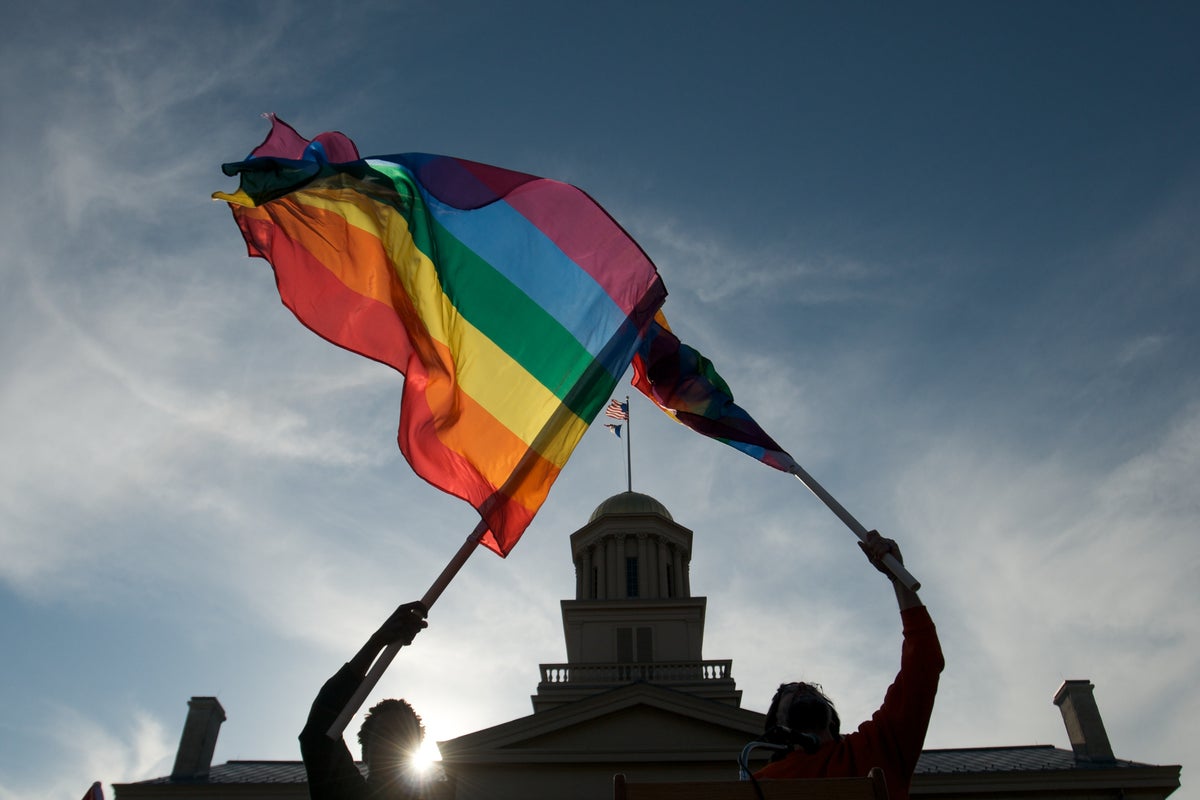
He was also gay.
In a functioning society, those two facts occupy entirely separate universes. One belongs to professional accolades and administrative evaluations; the other belongs to private life. But in the climate of modern administrative panic, the two were violently fused together. Being visible, being honest about identity, suddenly retroactively transformed into a threat.
Consider what happens next in these scenarios. A rumor starts as low static in a faculty lounge or an anonymous complaint whispered through a digital portal. Instead of testing the weight of the claim, institutional self-preservation takes over. School boards and district superintendents do not panic about justice; they panic about press releases. They look at a cultural tempest and decide that the easiest way to weather the storm is to throw overboard the person making the waves.
The investigation did not uncover a trail of broken trust or endangered children. It uncovered a life lived openly. It uncovered a man who mentioned his partner, who existed in public view without apology.
That was the offense.
We live in an era where institutional fear masquerades as child safety. When districts face intense political crosswinds, the instinct is no longer to protect the truth, but to protect the brand. If an accusation carries enough cultural electricity, truth becomes optional. The administrative machine grinds forward, sacrificing human collateral to appease a distant, baying crowd.
Think about the silence that follows an expulsion like this. The empty office. The colleagues who suddenly find reasons to look down at their clipboards when passing in the hallway. The sudden evaporation of decades of hard-earned professional goodwill. It is a peculiar kind of grief—mourning a reputation while you are still standing in the room.
Kevin Erickson did not lose his job because he failed the children. He lost his job because his existence became politically inconvenient.
The desk calendar still sits on that desk in memory, frozen on a Tuesday. The coffee mug is empty. But the question remains hanging in the stale air of every school district office across the country, watching to see who is next to walk down the hall carrying a cardboard box.
The fluorescent lights hummed above the boardroom table, casting a sterile, sickly glow over the faces of people who had known him for years.
This is the anatomy of a modern expulsion. It rarely looks like a dramatic courtroom scene. There is no shouting, no slamming of gavels. It happens in clipped, bureaucratic tones. Words like protocol, liability, and optics float through the air like invisible dust.
When a school district faces pressure from activist corners or panicked parent groups, the machinery of due process breaks down with terrifying speed. The burden of proof shifts. Suddenly, the accused is forced to prove a negative—to prove that a casual conversation was not sinister, that a supportive pat on the back was not predatory, that an authentic smile was not a trap.
It is an impossible defense.
Imagine standing before a committee of your peers, people you sat with at graduation ceremonies, people who shared cake in the breakroom on your birthday, and realizing they are no longer looking at a human being. They are looking at a liability. They are calculating the cost of standing by you versus the cost of cutting you loose.
Mathematics always wins in those rooms.
The human cost, however, defies spreadsheets. It lives in the sleepless nights staring at the ceiling, replaying conversations from three years ago, wondering which casual remark was weaponized. It lives in the sudden loss of identity. When your entire life has been defined by service, by shaping young minds and holding a school community together through grief and celebration, having that stripped away leaves a hollow space that nothing else can fill.
Yet the broader danger extends far beyond one man in Wisconsin.
When identity becomes a latent accusation, a chilling effect settles over every classroom. Teachers begin to close their doors. They stop staying late to help the struggling student after hours, paralyzed by the fear that an extra five minutes in an empty room might be reinterpreted through a malicious lens. Mentorship dies in an atmosphere of suspicion. Authenticity becomes a professional hazard.
We are building a system that rewards cowardice and punishes honesty. We are teaching educators that the safest way to survive is to be invisible, to remain entirely bland, to offer no part of their genuine humanity to the students who need it most.
And who suffers most in that sterile environment? The children.
Kids are remarkably perceptive. They can smell artificiality a mile away. They lean toward adults who are real, who are grounded, who are brave enough to exist as whole people. When we drive out educators because their personal lives do not conform to a manufactured political comfort zone, we impoverish the entire ecosystem of learning.
The corridor is quiet now. The bell rings, signaling the change of period. Doors open and close, waves of laughter and argument spilling out into the hall. Life in the school goes on, as it always does, indifferent to the administrative casualties left in its wake.
The coffee has long since grown cold. The keys are on another ring. But the shadow cast by that closed door stretches long across every hallway where fear has replaced courage.