The headlines are carbon copies of each other. "Moscow repels massive drone wave." "Air defenses prove resilient." Mayor Sergey Sobyanin takes to Telegram to assure the public that the shield held, citing sixty-five intercepted targets as proof of dominance.
It is a lie. Not necessarily a lie of numbers, but a lie of metrics.
If you are measuring the success of an integrated air defense system (IADS) by the number of cheap, plywood-and-lawnmower-engine drones it shoots down over its own capital, you have already lost the war of attrition. Counting downed drones as a "victory" is like a boxer bragging about how many punches he blocked with his face.
The media focuses on the kinetic explosion in the sky. They miss the economic hemorrhage on the ground.
The Asymmetry of the $20,000 Flying Lawnmower
The "lazy consensus" among defense analysts is that high interception rates equal safety. They don't. They equal bankruptcy.
Modern air defense relies on interceptors that are masterpieces of engineering. Whether we are talking about the Pantsir-S1, the Tor-M2, or the S-400, these systems utilize radar-guided or heat-seeking missiles that cost anywhere from $100,000 to $2 million per shot.
Now, look at the math on the incoming "threat."
Ukraine’s long-range strike drones—like the Lyutyi or the Beaver—are built for pennies. We are talking about basic GPS modules, fiberglass frames, and internal combustion engines that wouldn't look out of place on a high-end weed whacker.
- Cost of Attacking: $20,000
- Cost of Defending: $200,000+ (plus the wear and tear on multi-million dollar radar arrays)
When Sobyanin claims sixty-five drones were downed, he is announcing that Russia just spent millions of dollars to negate roughly $1.3 million in disposable Ukrainian hardware. That is not a win. That is a strategic sinkhole. In any war of industrial attrition, the side that forces the enemy to spend 10x more on defense than they spend on offense is winning, regardless of whether the "target" is hit.
The "Iron Dome" Delusion
People see videos of streaks in the Moscow night sky and think of Israel’s Iron Dome. They assume "interception" means the threat is gone.
I have spent years looking at the telemetry of urban electronic warfare. Here is what they won't tell you in a press release: An intercepted drone does not vanish. Gravity remains undefeated.
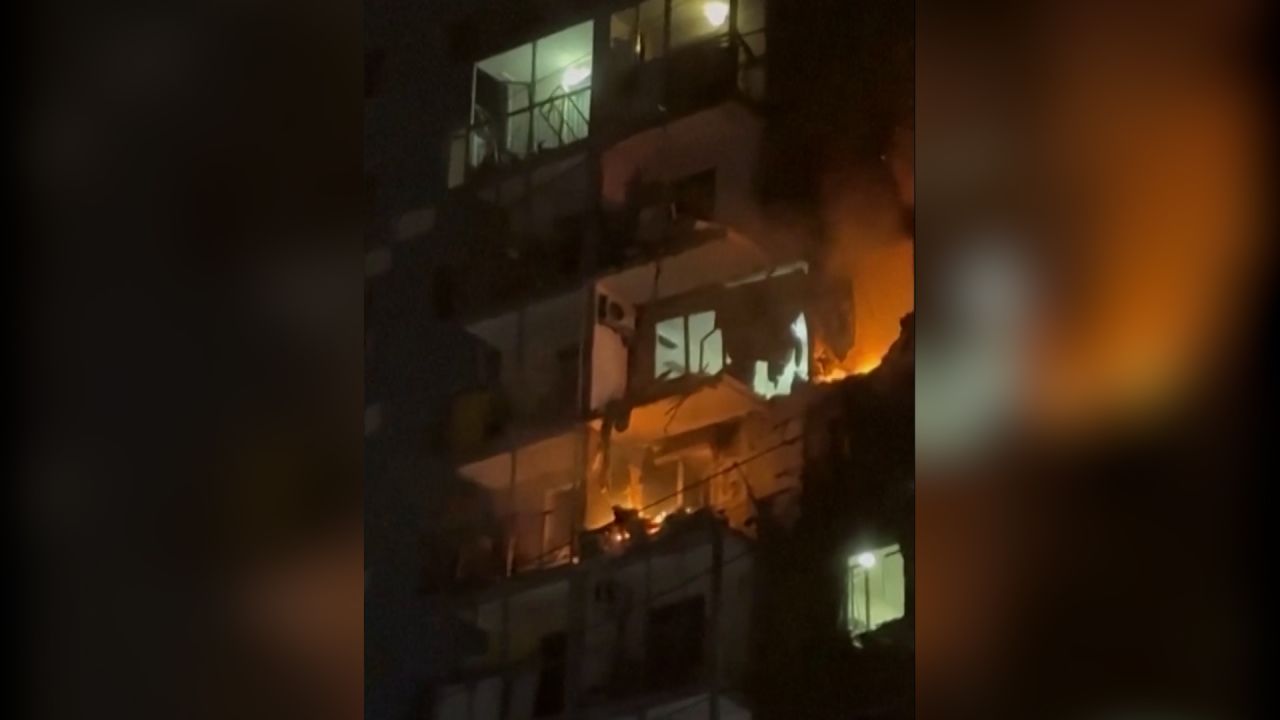
When an interceptor missile strikes a drone carrying 20kg of high explosives over a residential district like Ramenskoye or Podolsk, that mass has to go somewhere. You are essentially turning a "precise" strike into a "random" strike. Shrapnel, unexploded fuel, and the wreckage of the interceptor itself rain down on civilian infrastructure.
The "success" of downing sixty-five drones over a densely populated metro area is actually a logistical nightmare. Every "kill" creates a secondary debris field. If the goal of the attacker is to sow chaos, trigger air raid sirens, and shut down international airports like Vnukovo and Domodedovo, they achieve 100% of those goals the moment the first air defense missile is fired—even if it hits its target.
Why "Air Defense" is a Misnomer for Electronic Warfare
The true battle isn't kinetic; it’s spectral. If Russia were actually winning the drone war, we wouldn't see sixty-five drones reaching Moscow's outskirts in the first place.
Effective defense starts hundreds of kilometers from the capital. It involves:
- Passive Detection: Acoustic sensors and thermal imaging that don't give away your own position.
- GPS Spoofing: Creating "ghost" coordinates that trick a drone into thinking it's 50 miles away from its actual location.
- Command Link Jamming: Severing the tie between the pilot (if any) and the craft.
The fact that these drones are reaching the Moscow Oblast indicates a massive failure in the forward layers of the Russian electronic warfare (EW) "bubble." The reliance on kinetic interceptions—shooting things down with missiles—is a desperate, last-resort tactic. It means the sophisticated EW suites like the Krasukha or Pole-21 failed to blind the drones or fry their logic boards at the border.
If you're shooting them down over the Mayor's office, your "cutting-edge" tech is essentially acting as a glorified fly swatter because the screen door was left wide open.
The Psychological Tax of "Success"
Let’s address the "People Also Ask" obsession: Is Moscow safe? Technically, yes, the odds of a drone hitting your specific apartment are low. But "safety" is a feeling, not a statistic.
Every time sixty-five drones head for a city, the entire economic engine of that city grinds to a halt.
- Airspace Closures: Thousands of passengers delayed, fuel burned in holding patterns, cargo diverted.
- Productivity Loss: Millions of people waking up to explosions at 3:00 AM does not lead to a high-functioning workforce at 9:00 AM.
- Insurance Premiums: Commercial real estate in "protected" zones becomes a liability.
The attacker doesn't need to destroy the Kremlin. They just need to make the cost of living in Moscow slightly more annoying and slightly more expensive every single week. By celebrating "downed drones," the Russian government is validating the attacker’s strategy. They are proving that the drones are capable of reaching the heart of the state and forcing a high-resource response.
The Myth of the "Unstoppable" Shield
No air defense system in history has ever been 100% effective against a saturated swarm. Not the Patriot, not the S-400, not the Iron Dome.
The logic of the "swarm" is rooted in the "Leaky Bucket" principle. If I send 100 drones and you have a 95% interception rate—which is world-class, by the way—5 drones still hit their targets. If those targets are oil refineries or electricity substations, the "victory" of the 95 interceptions is irrelevant. The 5% failure rate defines the outcome.
In the most recent Moscow "attack," the report of sixty-five downed drones suggests a massive volume of fire. This is a stress test of the Russian supply chain. How many missiles does Russia have in stock for its Pantsir systems? How quickly can they be moved from the front lines in Donbas back to Moscow to replenish the capital’s defenses?
Ukraine is trading cheap plastic for Russia’s strategic reserves. It is a brilliant, cold-blooded trade.
The Failure of Perspective
Stop looking at the explosions. Look at the logistics.
The competitor's article wants you to believe that "65-0" is a shutout score. It isn't. In the world of modern drone warfare, "65-0" in favor of the defense is actually a 0-1 loss for the defender's treasury and a 1-0 win for the attacker’s psychological operations.
We are seeing the sunset of the era where "owning the skies" meant having the best fighter jets. Now, owning the skies means having the most disposable junk. Russia is trying to fight a swarm of locusts with a collection of expensive silver bullets.
You don't win against a swarm by shooting every bug. You win by destroying the nest or making the environment uninhabitable for the swarm. As long as Moscow is bragging about interception counts, they are admitting they have no idea how to do either.
The next time you see a headline about "thwarted" drone attacks, ask yourself one question: Who spent more money yesterday?
The answer tells you who is actually winning.
Stop counting the drones falling out of the sky and start counting the holes in the Russian defense budget. The shield isn't holding; it's evaporating.