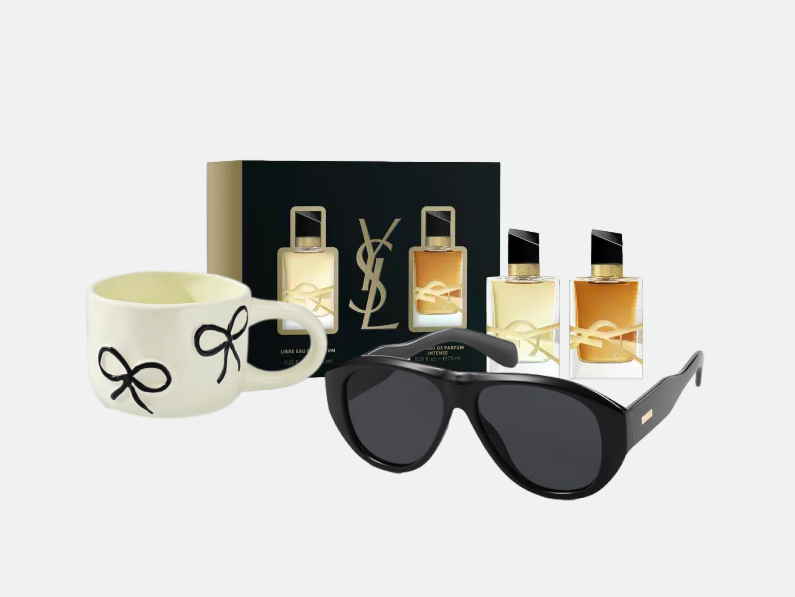
The annual rush to find the perfect Mother’s Day gift for under $100 is more than a seasonal shopping trend. It is a massive exercise in guilt mitigation. Every May, the retail industry unleashes a wave of mass-produced candles, generic jewelry, and tech gadgets designed to fit a specific price point rather than a specific person. We are conditioned to believe that a century-note budget can adequately summarize a lifetime of emotional labor. It can't. But if you are going to play the game, you have to understand the mechanics of value versus cost.
The market for mid-range gifts is flooded with "perceived value" items. These are products that look expensive in a professional photograph but feel flimsy in the hand. To find something meaningful under the $100 mark, you must ignore the algorithm-driven gift guides and look at the underlying utility and longevity of the object. We are currently seeing a shift away from "stuff" and toward "systems"—gifts that solve a recurring problem or enhance a daily ritual without requiring a monthly subscription or a charger.
The Fragrance Trap and the Science of Scent
Most people default to candles or perfume when they run out of ideas. It’s a safe bet, but also a lazy one. The luxury candle market is built on a 500% markup on paraffin wax and synthetic fragrance oils. If you are spending $70 on a jar of scented wax, you are paying for the label, not the olfactory experience.
Instead of the standard boutique candle, look toward the revival of high-end apothecary goods. Small-batch producers are now utilizing cold-pressed botanicals and essential oils that actually offer therapeutic benefits rather than just masking the smell of a kitchen. A high-quality mineral bath soak or a botanical facial oil provides a sensory experience that lingers long after a candle wick has burned out. The goal is to provide a moment of forced decompression. In an era where "self-care" has been commodified into a billion-dollar industry, giving a gift that facilitates actual rest is the ultimate power move.
The Death of the Trinket
The era of the "dust collector" is over. Modern mothers, particularly those in the Gen X and Millennial demographics, are increasingly minimalist. They don't want another "Best Mom" mug or a decorative plate. They want efficiency.
Investigate the kitchen tool category with a skeptical eye. Avoid anything with a motor. Cheap electronics in the kitchen are destined for the landfill within eighteen months. However, a professional-grade carbon steel crepe pan or a Japanese Damascus steel utility knife often falls just under that $100 threshold. These are heirloom-quality tools. They improve with age. Every time she slices a tomato or flips a pancake, the weight of the tool serves as a reminder of the gift’s quality. This is the difference between a gift that occupies space and a gift that earns its place.
The Digital Detox Luxury
We are all over-connected. The irony of the modern Mother’s Day gift is that many of the most popular items—smart speakers, fitness trackers, digital frames—actually increase the user's cognitive load. They require updates. They ping with notifications. They demand attention.
The truly radical gift under $100 is one that encourages a disconnection from the grid. Consider high-gsm linen bedding or a heavyweight cotton robe. These are tactile gifts. They ground the recipient in the physical world. The textile industry has seen a massive influx of "fast-home" products that mimic the look of Belgian linen using polyester blends. Avoid them. Genuine flax linen is breathable, antimicrobial, and lasts for decades. It is a functional luxury that improves the quality of sleep, which is the one thing every mother actually needs more of.
The Problem with Subscription Boxes
The subscription model is a trap. While a "Wine of the Month" or "Book Club" box seems like the gift that keeps on giving, it’s often a way for companies to offload excess inventory. You are paying for the curation, but the actual goods are often subpar.
If you want to go the consumable route, go deep rather than broad. Instead of a box of random snacks, buy a single, estate-grown bottle of Olive Oil from a harvest-dated source. Or a three-pound bag of single-origin coffee beans from a roastery that pays direct-trade premiums to farmers. The quality difference between grocery store staples and these high-end versions is staggering. It turns a mundane morning routine into a legitimate event.
Redefining the "Experience" Gift
The common advice is to "buy experiences, not things." But at the $100 level, most experiences are fleeting. A massage lasts sixty minutes. A dinner out is gone in two hours. To make a sub-$100 experience gift work, you need to provide the infrastructure for a recurring experience.
Think about a high-quality bird feeder made of copper and glass, paired with a field guide to local species. This isn't just an object; it’s a window into a new hobby. It creates a daily reason to look out the window and engage with the immediate environment. Or consider a weighted silk eye mask and a high-end sound machine. You aren't just giving her "stuff"; you are giving her the tools to reclaim her own time.
The Hidden Costs of Convenience
We have to talk about the Amazon effect. The convenience of one-day shipping has decimated our ability to find unique items. When you shop on a mass-market platform, you are seeing the same 50 items that everyone else is seeing. The "Best Sellers" list is a feedback loop of mediocrity.
To find a gift that actually resonates, you have to do the legwork that the internet has tried to automate away. This means visiting local independent bookstores, museum gift shops, or specialized boutiques. A first-edition copy of a favorite novel or a hand-thrown ceramic vase from a local artist carries a narrative weight that a mass-produced item can never replicate. The recipient knows you spent time, not just money. In the economy of Mother’s Day, time is the only currency that consistently appreciates.
Why Quality Matters More Than Quantity
It is better to give one exceptional $40 item than a $100 basket filled with five mediocre ones. Retailers love the "gift set" because it allows them to hide low-quality products behind elaborate packaging. Break the set.
If she likes gardening, don't buy the "Gardener's Kit." Buy a single pair of forged steel bypass pruners from a reputable brand like Felco. They are ergonomic, the blades are replaceable, and they will likely outlive the person using them. This is "buy it for life" (BIFL) territory. It signals that you value her interests enough to research the professional standard.
The Psychology of the "Luxury Basic"
There is a specific category of gifts known as "luxury basics." These are everyday items that most people wouldn't spend their own money to upgrade, but which provide immense daily satisfaction.
- Socks: Not the multi-pack from a department store, but merino wool cushioned socks designed for hiking or recovery.
- Stationery: A heavy-weight brass fountain pen or a leather-bound notebook with fountain-pen-friendly paper.
- Umbrellas: A wind-proof, fiberglass-ribbed umbrella with a solid wood handle.
These items solve the "under $100" dilemma perfectly. They are at the absolute top of their respective categories. Buying the best umbrella in the world costs $70. Buying the best watch in the world costs $50,000. When you buy the "best" of a basic category, you are providing a gold-standard experience within a reasonable budget.
The Sustainability Factor
We are living in a period of unprecedented environmental awareness. A gift that feels "disposable" is increasingly seen as a burden rather than a blessing. When selecting a gift, ask yourself: Where will this be in five years? If the answer is a drawer or a landfill, put it back.
Gifts like solid brass hardware, cast iron cookware, or hand-woven wool throws are sustainable because they are durable. They don't rely on plastic components or planned obsolescence. They are a rejection of the "fast-gift" culture that dominates the Mother's Day landscape.
The Authentic Gesture
Ultimately, the failure of most gift guides is that they treat "Mom" as a monolith. They assume every woman over the age of 30 wants a scented candle and a soft blanket. This is a reductive view of motherhood that ignores the complex, multifaceted individuals they actually are.
The most "hard-hitting" advice for Mother’s Day is this: Stop looking for the gift that "moms" like, and start looking for the gift that the person likes. If she’s a tech-obsessed power user, a high-capacity portable power bank or a mechanical keyboard might be more romantic than a bouquet of roses. If she’s a fitness enthusiast, a high-density foam roller or a weighted jump rope shows you’ve been paying attention to her routine.
The $100 limit isn't a restriction; it’s a filter. It forces you to move past the easy, expensive options and find something that demonstrates true insight into her character.
Don't buy the marketing. Buy the utility, the durability, and the intent. If a gift doesn't have a story or a clear function, it’s just more noise in an already loud world. Forget the "best of" lists curated by affiliate links and focus on the one person who actually matters. Stop buying items and start buying quality.