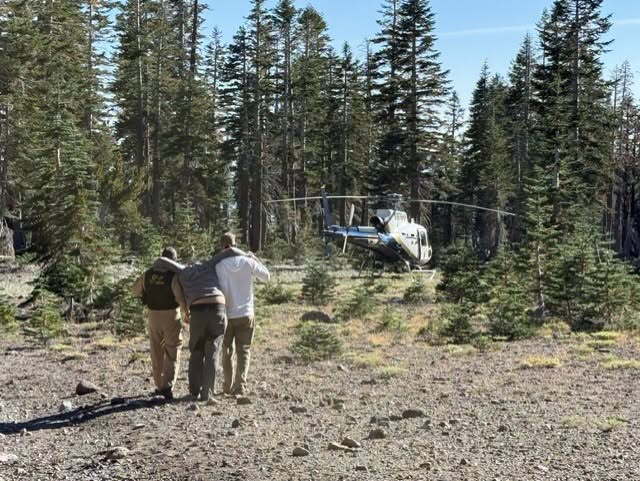
Every time a headline breaks about an injured climber spending a freezing night dragging themselves down the flanks of a major peak, the media machinery fires up the violins. We get breathless accounts of grit, unbreakable human will, and miraculous overnight descents. The public eats it up. Social media floods with applause.
It is all a comforting lie.
What the romanticized narratives of Mt. Shasta trauma omit is the unvarnished truth: that overnight crawl was not a testament to human resilience. It was a monument to catastrophic planning failure, ego-driven decision-making, and a culture that treats basic mountaineering hygiene as optional until disaster strikes.
We need to stop praising disasters as heroic survival stories. When you glorify the rescue, you encourage the next idiot to roll the dice.
The Cult of Manufactured Suffering
Modern outdoor culture has developed a dangerous fetish for suffering. Somewhere along the way, we confused reckless unpreparedness with rugged individualism. When an individual heads up Avalanche Gulch or Casaval Ridge without accounting for worst-case degradation, they are not pushing the envelope. They are rolling a 20-sided die and hoping the universe covers their bad math.
When things go sideways—as they inevitably do when you ignore a deteriorating barometer or push past a hard turnaround time—the narrative immediately pivots. Instead of asking why an adult with a credit card and a gear list thought they could out-negotiate an active storm or a steep ice chute with a sprained ankle, we focus on the raw physical toll of the descent.
"They crawled for fourteen hours!"
Good. They should have walked out on two feet if they had checked the route profile, respected their physical limits, and turned around when the warning signs flashed like neon signs in a dark room. By turning a preventable evacuation into an epic tale of survival, we strip accountability from the participant and hand it over to fate. Fate didn't break their leg or strand them above tree line. Bad risk management did.
The Economics of Vanity Rescues
Let us talk about the dirty secret of alpine rescue operations that the glossy outdoor magazines refuse to print: the unpaid cost borne by volunteers and taxpayers.
When someone decides that summiting a volcano is more important than returning home safely, they trigger a chain reaction. Search and Rescue teams—mostly volunteers who drop their jobs, their families, and their sleep—are summoned onto a mountain at midnight. Helicopters burn thousands of dollars of public fuel. Emergency medical personnel risk their lives navigating loose scree, crevasses, and sub-zero wind chills to pull someone out of a hole they walked into with open eyes.
And what does the rescued individual get? A pat on the back, a few local news interviews, and a renewed sense of invincibility.
In business, if an executive blows a quarter-million dollars on a project because they ignored basic market data, they are fired. In mountaineering, if a climber ignores basic weather windows and physiology, they get a profile piece in a regional paper celebrating their tenacity. This asymmetry is toxic. Until we attach real social and financial consequences to negligence in the backcountry, the mountains will continue to function as a playground for people who treat nature like an extreme amusement park ride.
The Myth of the Unpredictable Mountain
The standard excuse from the unprepared is that the mountain is unpredictable. Weather changes fast. Rockfall happens. Conditions deteriorate without warning.
This is absolute nonsense.
Mt. Shasta is not an unmapped peak in a remote Karakoram range. It is one of the most heavily documented, frequently climbed stratovolcanoes in North America. Its weather patterns are studied. Its routes are cataloged down to the individual boulder. The snowpack behavior, the afternoon convection storms, the freeze-thaw cycles on the Red Banks—none of this is classified information.
When a climber gets caught out, it is almost never because the mountain did something unexpected. It is because the climber refused to respect the rules that have been written in blood and granite for decades. They pushed past their turnaround time because the summit was only five hundred vertical feet away. They neglected to pack proper bivy gear because it added two pounds to their pack. They relied on a smartphone GPS app instead of developing actual route-finding competence and carrying a paper map and compass.
An "ordeal" is what happens when bad preparation meets cold physics. Treating it like an act of God absolves the climber of the one thing that keeps people alive in the high country: ruthless self-assessment.
Dismantling Summit Fever
Summit fever is a psychological pathogen. It robs intelligent people of their survival instincts and replaces them with an infantile need to touch a pile of rocks at the top of a hill before heading down.
I have watched seasoned professionals—people who should know better—ignore clear warning signs because turning around feels like losing. They convince themselves that the pain in their knee will magically disappear once they hit the plateau, or that the grey clouds banking up over the Trinity Alps are just passing moisture.
Here is a radical concept: the summit does not care about your ego. The mountain will be there tomorrow, next week, and next century. Your cartilage, your kidneys, and your life are considerably less durable.
True mountaineering expertise is not measured by how much pain you can endure on the way down. It is measured by how many times you turned around before things got dangerous. If you are crawling down a mountain, you have already failed at the primary objective of mountaineering, which is to return home under your own power without requiring a small army of strangers to risk their necks pulling your dead weight off the snowfields.
The Contrarian Blueprint for True Alpine Safety
If you want to survive and thrive in high-altitude environments, you have to throw out the modern internet-fueled playbook of gear-fetishization and summit-chasing. Adopt a framework built on friction, discipline, and absolute accountability.
1. Hard Turnaround Times Are Non-Negotiable
Set a hard clock time before you leave the trailhead. If you reach your designated elevation milestone at 11:00 AM, you keep going. If you reach it at 11:01 AM and you are behind schedule, you turn around immediately. No rationalization. No "just ten more minutes." The clock dictates reality, not your ambition.
2. Train for the Worst-Case Descent, Not the Best-Case Ascent
Most climbers train their lungs and legs for going up. That is amateur hour. Going up requires cardiovascular endurance; going down requires eccentric leg strength, joint stability, and psychological control when you are already depleted. If your training regimen does not include heavy downhill eccentric loading, weighted pack descents, and navigation under fatigue, you have no business above timberline.
3. Eliminate the Safety Net Mentality
Stop climbing with the subconscious insurance policy that rescue services are just an SOS button away via satellite messenger. Plan every trip as if rescue is mathematically impossible. If you cannot self-rescue from your planned route with the gear on your back, your plan is flawed and your risk profile is too high.
4. Reframe Failure As Mastery
Celebrate the days you turned around early. In a healthy mountain culture, aborting a climb due to marginal weather or sub-par physical condition should be praised as the highest form of discipline. The people who summit under dangerous conditions are not brave; they are simply lucky. Do not confuse luck with skill.
The next time a story breaks about an epic overnight crawl down a freezing slope, stop looking for the hero. Look for the chain of bad decisions that put them there in the first place. Until we stop applauding the wreckage, climbers will keep paying the price for our collective applause.
Leave the ego at the trailhead. The mountain doesn't know you're there, and it certainly doesn't care.