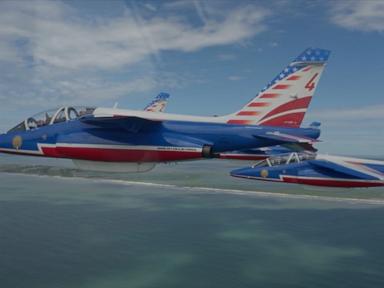
A French Rafale fighter jet tears through the sky over New York Harbor, banking hard past the Statue of Liberty. The engines roar. The smoke trails mimic the tricolor flag. The media loses its mind over the "enduring alliance" between Washington and Paris.
It is a beautiful, expensive, utterly useless illusion. For a deeper dive into similar topics, we recommend: this related article.
Mainstream news outlets love covering these flyovers. They treat them as profound symbols of international cooperation and military readiness. They stitch together high-definition cockpit footage, interview smiling pilots, and regurgitate press releases about shared democratic values.
They are selling you a romanticized lie. For additional details on this issue, extensive coverage is available on BBC News.
As someone who has spent years analyzing defense procurement and bilateral military exercises, I look at these flyovers and see exactly what they are: a staggering waste of aviation fuel, an operational distraction, and a superficial substitute for actual strategic alignment. The narrative that a flyover reinforces an alliance is built on a flawed premise. In reality, these high-profile stunt flights mask deep-seated geopolitical friction and structural defense failures.
The True Cost of a Five-Minute Photo Op
Let us dismantle the logistics first. The public sees a stirring, patriotic spectacle. They do not see the spreadsheet behind it.
Flying advanced fighter aircraft like the Dassault Rafale or the American F-22 Raptor is not like taking a weekend drive. The hourly operating cost of a modern multi-role fighter jet ranges anywhere from $20,000 to over $60,000 depending on the platform, maintenance overhead, and fuel consumption.
[Logistics Pipeline] -> [Pre-flight Maintenance] -> [Transatlantic Transit] -> [Stunt Flight] -> [Post-flight Overhaul]
When a foreign air force participates in a ceremonial flyover in the United States, you are looking at millions of dollars burned for a few photographs. This includes:
- Transatlantic transit flights requiring multiple aerial refuelings.
- Pre-flight maintenance hours that pull mechanics away from operational readiness.
- Post-flight overhauls to address the wear and tear of low-altitude, high-speed maneuvers over urban centers.
To what end? To generate a 30-second clip for the evening news and a few thousand likes on social media.
If the goal of a military is to project power and maintain combat readiness, burning precious flight hours on theatrical choreography is counterproductive. Every hour a pilot spends practicing precise formation flying for a public relations stunt is an hour they are not training for complex, contested airspace environments.
PR Stunts Cannot Hide Structural Friction
The lazy consensus in defense journalism suggests that public displays of military solidarity equal strong geopolitical partnerships. This ignores how international relations actually function.
France and the United States share a long history, but their defense strategies are frequently at odds. Look at the fallout from the 2021 AUKUS submarine deal, where the U.S. and the UK blindsided Paris to secure a defense pact with Australia. No amount of smoke trails over Lady Liberty can erase the structural distrust that such maneuvers create. France routinely pushes for European strategic autonomy—explicitly trying to decouple European defense from total reliance on the American military apparatus.
A flyover is the diplomatic equivalent of a corporate team-building exercise. It looks great on the company intranet, but it does nothing to fix the toxic management culture or the broken supply chain.
"Symbolism is the refuge of nations that cannot agree on substance."
When you see a joint flyover, ask yourself what major treaty negotiation is currently stalling. Ask yourself which trade dispute is being swept under the rug. True military interoperability is built in dreary, untelevised command centers, through shared data links, standardized ammunition calibers, and grueling joint logistics exercises in the Baltic states or the Pacific. It is not built over Manhattan.
Dismantling the "Public Inspiration" Fallacy
Proponents of these flyovers always fall back on the same emotional argument: But it inspires the public and boosts recruitment!
Does it?
Show me the data linking a five-minute flyover to a sustained spike in high-quality military recruitment. It does not exist. What it actually does is reinforce a Hollywood-ized, outdated perception of warfare. Modern conflicts are won through cyber capabilities, electronic warfare, logistical endurance, and distributed drone networks.
Parading a handful of fourth- and fifth-generation manned fighters over a monument teaches the public to value prestige assets over actual combat efficacy. It feeds a dangerous bias toward expensive, legacy platforms at a time when defense budgets need to pivot toward high-volume, low-cost autonomous systems.
The Alternative: What Real Cooperation Looks Like
If we want to celebrate and fortify an international alliance, we must stop funding the theater.
Imagine a scenario where the millions spent on the Statue of Liberty flyover were instead allocated to a joint French-American cyber defense incubator. Imagine if those funds secured permanent exchange slots for mid-level officers to study at each other’s war colleges, closing the cultural and operational gaps that actually hinder joint campaigns.
The downside to this contrarian approach is obvious: it is boring. It does not look cool on Instagram. It does not give politicians a photo op with a pilot helmet. But it works.
Stop falling for the spectacle. The next time a fighter jet screams past a skyscraper for a holiday commemoration, do not marvel at the precision. Question the priorities.
Our adversaries are not intimidated by a beautifully executed flyover. They are intimidated by integrated logistics, hardened supply chains, and genuine political resolve. Everything else is just expensive smoke.