The headlines are screaming about a global blackout. They want you to believe that every skirmish in the Strait of Hormuz is a precursor to the end of the industrial world. They call it the "largest energy supply disruption in history."
They are wrong.
The narrative that West Asia holds a knife to the throat of the global economy is an outdated relic of 1973. It’s a ghost story told by analysts who haven't looked at a flow chart in a decade. If you are panic-buying energy futures based on the "unprecedented" nature of current regional volatility, you aren't just late—you’re reading the wrong map.
The real story isn't about a shortage. It’s about a massive, structural rerouting of reality that the "doom-and-gloom" crowd is too terrified to acknowledge because it ruins their click-through rates.
The Ghost of the 1970s is Dead
Every time a tanker is diverted around the Cape of Good Hope, the legacy media trots out the same tired comparisons to the OPEC embargo. They act as if the world is still a fragile, unipolar energy consumer.
Let’s look at the math. In 1973, the U.S. was a desperate importer. Today, the U.S. is the world's largest producer of crude oil. The shale revolution didn’t just add barrels to the market; it fundamentally broke the "energy weapon" that West Asian states used to wield. When the supply from the Persian Gulf dips, the Permian Basin doesn't just watch—it reacts.
The "disruption" people are crying about is actually a logistical annoyance, not a systemic failure. The oil is still there. The gas is still there. It’s just taking the long way home. We are seeing a crisis of shipping costs, not a crisis of resource scarcity. To conflate the two is amateur hour.
The Efficiency Trap
The reason the world hasn't collapsed—and won't—is something I call the Efficiency Buffer. I’ve watched boardrooms across Europe scramble for the last eighteen months, and do you know what they found? They found that they were incredibly wasteful when energy was "free."
When prices spike, industrial giants don't just roll over and die. They optimize. They switch fuels. They implement AI-driven grid management that reduces waste by 15% in a single quarter. This isn't "fostering" a better environment; it’s cold-blooded survival.
The "unprecedented disruption" narrative ignores the fact that demand is no longer a rigid, vertical line. It is elastic. We are learning to do more with less because the market is forcing our hand. The disruption is acting as a brutal, necessary catalyst for a technological leap that would have taken twenty years in a stable market.
The China-India Re-Routing Reality
While Western analysts wring their hands over "global" supply shocks, they ignore where the oil is actually going. Russia, Iran, and even sanctioned barrels from various pockets of West Asia are flowing directly into the massive refining hubs of India and China.
- The Shadow Fleet: There are hundreds of tankers operating outside the traditional insurance and tracking "landscape."
- The Refining Wash: Crude goes in as "conflict oil" and comes out as refined diesel with a neutral stamp.
The supply hasn't vanished; it has just moved to a darker room. If you think the world is "running out" because the Red Sea is a mess, you are ignoring the massive volumes moving across the Pacific. The disruption is a Western-centric optical illusion.
Why the Price of Oil is a Liar
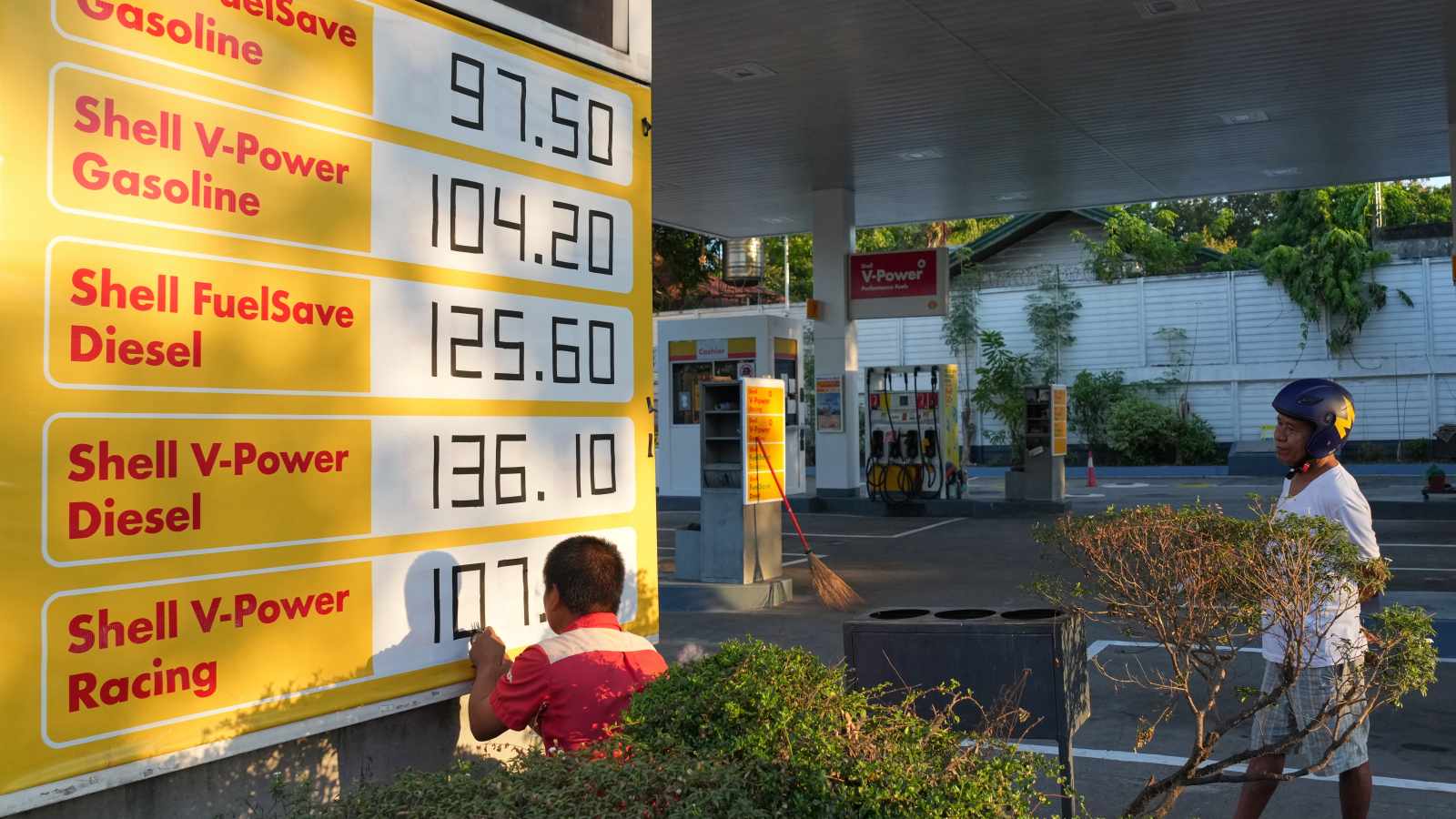
Price is not a measure of availability; it is a measure of fear. $100 oil in 2026 dollars is not the same as $100 oil in 2008. When you adjust for inflation and the energy intensity of the global GDP, we are actually paying less for the energy required to produce one unit of economic growth than we were during the "stable" years of the early 2000s.
The "largest disruption ever" hasn't even managed to keep Brent crude above $90 for a sustained period. If the disruption were truly existential, we’d be seeing $150. The market knows something the pundits don’t: the world is oversupplied, and the "war" is just a floor for prices that would otherwise be cratering due to the rise of renewables and EVs.
The Fatal Flaw in the "Supply Chain" Argument
People love to talk about "supply chains" as if they are fragile glass threads. They aren't. They are more like a fungal network. If you step on one part, the nutrients find another way through the soil.
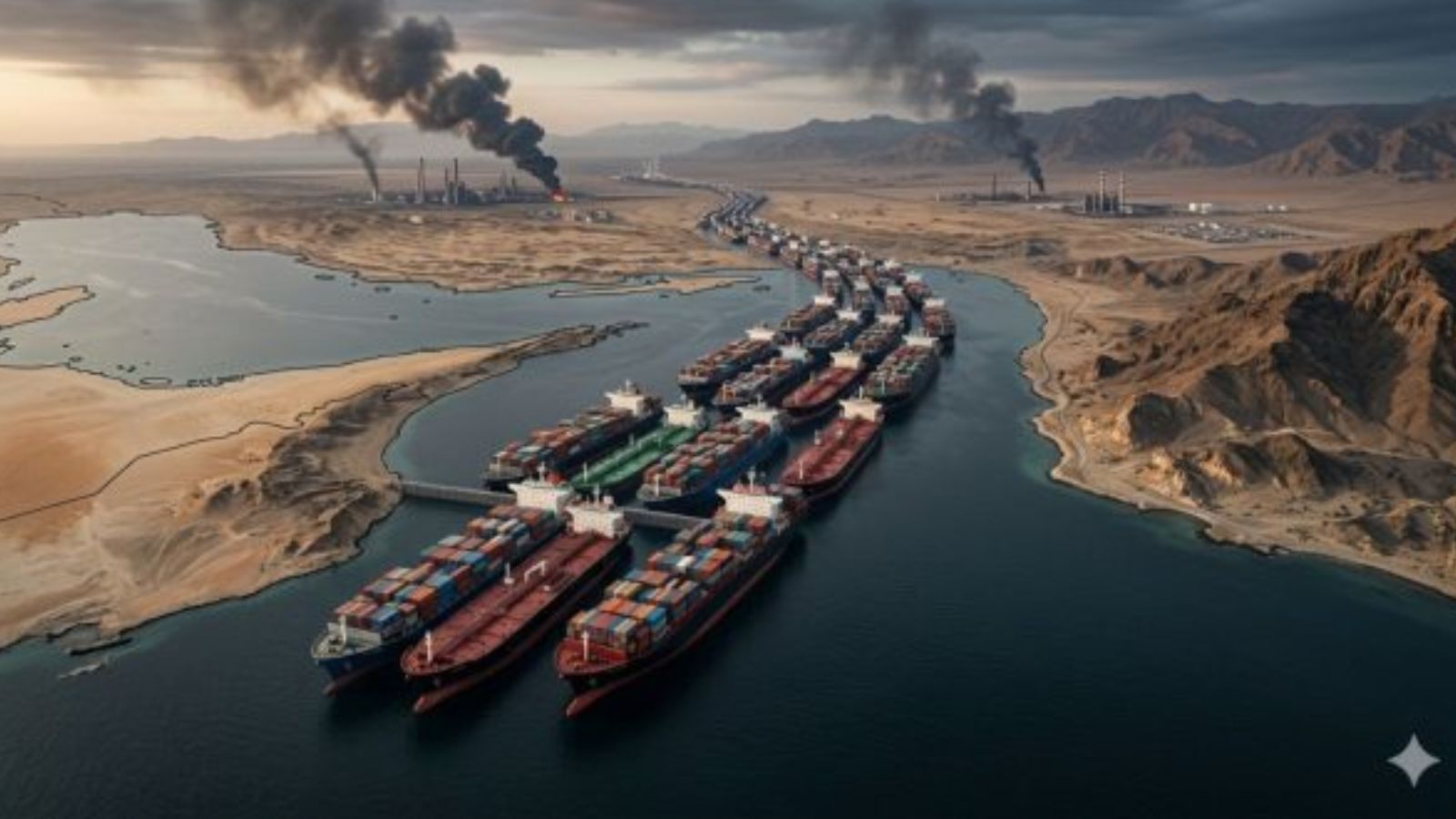
The diversion of ships away from the Suez Canal is being framed as a catastrophe. In reality, it’s a stress test that the global shipping industry is passing with flying colors. Yes, it adds 10 days to a voyage. Yes, insurance premiums are up. But the shelves are full. The factories are running.
If this is the "largest disruption in history," then history is surprisingly manageable.
Stop Asking if the Oil Will Run Out
The question is wrong. The question you should be asking is: "How much faster does this accelerate the irrelevance of West Asian crude?"
By creating volatility, these regional conflicts are signing their own death warrants. Every time a CEO has to explain a "supply chain surcharge" due to West Asian tensions, they greenlight another billion-dollar investment in domestic solar, modular nuclear, or North American extraction.
The "disruption" is actually a massive, forced divestment campaign. The region is losing its "pivotal" status precisely because it is trying to use it as a cudgel. You cannot hold a gun to your customer's head and expect them to keep coming back to your store once they find a way to grow their own food.
The Hard Truth About Energy Independence
I’ve sat in meetings with energy policy makers who still talk about "global cooperation." It’s a fantasy. The disruption has proven that energy independence is the only currency that matters.
- Nuclear is the only exit: If you aren't building SMRs (Small Modular Reactors), you aren't serious about stability.
- Storage is the new oil: The ability to store 48 hours of national grid power is worth more than a decade of trade deals.
- Localism wins: The more layers of "global" you have in your energy stack, the more points of failure you own.
The current war in West Asia isn't a threat to the global economy—it’s a final warning to the laggards. Those who rely on the "seamless" flow of goods through a single 20-mile-wide strait deserve the volatility they get.
The Bottom Line
The "largest energy supply disruption the world has ever seen" is a paper tiger. It’s a localized conflict with global PR. The infrastructure of the 21st century is too distributed, too redundant, and too technologically advanced to be brought down by 20th-century kinetic warfare.
The real danger isn't that the oil stops flowing. The danger is that you believe the hype and make your investment decisions based on a version of the world that stopped existing when the first shale well was fracked.
Stop looking at the maps of the Middle East. Start looking at the battery density charts and the North American export terminal schedules. That’s where the power is. The rest is just noise and expensive boat rides.
Build your own grid. Diversify your own risk. Stop waiting for the Strait of Hormuz to tell you what your power bill is going to be.