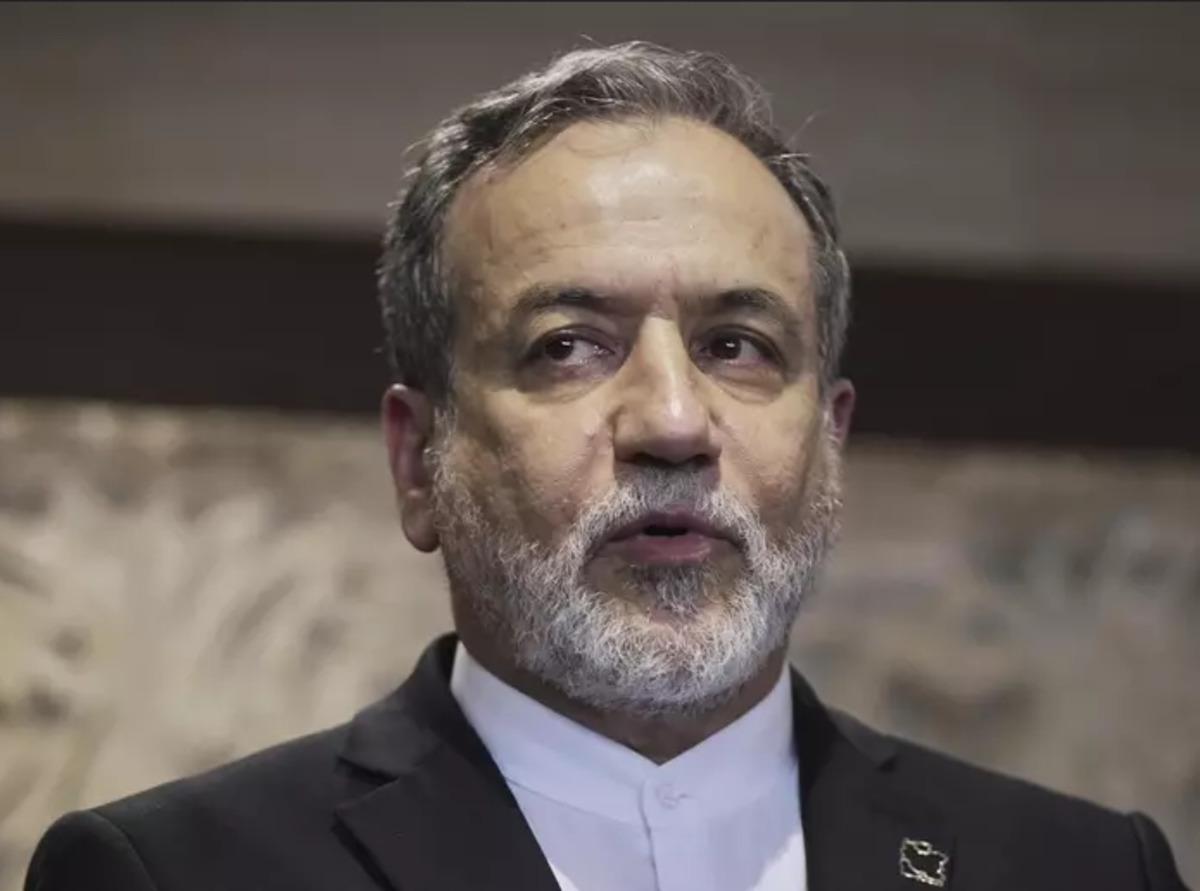
Iranian Foreign Minister Abbas Araghchi recently took to the airwaves to blame stalled peace talks on what he termed America’s excessive, maximalist demands. The mainstream press ran with it. They always do. It fits the comfortable, lazy narrative that negotiations fail simply because one side asks for too much.
It is a convenient lie.
The truth is far more cynical. The deadlock between Washington and Tehran is not a failure of diplomacy. It is a highly functioning diplomatic product. Both regimes are getting exactly what they need from the stalemate. Stop looking at the failure to sign a treaty as a bug. It is the main feature.
The Lazy Consensus of Strategic Blame
When Araghchi claims that Washington is blocking peace by refusing to compromise, he is playing to a specific audience. He wants global observers to believe that Iran is a rational actor trapped at the table with an erratic superpower.
But geopolitical negotiations are not a standard business acquisition where both parties genuinely want to close the deal. In high-stakes statecraft, the process of negotiating is often more valuable than the actual agreement.
Let us look at the mechanics. For the Iranian leadership, an active, unresolved conflict with the West serves as the ultimate domestic glue. It justifies economic hardship under the banner of resistance. It legitimizes the tightening of internal security. If tomorrow the United States accepted every single one of Iran’s terms, the regime would face an immediate existential crisis: how to govern a young, restless population without the specter of the Great Satan to explain away systemic economic mismanagement.
Washington operates on a parallel track. For American policymakers, a permanent state of managed tension in the Middle East keeps regional allies dependent on US military hardware and intelligence. It maintains a predictable equilibrium. A comprehensive peace deal would force a radical, unpredictable realignment of partnerships with Gulf states and Israel. No administration wants to risk that level of instability for the sake of a signature on a piece of paper.
The Cost of the Closed Deal
I have watched diplomatic analysts spend decades dissecting the minutiae of sanctions relief and enrichment percentages. They miss the forest for the trees. They assume the goal is a signed document.
Imagine a scenario where the Joint Comprehensive Plan of Action (JCPOA) was completely restored tomorrow with zero US caveats. What happens?
- Capital Flight: Global banks do not move because a politician signs a paper. They move based on long-term risk assessment. The systemic compliance risks of doing business with state-linked Iranian firms would remain astronomical.
- Political Vulnerability: The sitting US president would face immediate, brutal blowback from Congress, turning a foreign policy "win" into a domestic electoral liability.
- Regional Escalation: Proximity forces action. Without the diplomatic theater of "negotiations," proxy factions would lose their strategic ambiguity. Every minor border skirmish would risk escalating into direct state-on-state conflict because there would be no ongoing talks to protect.
The status quo provides a cushion. It allows both sides to project strength to their domestic bases while privately ensuring that lines of communication remain open enough to prevent total war. It is a choreographed dance of hostility.
Dismantling the Nuclear Currency
The core flaw in public commentary around these talks is the belief that uranium enrichment is the ultimate bargaining chip. It is not. The nuclear program is a financial instrument.
Tehran understands that the threat of development is far more lucrative than the actual possession of a weapon. Once a state builds a bomb, the leverage disappears. The penalties become permanent, the isolation absolute. Look at North Korea. They have the weapon, and they are economically marooned.
By remaining perpetually on the threshold—accelerating enrichment when they need leverage, slowing it down when the pressure gets too high—Iran maintains a highly liquid diplomatic currency. They can trade minor concessions for partial asset unfreezing, keeping the economy on life support without ever giving up the asset that bought the seat at the table.
Araghchi knows this. Araghchi’s American counterparts know this. The public theater of blaming "maximalist demands" is simply the cost of doing business. It keeps the markets stable and the hardliners quiet.
The Flawed Questions We Keep Asking
The public constantly falls into the trap of asking the wrong questions about Middle Eastern diplomacy.
Why can't the US just lift sanctions first to build trust?
This question assumes trust is a variable in international relations. It is not. Compliance is the only metric that matters. Lifting sanctions upfront removes American leverage without any guarantee of behavioral change. It is state-level malpractice. Furthermore, sanctions are easy to impose but incredibly difficult to unwind structurally because they are woven into the fabric of Western financial compliance systems.
Will a change in leadership in Tehran or Washington fix the deadlock?
No. The structural incentives do not change when the faces change. A conservative US administration will use the deadlock to project toughness; a liberal administration will use it to demonstrate diplomatic patience. In Tehran, the foreign ministry is an execution arm, not a decision-making body. The strategic necessity of the external adversary remains constant regardless of who sits in the president's office.
The Reality of Managed Instability
The actionable truth for businesses, energy markets, and regional observers is simple: stop waiting for a breakthrough.
The premium placed on geopolitical risk in the region is fundamentally mispriced because people are factoring in a catastrophic collapse of talks or a sudden, miraculous peace. Neither is going to happen. The friction is stable.
- Energy Markets: Oil prices regularly spike on aggressive rhetoric from Persian Gulf officials. Smart operators ignore the noise. The rhetoric is designed for domestic consumption, not military deployment.
- Supply Chains: Bet on the persistence of sanctions. Do not build five-year strategies around the assumption that the Iranian market will open up to Western capital.
The deadlock is the policy. The friction is the stability. The moment you accept that both sides are winning by losing, the entire geopolitical theater makes perfect sense. Stop looking for a resolution and start managing the permanence of the divide.