The generator hums. It is the persistent, grinding heartbeat of Lagos, a mechanical cough that signifies both survival and a deep-seated frustration. For three years, that sound has been the soundtrack to a slow-motion tightening of the throat for the Nigerian economy.
When the news cycle speaks of "macroeconomic stabilization" or "inflationary cooling," the words feel hollow. They don't capture the weight of a basket of yams. They don't describe the look on a father’s face when he realizes the fuel for his small delivery van has doubled in price—again. To understand why Nigeria’s recent economic uptick matters, you have to stop looking at the spreadsheets and start looking at the street corners.
The story of the last thirty-six months is one of a country holding its breath.
The cost of a clean slate
For years, the Nigerian economy was a house built on subsidies that the foundation could no longer support. It was a comfortable lie. By keeping the price of petrol artificially low and tightly controlling the exchange rate of the Naira, the government bought a fragile peace. But the bill always comes due. When the subsidies were finally stripped away and the currency was allowed to find its own level, the shock wasn't just financial. It was visceral.
Imagine a woman named Amina. She runs a small textile stall in Kano. For Amina, the "unification of the exchange rate" wasn't a policy goal. It was a thief. It meant the vibrant fabrics she imported became twice as expensive overnight. It meant her customers, whose wages hadn't moved an inch, stopped coming.
She is the human face of the "three grueling years."
During this period, inflation peaked at levels that made the simple act of eating a luxury for many. The central bank raised interest rates with the clinical detachment of a surgeon, trying to bleed the fever out of the economy. It worked, in the way that harsh medicine often does, but the patient felt every bit of the pain.
A shift in the wind
Something changed in the early months of this year. It wasn't a sudden explosion of wealth, but rather a quiet, steadying hand.
The data tells us that the Gross Domestic Product grew by 3.19% in the second quarter of 2024. That number sounds small. It sounds like a rounding error in the grand scheme of global finance. But in the context of Nigeria, it is a signal fire. It marks a departure from the stagnation that threatened to swallow the middle class whole.
Why is this happening now?
The answer lies in the painful corrections finally yielding fruit. By allowing the Naira to breathe, the government began to attract the kind of foreign investment that had fled during the years of uncertainty. Investors are like birds; they don't land where they sense a trap. For a long time, the fixed exchange rate was that trap. Now that the rules of the game are transparent, the capital is slowly, cautiously returning.
More importantly, the non-oil sector is beginning to flex its muscles. For decades, Nigeria was a hostage to the price of a barrel of crude. If the global oil market sneezed, Nigeria caught pneumonia. Today, the growth is being driven by services, by telecommunications, and by a resilient agricultural sector that refuses to quit.
The invisible stakes of stability
We often mistake "economic growth" for "everyone getting rich." That isn't what is happening here. What we are seeing is the return of predictability.
In a volatile economy, time is the enemy. You cannot plan a business, a wedding, or a home renovation if you don't know what your money will be worth in two weeks. That uncertainty creates a frantic, short-term mindset. People hoard. They panic. They stop dreaming.
The recent stabilization of the Naira—even at a much lower value than people would like—provides a floor. You can stand on a floor. You can build on it.
Consider the tech hubs in Yaba. These are rooms filled with young Nigerians coding solutions for a continent. For them, a stable, albeit weak, currency is better than a "strong" currency that they can't actually access. When the exchange rate was pegged, they had to resort to the black market, navigating a shadowy world of back-alley transfers just to pay for server space. Now, they can operate in the light.
The stakes are nothing less than the retention of Nigeria's greatest export: its talent. Every year of economic misery is a year that the brightest minds look toward London, Toronto, or Dubai. Stabilizing the economy isn't just about debt-to-GDP ratios; it’s about making sure the next great African innovation happens in Lagos, not in a diaspora suburb.
The persistent shadows
It would be a lie to say the clouds have cleared.
Inflation is still a predatory beast, hovering near 30%. While the rate of increase is slowing, the prices are not coming down. They are simply climbing more slowly. For a family that was already on the edge, this distinction is academic. The hunger is still real.
There is also the matter of the "exit" of several multinational giants. You may have read about Proctor & Gamble or GSK scaling back their direct operations. These headlines are often used as proof of failure. The reality is more nuanced. These companies are moving to a third-party distribution model because the old way of doing business—relying on cheap, subsidized dollars—is dead.
It is a culling of the old guard.
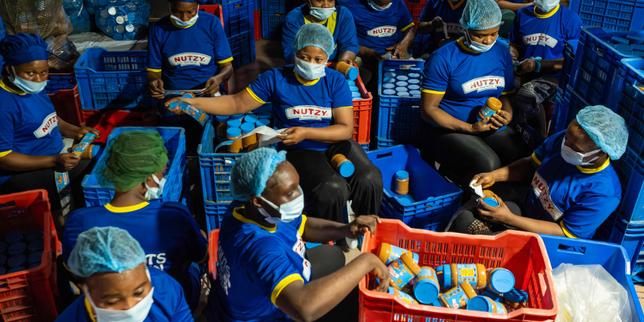
In their place, local manufacturers are trying to fill the void. This is the "Import Substitution" dream, finally being forced into reality by necessity rather than decree. It is messy. It is difficult. It involves smaller margins and greater risks. But it is Nigerian-owned, and it is rooted in the soil.
The geography of hope
If you travel from the bustling ports of Lagos to the grain elevators of the north, you see a country that is tired but increasingly defiant.
The government’s revenue has increased significantly. This is the result of better tax collection and the removal of those hemorrhaging subsidies. The question that hangs in the air—the question that every Nigerian asks over tea or in the back of a yellow danfo bus—is where that money will go.
If it goes into infrastructure, into the power grid that would finally silence those ubiquitous generators, then this "encouraging result" becomes a turning point. If it vanishes into the old pockets of patronage, the three grueling years will have been for nothing.
We are at the "narrow bridge" moment of the Nigerian story.
The data suggests we are crossing it. The international markets are nodding in approval. The bond yields are looking attractive. But the true measure of success won't be found in a report from a rating agency in New York.
It will be found in the night markets. It will be found when Amina can buy twice as much fabric as she did last month. It will be found when the hum of the generator is replaced by the steady, silent flow of a national grid that finally works.
Nigeria is a country of 200 million people who have mastered the art of the "hustle." They have survived policies that would have collapsed smaller nations. Now, for the first time in a long time, the hustle isn't just about treading water. It’s starting to look like progress.
The generator is still running, but the lights in the house are finally starting to flicker on.
Would you like me to analyze the specific sectors within the Nigerian non-oil economy that contributed most to this 3.19% growth?