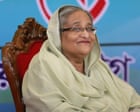
Conventional political commentary frames the potential return of former Bangladeshi Prime Minister Sheikh Hasina from exile in India as a binary showdown between a fallen autocrat and a newly liberated democracy. That framing is overly simplistic. According to regional political analysts and diplomatic observers, treating her potential return as a mere nostalgic bid for power ignores the structural realities of Bangladeshi statecraft, the deep-seated institutional loyalties within the civil-military bureaucracy, and the geopolitical calculus driving New Delhi and Washington.
When Sheikh Hasina resigned and fled to India in August 2024 following mass student-led protests against government job quotas and broader governance grievances, international observers quickly declared the end of the Awami League era. Subsequent reporting has focused heavily on legal proceedings against her, including arrest warrants issued by Bangladesh’s International Crimes Tribunal (ICT) over alleged crimes against humanity during the 2024 crackdown, alongside reports that she and her party are plotting a political comeback. Yet, framing this purely as a story of a "disgraced leader" attempting an improbable restoration overlooks how South Asian political dynasties actually operate—and how fragile transitional administrations remain when economic pressures mount.
The Myth of the Clean Slate in Dhaka
A common assumption among foreign commentators is that ousting an executive immediately dismantles the political ecosystem built over fifteen consecutive years in power. History across South Asia demonstrates the opposite.
Between 2009 and 2024, the Awami League did not merely win elections; it embedded its ideological and administrative network into every tier of the Bangladeshi state. From the judiciary and law enforcement to local union councils and major business conglomerates, the party's roots run deep. While Chief Adviser Muhammad Yunus and the interim government have initiated sweeping reforms—replacing top judges, overhauling the police leadership, and establishing commissions to rewrite constitutional rules—institutional culture does not evaporate overnight.
Political scientists specializing in South Asian governance note that grassroots party structures in Bangladesh rely heavily on patron-client networks rather than formal ideological allegiance. Even with senior Awami League leaders in prison, in hiding, or abroad, the party retains a substantial vote bank—historically estimated at 30 to 35 percent of the electorate—that cannot simply be legislated out of existence. Banning the party or disqualifying its leadership may satisfy immediate demands for accountability from student coordinators and opposition groups like the Bangladesh Nationalist Party (BNP), but it also risks disenfranchising millions of voters, potentially delegitimizing future elections in the eyes of international monitors.
What Critics Get Wrong About India's Role
Much of the commentary surrounding Hasina’s stay in India portrays New Delhi as stubbornly clinging to a losing bet out of sheer loyalty. That assessment misunderstands Indian foreign policy.
New Delhi’s continued hosting of Hasina is driven by cold strategic pragmatism, not sentimentality. During Hasina’s tenure, Bangladesh dismantled anti-India insurgent camps operating in its territory, expanded transit corridors connecting mainland India to its landlocked northeastern states, and suppressed Islamist militancy along a 4,096-kilometer shared border. For Indian security planners, stability on their eastern flank is a core national security requirement.
At the same time, Indian diplomats have actively engaged with the interim government in Dhaka and opened channels with the BNP, recognizing that bilateral trade and water-sharing agreements cannot be held hostage to one individual. However, keeping Hasina in reserve—or refusing to extradite her despite formal requests from Dhaka—gives New Delhi leverage. Under the 2013 India-Bangladesh Extradition Treaty, exceptions exist for offenses deemed "political in character," a clause legal experts frequently point out gives India ample legal cover to delay or deny extradition indefinitely. Thus, Hasina's presence in India is less about an imminent physical return to Dhaka and more about maintaining a political counterweight in regional negotiations.
The Economic Reality Testing the Interim Government
While political headlines focus on court summonses and street rallies, the true determinant of Bangladesh’s political trajectory is macroeconomic stability.
The interim government inherited an economy strained by high inflation, depleted foreign exchange reserves, a banking sector burdened by massive non-performing loans, and disruptions to the vital ready-made garment (RMG) industry—which accounts for over 80 percent of Bangladesh’s export earnings. While international financial institutions like the World Bank and the International Monetary Fund (IMF) have pledged support, structural reforms take years to yield tangible relief for ordinary citizens.
In Bangladesh, public patience with transitional authorities has historically been short when food prices remain high and industrial unrest threatens jobs. Critics of the interim administration argue that delays in announcing a concrete election roadmap create a political vacuum. As economic anxieties persist, supporters of the former ruling party have sought to contrast current instability with the infrastructure growth and GDP expansion recorded during the previous decade—a narrative that resonates with segments of the business community and middle class, even among those who opposed Hasina’s authoritarian governance.
Evaluating the Competing Perspectives
To understand whether a political comeback is viable—or whether it is a strategic distraction—it is necessary to weigh the conflicting assessments offered by key stakeholders:
| Perspective | Core Argument | Supporting Evidence | Key Vulnerability |
|---|---|---|---|
| Interim Government & Student Movement | Hasina and the Awami League are permanently discredited due to corruption and the lethal 2024 crackdown. | Widespread public anger over casualties in July–August 2024; active ICT prosecution; freezing of party assets. | Economic stagnation or law-and-order failures could erode public goodwill before reforms are institutionalized. |
| Awami League Loyalists | The ouster was an unconstitutional regime change; only the Awami League can guarantee secularism and economic growth. | Historical 30%+ core vote share; strong ties to rural constituencies and traditional minority voting blocs. | Severe leadership vacuum on the ground; acute public hostility toward top figures; lack of immediate street mobilization capacity. |
| Bangladesh Nationalist Party (BNP) | Early elections are essential; the BNP is the natural democratic successor and should inherit state power. | Largest intact opposition mobilization network; positioning itself as a moderate alternative to both Hasina and hardline groups. | Internal factionalism; historical baggage from its own tenure in power (2001–2006); pressure to prove democratic credentials. |
| Regional & Western Diplomats | Institutional reform must precede elections, but an inclusive political process is vital for long-term legitimacy. | Calls from UN human rights officials for credible trials alongside warnings against sweeping political bans. | Balancing demands for justice against the risk of creating a disenfranchised insurgency or deep polarization. |
The Risks of Both Exclusion and Return
A serious analysis must acknowledge the inherent traps on both sides of this debate.
If Sheikh Hasina were to attempt a physical return to Bangladesh in the near term, the immediate outcome would almost certainly be arrest, prolonged detention, and heightened civil unrest. Without control over the security apparatus or police force, she lacks the mechanism to convert latent public sympathy into executive authority. Furthermore, her return could unify fragmented rival factions—ranging from student activists to the BNP and Islamist parties like Jamaat-e-Islami—who otherwise have competing visions for Bangladesh's future.
Conversely, assuming that Hasina’s political relevance ends simply because she cannot safely land at Hazrat Shahjalal International Airport is equally flawed. Modern South Asian politics shows that exiled or sidelined leaders exert massive influence remotely—through audio addresses, digital networks, lobbying in foreign capitals, and economic disruption. For decades, former leaders in Pakistan and Bangladesh have shaped domestic elections from London, Dubai, or New Delhi.
The Real Question Observers Should Ask
Focusing exclusively on whether Sheikh Hasina personally boards a flight back to Dhaka misses the larger structural crisis facing Bangladesh. The central issue is not the fate of one former prime minister, but whether Bangladesh can break its decades-long cycle of winner-take-all politics.
Since the restoration of parliamentary democracy in 1991, Bangladeshi politics has operated as a zero-sum vendetta between rival political camps, where the party in power uses state institutions to dismantle its opposition, only to face the exact same treatment when power shifts. Whether the Awami League is sidelined permanently, rebrands under new leadership, or attempts a resurgence from abroad, Bangladesh’s long-term stability depends on building independent courts, an apolitical civil service, and credible electoral mechanisms that survive whoever occupies the Prime Minister's office. Until those institutions are insulated from partisan control, every exiled leader remains a potential catalyst for the next political crisis.